
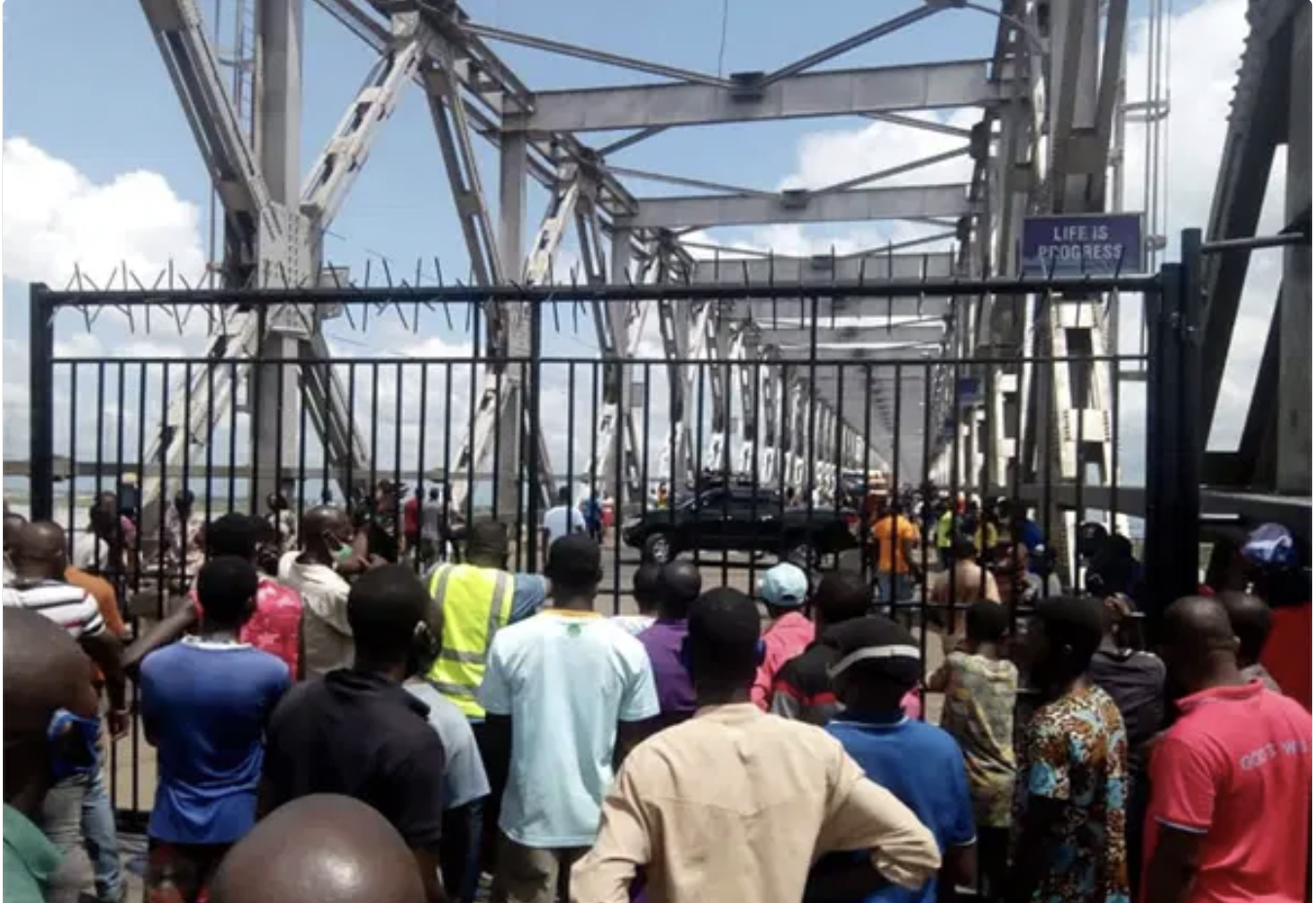
The Onitsha Bridgehead in Anambra State has earned a notorious reputation as one of Nigeria’s most dangerous and corrupt locations, according to a recent report by the International Society for Civil Liberties and Rule of Law (Intersociety). The civil rights group’s findings, released in a report titled Nigeria: Ocean of Innocent Blood Flowing in the East, paint a grim picture of widespread extortion, corruption, and brutal practices inflicted by the police, military, paramilitary forces, and private extortionists in the area.
The 110-page report, authored by Intersociety Chairman Emeka Umeagbalasi and other prominent members of the group, details how the Onitsha Bridgehead and its surrounding areas have become hotspots for abuse. The report covers the regions from the Uga Street Junction to the notorious Niger Bridge and the infamous markets in the area. It calls out specific locations like the Ogbogwu (Drug) Market, Atani Road Junction, and the now-defunct Premier axis of the Asaba-Enugu Expressway for being rife with corrupt activities.
“In the heart of Onitsha Bridgehead lies a breeding ground for some of the most insidious and deadly practices that continue to plague the Southeast and South-South regions of Nigeria,” Umeagbalasi remarked in the report. “These areas are not only known for their commercial importance but for the widespread lawlessness that has taken root, driven by corrupt police and military officials who have abandoned their duties to serve the people.”
Rampant Police and Military Brutality
According to Intersociety’s findings, the brutal actions of the police, military, and naval personnel are systematic, with their activities centered around extortion and physical violence. The report highlights the role of various police divisions, including the Bridgehead, Fegge, and Okpoko Police Divisions, as well as the Nigerian Navy stationed at Atani Road Junction in Ogbaru, for enabling the thriving corruption.
“The brutality is both evident and pervasive,” said Umeagbalasi. “From arbitrary arrests and beatings to the deliberate creation of traffic gridlocks, the military and police officers ensure that road users, particularly traders, are forced to pay extortion fees. These practices occur at every corner of Onitsha Bridgehead and its surroundings.”
One of the most alarming aspects of the report is the extent to which security forces have colluded with unscrupulous traders. Intersociety revealed that some police officers and military personnel actively assist in transporting illicit goods, particularly drugs like tramadol and codeine. Traders pay them to “escort” containers and goods across the bridge, ensuring that their illegal shipments pass without interference.
“The mode of operation for police and military personnel is quite clear. They create roadblocks, causing artificial traffic jams on both the Onitsha and Asaba sides of the bridge, where they demand bribes from all types of vehicles,” the report noted. “From trucks to trailers, each vehicle must pay a fee or face harassment, beatings, or worse.”
The Cost of Extortion: How Much Drivers Pay to Cross
The amount collected at the various checkpoints varies depending on the size and type of the vehicle. The bribe system is structured with different rates for different vehicles. According to the report, 20/40ft container trucks and tankers carrying oil and gas are charged between N5,000 to N10,000. Smaller vehicles, such as 911 lorries and regular trucks, pay between N2,000 to N5,000.
This system ensures a constant flow of income for the corrupt officials, as hundreds of vehicles cross the Onitsha Bridgehead daily. Intersociety’s findings revealed that the practice of extortion is not limited to just the military or police. Private individuals, acting as middlemen or “private extortionists,” also take advantage of the chaos to exploit drivers, demanding bribes in exchange for safe passage.
“This bridgehead has become a microcosm of everything wrong in Nigeria—corruption, abuse of power, and the breakdown of the rule of law. The lack of proper regulation has made this a haven for exploitation,” Umeagbalasi stressed.
The Role of Corruption in Perpetuating Violence
Intersociety’s report also underscores the role of corruption in enabling violence. The unchecked brutality, facilitated by corrupt military and police officers, has led to numerous human rights violations. Individuals caught up in the extortion schemes often face physical harm, arbitrary detention, or in some cases, even death. Local residents, business owners, and travelers alike have voiced concerns over the increasing militarization of the area, which has only worsened the situation.
“The constant presence of military personnel in this area is not to secure lives or properties, but rather to perpetuate a system of brutality,” said one local resident who wished to remain anonymous. “People are forced to give bribes just to ensure their safety or the safety of their goods. And if you refuse, the consequences are always severe.”
The report also touches on the psychological toll this constant exposure to violence and fear has on the local population. For many, crossing the Onitsha Bridge has become a daily ordeal filled with anxiety and dread.
Calls for Immediate Intervention and Accountability
Intersociety has called for urgent action from both state and federal authorities to end the exploitation and brutality at Onitsha Bridgehead. The civil rights group is calling for greater oversight of the security forces in the region and the prosecution of those found guilty of misconduct.
“We demand accountability from all agencies involved, from the police to the military. We call on the Nigerian government to immediately intervene and put an end to the reign of terror at the Onitsha Bridgehead,” Umeagbalasi urged. “The time for talking is over. Action must be taken to restore peace, security, and order to this strategic location.”
The group has also demanded that the federal government institute a more transparent and effective system to monitor the activities of law enforcement and military personnel in the region. There is a growing need for reform, both in terms of personnel conduct and operational strategies.
As the situation at Onitsha Bridgehead continues to deteriorate, one thing remains clear: the nexus of corruption, brutality, and impunity must be addressed before it further erodes public trust in the security forces and government institutions.