
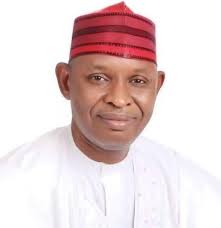
In a dramatic and forceful response, the Kano State Government has categorically rejected the proposed national tax reforms currently before the National Assembly, calling the reforms a threat to the economic well-being of its people.
The state’s disapproval was conveyed by Deputy Governor Aminu Abdussalam Gwarzo during the 2025 celebration at Filin Mahaha, Kofar Naisa open theatre, on Monday. His words were an emphatic reiteration of the position held by Governor Abba Kabir Yusuf, who, through his deputy, voiced his dissatisfaction with the tax reform bills, describing them as an inappropriate response to Nigeria’s economic challenges.
“This tax reform bill is not the solution to our economic challenges,” Governor Yusuf’s statement, delivered by Gwarzo, read. “Kano State stands firmly against any policy that negatively affects the welfare of our people.”
The tax reforms, which aim to introduce higher levies across various sectors of the economy, have faced resistance from several states across Nigeria, with Kano at the forefront. Governor Yusuf, through his deputy, labeled the timing of the tax hike as “ill-timed” and “lopsided.”
Kano, like much of the northern region, has been reeling from the dual crises of hyperinflation and escalating insecurity. These issues have exacerbated the poverty levels across the state and the region, leading many to question the government’s priorities. Governor Yusuf, in his address, pointed to these challenges, urging the federal government to reconsider the proposed tax hikes.
“How can the government be introducing tax hikes when the people are already struggling under the weight of hyperinflation and unprecedented insecurity?” Governor Yusuf’s statement continued. “The northern region, in particular, is suffering from extreme poverty and hunger. We believe that the presidency should direct more attention to alleviating these conditions, rather than burdening the people with further taxes.”
The governor’s comments reflect growing frustration in the northern part of the country, where many feel that the federal government’s economic policies have disproportionately affected the region. With inflation rates soaring and security issues worsening, the introduction of new taxes is seen by many as an additional strain on the already struggling populace.
In his speech, Deputy Governor Gwarzo reminded the people of Kano of the government’s achievements in addressing some of the state’s pressing challenges. He highlighted improvements in healthcare, education, and infrastructure, including significant investments in road construction, which have improved connectivity in the state. Furthermore, Gwarzo emphasized the state’s foreign scholarship programs, which have seen Kano students benefiting from educational opportunities abroad.
Despite these advancements, Gwarzo made it clear that the administration’s priority remains the welfare of the people, and any reforms that could worsen the economic situation would be vehemently opposed.
The governor also took the opportunity to remind residents of Kano of the legal victory that secured his position as the state’s elected leader. He referenced the landmark Supreme Court ruling in January 2024, which affirmed his election as governor, a crucial point in the state’s recent political history. This ruling ended months of political uncertainty, and Governor Yusuf made it clear that the legal battle had strengthened his resolve to fight for the people’s rights.
“We have overcome challenges, and we will continue to build a better future for our people. The ruling in January was a victory for democracy and for the people of Kano,” Yusuf’s statement read. “We stand firm in our commitment to improving the lives of every resident.”
Another key moment of Gwarzo’s address came when he celebrated the reinstatement of Emir Muhammadu Sanusi II in 2024. The controversial return of the emir, who had been removed from his position by the previous administration, was framed by Gwarzo as a triumph for the will of the people of Kano.
“The reinstatement of Emir Sanusi is a victory for the people of Kano,” Gwarzo asserted. “It is a reminder that the authority to appoint an Emir lies solely with the Governor of Kano State, and those who seek to interfere with the emirate affairs must respect the law and uphold peace.”
While Gwarzo did not name specific individuals or groups involved in the dispute, it is widely believed that the comments were directed at political figures who had sought to undermine the governor’s authority over the emirate. The reinstatement of Emir Sanusi, who had been exiled in 2020 following his removal, had sparked widespread political and social discussions, with supporters of the emir seeing it as a symbolic return of political power to the traditional institutions in Kano.
In his conclusion, Deputy Governor Gwarzo delivered a message of unity and hope to the people of Kano. He urged residents to remain resolute in the face of economic and security challenges, emphasizing the need for collective action to ensure progress.
“Let 2025 be a year of shared prosperity and progress,” Gwarzo urged. “Together, we will build a stronger Kano.”
The statement from the Kano State Government comes at a critical moment as the National Assembly continues to debate the proposed tax reforms. Many Nigerians, particularly those in the northern region, view the tax hike as an unnecessary burden that will only exacerbate the current economic difficulties. Critics of the reforms argue that the government should focus on addressing the root causes of poverty and insecurity before imposing additional financial pressures on the population.