
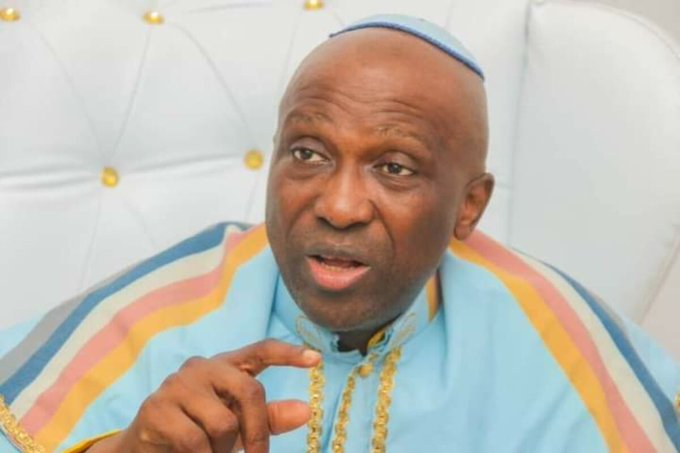
A storm of religious controversy is brewing in Oyo State as the issue of Sharia law takes center stage. Primate Elijah Ayodele, the founder and spiritual leader of INRI Evangelical Spiritual Church, has raised an alarm over the proposed implementation of Sharia law in the South-Western state, warning of the dangerous implications it could have on the region’s delicate religious balance. In a candid statement released on January 1, 2025, Ayodele urged Governor Seyi Makinde to reconsider any plans to establish the controversial law, describing it as a potentially disastrous decision for the state and the country.
The renowned man of God, whose influence extends beyond the walls of his church, argued that the introduction of Sharia law in Yorubaland would not only create a political and religious crisis but could lead to long-term societal division. “The proposed establishment of Sharia law isn’t appropriate for Yorubaland, and if implemented, it will lead to chaos and division,” Ayodele said in his statement. “This proposal doesn’t bring any benefit to the people of Oyo State; it will only serve to deepen existing religious fault lines.”
A Divisive Proposal
The contentious issue has sparked widespread debate across the South-West, a region known for its religious diversity and historical resistance to Sharia law. While Sharia is currently implemented in certain northern states, its introduction in the South-West has raised questions about the compatibility of such a move with the region’s predominantly Christian and traditional religious makeup.
Primate Ayodele made it clear that the governor should tread cautiously, as any attempt to push through Sharia law would backfire. “Seyi Makinde should be cautious not to allow Oyo State to burn,” he warned. “This proposal could tear apart the state and even the nation. It is not a move that promotes unity or progress but rather sets the stage for religious upheaval.”
Sharia as a Hindrance to Progress
Ayodele, who has frequently commented on national issues, also criticized Nigerian leaders for their focus on divisive religious matters instead of pursuing real development. In his view, the Sharia law proposal is a distraction from the state’s pressing economic and social issues. “Nigerian leaders need to recognize what truly drives development, and Sharia law isn’t part of that agenda,” Ayodele asserted. “Instead of focusing on policies that foster economic growth and social cohesion, we are being dragged into religious debates that have no place in modern governance.”
He emphasized that the focus should be on tangible progress—job creation, infrastructure, and sustainable development—rather than introducing laws that could tear the fabric of society apart. “Sharia law won’t bring any development to Oyo or Nigeria. Just like our dependence on oil resources, it won’t lead to any meaningful improvement. What we need are leaders who understand the instruments that can propel this nation forward, not policies that divide us,” he said.
Oyo’s Religious Landscape
The South-West region, and particularly Oyo State, has long been a melting pot of various religious beliefs, including Christianity, Islam, and indigenous faiths. The introduction of Sharia law in this region would mark a significant departure from the secular governance model that has traditionally prevailed. While there has been no official proposal yet to implement Sharia law, the mere suggestion has ignited debates among religious and political leaders, with many fearing it could create a rift that would be difficult to heal.
Oyo State’s governor, Seyi Makinde, a member of the People’s Democratic Party (PDP), has not yet made an official statement regarding the proposal, but his response will be crucial in determining the future of the discussion. Local political analysts suggest that Makinde will need to balance the interests of various religious groups to avoid alienating any one faction.
A Wider National Concern
Primate Ayodele’s warnings, though directed at Oyo State, carry implications for the broader national discourse on religion and governance. As Nigeria grapples with its complex religious landscape, the debate over the role of religion in public life is becoming increasingly polarized. While some advocates argue for the incorporation of Islamic principles into the country’s legal system, others, like Ayodele, see such moves as a step backward.
“The introduction of Sharia law is not just a matter for Oyo State,” Ayodele said. “It is a matter of national importance. The government must consider the broader implications of such decisions and the impact they will have on Nigeria’s unity.”
In a country where religious sentiments often intersect with politics, the stakes are high. The federal government’s stance on this issue will likely influence the direction of future religious policies, especially in the context of Nigeria’s efforts to balance secularism with the diverse religious identities of its citizens.
A Call for Unity
In the wake of the religious tensions sparked by the Sharia proposal, Primate Ayodele has called for unity among Nigerians, urging leaders to put national interest above sectarian divisions. “Our leaders must understand that religion should not be used as a tool for political maneuvering or social control. We need policies that unite us, not ones that will set us apart,” he said.
Ayodele’s comments come at a time when Nigeria is already facing numerous challenges, including economic instability, insecurity, and rising unemployment. Amidst these crises, many Nigerians are calling for leadership that prioritizes the country’s development and stability rather than divisive religious rhetoric.