
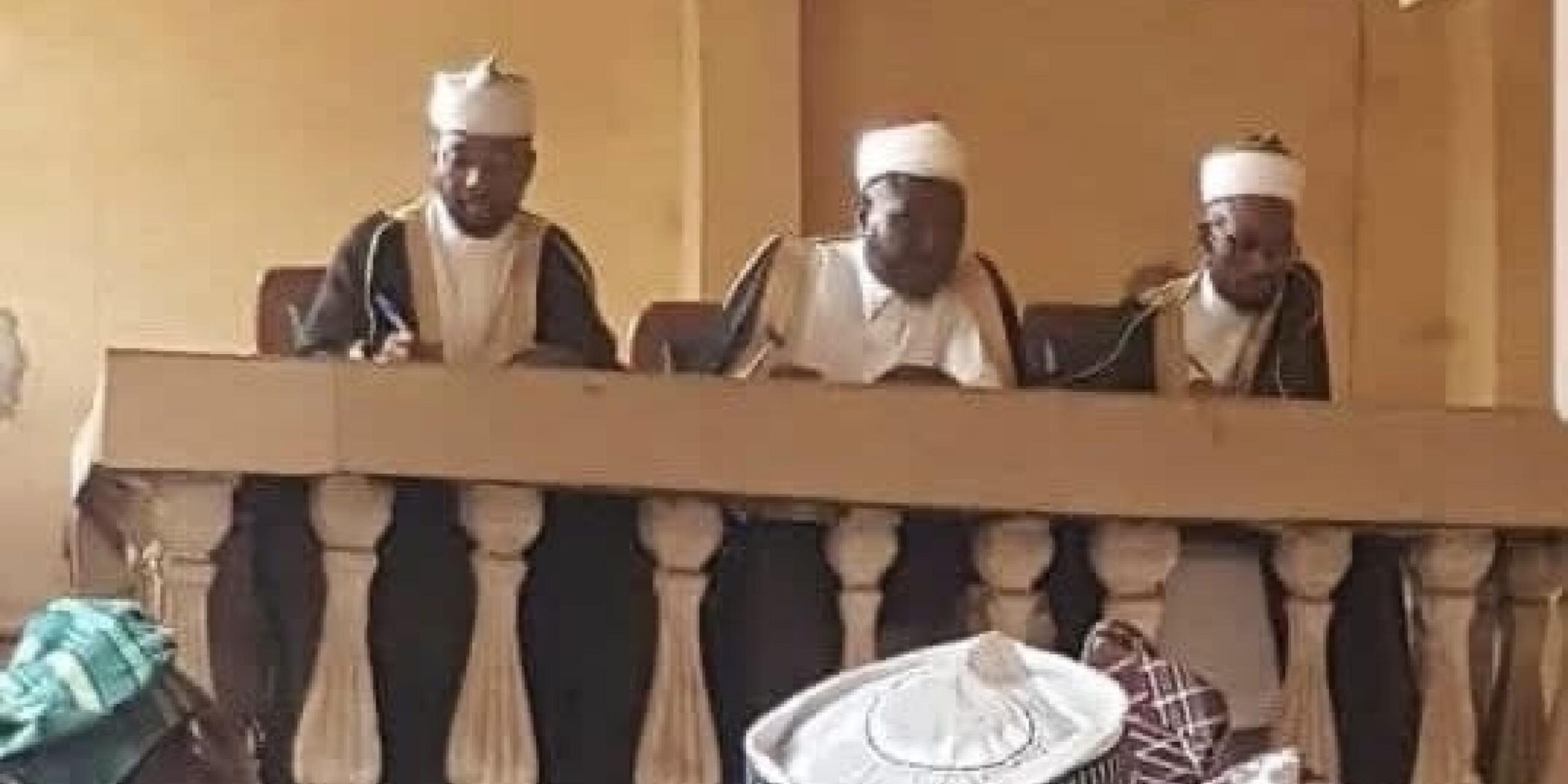
The Chief Imam of Yorubaland, Sheik Abdulraheem Aduanigba, has issued a stern warning against any attempt to introduce Sharia law in the South-West, insisting that such a move could trigger widespread unrest and even war in the region.
In a viral video that has sparked intense debate across Nigeria, the Islamic cleric argued that Sharia is fundamentally incompatible with the cultural and religious composition of Yorubaland. He described the proposition as an agenda pushed by Northern interests, stressing that it would only lead to division and crisis in the South-West.
According to Sheik Aduanigba, the Yoruba people embrace three distinct religions—Christianity, Islam, and traditional worship. Any effort to impose Islamic law in the region, he said, would directly infringe on the rights of Christians and traditionalists, who together make up a significant portion of the population.
Religious Diversity in Yorubaland
“Sharia cannot work in Yorubaland because our general language is Yoruba,” Sheik Aduanigba declared in the video. “When we talk about Yoruba, there are three distinct religions. Our original religion in Yorubaland is a traditional religion before the advent of Christianity. When Christianity came, it gave birth to Islam. In Yorubaland today, we have 27 million Christians, 23 million Muslims, and 10 million traditional worshippers.”
He pointed out that with nearly 1,000 traditional rulers overseeing communities in the region, the legal and governance structures of the South-West have evolved separately from Sharia-based governance systems seen in some Northern states.
Sharia and Yoruba Customs: A Clash of Values
The cleric highlighted cultural and social norms in the South-West that directly contradict the tenets of Sharia law. He warned that enforcing such laws would lead to widespread conflict, particularly over issues like women’s dress codes, alcohol consumption, and inheritance laws.
“We, in the South-West, are aware that some of us celebrate masquerade festivals; some mark Christmas and Easter; some celebrate Ramadan and Ileya. So, if some of us in Yoruba decide to use Sharia, Sharia means women should cover their heads, and we will start quarrelling with women who don’t cover their heads. Those who drink alcoholic drinks, Sharia will frown at them. Yorubaland can’t allow such a system,” he stated.
Aduanigba further pointed out the irony in the economic relationship between the North and the South, stating that taxes from industries that would be prohibited under Sharia—such as breweries and hotels—contribute to the national economy, including revenue allocations to Northern states that enforce Sharia.
The Taxation Argument and Economic Contradictions
The cleric commended President Bola Tinubu’s tax reform bill, which seeks to ensure that states receive a fair share of their internally generated revenue. He emphasized that revenue from businesses prohibited under Sharia should not be used to support regions that enforce the same law.
“Sharia cannot work, and the reason is that the money generated from breweries in Lagos is the money given to the North who practice Sharia. The internally generated revenue from hotels where there are commercial sex workers is given to the North who cannot allow such things. That’s why I’m happy with the Tax Reform Bill that President Tinubu initiated that each state should be given the fair share of its IGR. So, that’s why Sharia cannot work in Yorubaland if we don’t want to cause war,” he argued.
A Potential Crisis in the Making
Sheik Aduanigba warned that the enforcement of Sharia in the South-West could lead to violent clashes, citing hypothetical scenarios where individuals could be harassed over clothing choices or social habits.
“It could cause war when someone wears knicker (shorts) on the road and Muslims pick her up because she has flouted Sharia. It’s not that it is only we Muslims that dominate Yorubaland. So, Sharia cannot work in the South-West. Sharia is an agenda by the North,” he declared.
He expressed concerns that Sharia would gradually creep into Yoruba society under the guise of resolving marital disputes and inheritance cases, leading to a situation where non-Muslims could be unfairly denied their rights.
Contradicting the Sultan of Sokoto
Sheik Aduanigba’s position directly opposes the stance of the Sultan of Sokoto, Alhaji Muhammadu Sa’ad Abubakar III, who has previously endorsed the idea of implementing Sharia in the South-West. The Sultan, the highest Islamic authority in Nigeria, has been an advocate for the expansion of Islamic jurisprudence beyond the Northern region, a move that has faced resistance from various quarters in the South.
Aduanigba, however, dismissed such advocacy as an attempt to impose a foreign system on a pluralistic society. He insisted that the Yoruba way of life—rooted in religious tolerance and cultural coexistence—was incompatible with the rigid legal framework of Sharia.
Historical Precedents and Constitutional Concerns
The cleric’s warning resonates with historical instances where attempts to introduce Sharia law outside the North have sparked tensions. In 2002, riots erupted in parts of the country following debates over the adoption of Islamic legal codes. Additionally, constitutional lawyers have long argued that Nigeria’s secular framework does not support the imposition of religious laws on multi-faith regions.
The Nigerian Constitution guarantees freedom of religion and prohibits any form of religious discrimination. Legal experts have pointed out that enforcing Sharia in a region where a significant portion of the population does not practice Islam would likely result in legal battles and widespread opposition.
A Call for Unity and Stability
In his closing remarks, Sheik Aduanigba urged Yoruba leaders and stakeholders to resist any attempt to introduce Sharia law in the region, warning that it would be a recipe for chaos.
“If a father who is a Muslim dies and some of his children have converted to Christians, in Yorubaland, all of them will have access to the inheritance. But, if they apply Sharia, the Sharia Court will say, since the child has left Islam, he is not entitled to the inheritance of his father who died as a Muslim. Therefore, Sharia cannot work in Yorubaland if we don’t want to ignite war,” he cautioned.