
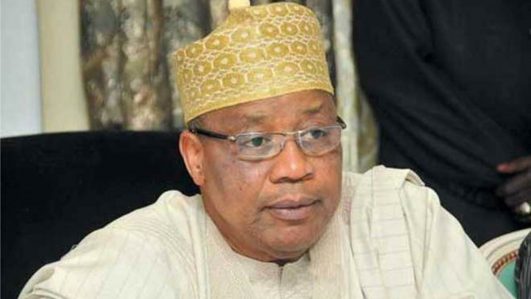
Former military head of state, General Ibrahim Badamasi Babangida (IBB), has officially confirmed that the late Chief Moshood Kashimawo Olawale (MKO) Abiola won the historic June 12, 1993, presidential election. The former military ruler made this admission in his newly launched autobiography, A Journey in Service, during an event in Abuja on Thursday, February 20, 2025.
This statement by Babangida has stirred significant interest, as it marks the first time the former military leader has publicly acknowledged the electoral victory of Abiola, whose win in the election was controversially annulled by Babangida’s government. The June 12 election, which is widely regarded as one of Nigeria’s freest and fairest, remains a significant point in the country’s democratic history.
In his autobiography, Babangida, who was at the helm of Nigeria’s affairs during the 1993 election, admitted that there was no doubt in his mind that MKO Abiola, who contested under the Social Democratic Party (SDP), secured both the majority of votes and the geographical spread necessary to win the presidency.
Babangida’s admission is a momentous shift in the country’s political discourse, especially regarding the controversial June 12 election. The 1993 poll, which many see as a pivotal moment in Nigeria’s democratic journey, was annulled by Babangida’s government under circumstances that remain a topic of intense debate and speculation.
During the book launch, Babangida stated unequivocally: “There was no doubt in my mind; MKO Abiola won the election. He satisfied all the requirements.” This statement is the most direct and clear-cut admission from Babangida regarding the annulled election. It comes after years of denial and ambiguity surrounding the controversial decision to annul the election.
The 1993 election results showed Abiola winning in a landslide, defeating his opponent, Alhaji Bashir Tofa of the National Republican Convention (NRC). Abiola’s victory was widely celebrated, especially as he represented a broad coalition of Nigerians yearning for democratic change. However, the military government led by Babangida declared the election results null and void, throwing the nation into a period of political unrest and uncertainty.
The annulment of the June 12 election sparked widespread protests and unrest across Nigeria. Many Nigerians saw the decision as a betrayal of the democratic process and a denial of their will. The annulment led to the imprisonment of MKO Abiola, who was later declared the winner by various political groups, but it was a title that was never formally recognized until much later.
After years of political upheaval and a return to civilian rule, the struggle for justice for Abiola continued. In 2018, former President Muhammadu Buhari posthumously honoured MKO Abiola, awarding him the prestigious Grand Commander of the Federal Republic (GCFR) title, which is typically reserved for Nigerian presidents. This recognition by Buhari was seen as a long-overdue acknowledgment of Abiola’s victory and a significant moment in Nigeria’s democratic history.
In his autobiography, Babangida expressed a sense of relief regarding the posthumous honour given to Abiola by Buhari. He described the annulment of the election as one of the most difficult decisions of his life, and his relief was evident when he remarked, “It was a very challenging decision for me. But I am happy that President Buhari recognized Abiola’s victory and honoured him with the GCFR title.”
The history of June 12, 1993, remains complex and layered with political, social, and emotional significance. For many Nigerians, June 12 represents a symbol of the country’s long struggle for true democracy, justice, and freedom. The events of 1993 also marked a turning point in the nation’s history, as they led to the eventual return to civilian rule in 1999, when Olusegun Obasanjo was elected president.
For years, the question of who truly won the 1993 election had remained contentious. MKO Abiola was widely seen as the legitimate winner, but his eventual imprisonment and the subsequent lack of official recognition of his victory kept the issue at the heart of Nigeria’s political landscape.
The new acknowledgment from Babangida has provided closure for many Nigerians who had long believed that the annulment was a great injustice. The decision to annul the election and its consequences have had a profound impact on Nigeria’s political development and its transition to the Fourth Republic in 1999.
MKO Abiola is now widely regarded as a martyr for democracy. His struggle for freedom and justice, alongside the sacrifices of many Nigerians, led to the eventual establishment of a civilian government, though the road to democracy has been far from smooth. The recognition of Abiola’s victory has helped heal some of the wounds caused by the annulment and the years of political instability that followed.