
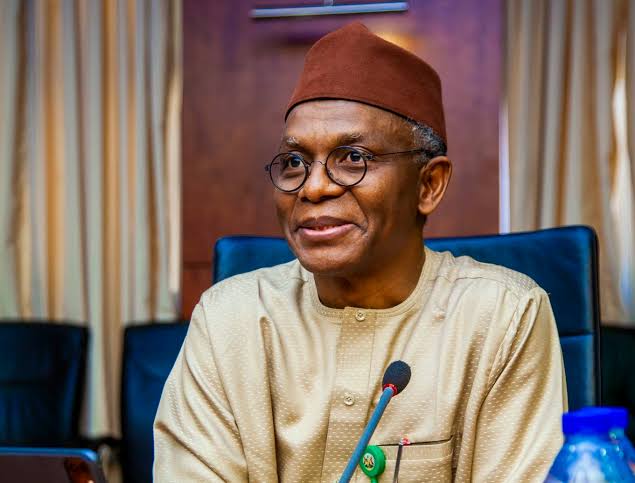
Former Kaduna State governor, Malam Nasir El-Rufai, has declared his intention to form a formidable opposition to the ruling All Progressives Congress (APC) by rallying key political figures, including former Vice President Atiku Abubakar, Labour Party (LP) candidate Peter Obi, and former Minister Rotimi Amaechi, to join the Social Democratic Party (SDP). El-Rufai, who recently defected from the APC to the SDP, aims to create a vibrant coalition of opposition leaders to challenge the APC’s dominance in the upcoming 2027 general elections.
In a recent interview with the BBC Hausa Service, El-Rufai highlighted the need for a strong opposition to keep the ruling party in check. He stated, “My biggest wish and prayer is to see Atiku, Obi, Amaechi, and Aregbesola join SDP, so that we can form a powerful coalition of opposition leaders—not necessarily to merge into one political party, but to work together for a common goal.”
El-Rufai’s bold remarks signal a shift in Nigerian politics as the nation prepares for the 2027 elections. His call to unite several influential figures from different political backgrounds reflects the growing dissatisfaction with the APC under President Bola Tinubu’s leadership, which he has criticized for causing economic hardship for many Nigerians.
El-Rufai’s decision to leave the APC after being a key supporter of Tinubu’s presidential bid in 2023 marks a significant political move. As one of the founding members of the APC, El-Rufai had strongly advocated for Tinubu’s candidacy, but his relationship with the president soured when he was excluded from the current government. El-Rufai has since been vocal in his criticism of Tinubu’s policies, which he argues have worsened the economic situation in Nigeria.
While reflecting on his decision to support Tinubu’s presidential bid in 2023, El-Rufai admitted that although he felt deceived by the president, he did not regret his role in helping Tinubu win the election. He acknowledged, however, that the policies implemented under Tinubu’s administration have not benefited the Nigerian people, particularly with regard to rising inflation and the devaluation of the naira.
Despite his growing disillusionment with the APC, El-Rufai made it clear that his primary goal now is to build a more effective opposition. He expressed his belief that the SDP, a party with a rich history and a platform that resonates with many Nigerians, could provide the necessary foundation for a strong challenge to the APC in 2027.
El-Rufai’s call for Atiku, Obi, and Amaechi to join the SDP represents an ambitious effort to unite key opposition figures from across Nigeria’s political spectrum. Atiku Abubakar, the presidential candidate of the Peoples Democratic Party (PDP) in 2023, is one of Nigeria’s most influential politicians. Despite losing to Tinubu in the 2023 elections, Atiku remains a central figure in Nigerian politics. His participation in a potential coalition could strengthen the opposition’s chances of challenging the APC.
Similarly, Peter Obi’s rise to prominence in the 2023 election, where he contested under the Labour Party, has made him a popular figure among young Nigerians. Obi’s message of fiscal responsibility and social justice resonated with many voters, and his inclusion in a broad opposition coalition could galvanize support among Nigeria’s youth.
Rotimi Amaechi, a former minister and strong figure within the APC, is another key politician whose support El-Rufai hopes to secure. Although Amaechi has yet to reveal his political future, his influence within the political landscape makes him a valuable ally for any opposition coalition.
El-Rufai highlighted that the goal of this coalition would not necessarily be to merge all parties into one, but to create a united front of influential leaders capable of holding the APC accountable. By drawing together leaders from various political backgrounds, El-Rufai believes the opposition can present a more unified and effective challenge to the ruling party in 2027.
Despite his efforts to build a strong opposition movement, El-Rufai made it clear that he does not have immediate plans to run for president in 2027. He explained that although he is open to supporting the SDP’s cause, his decision to contest any political office will depend on the party’s needs and the wishes of its members.
“I don’t know. I’m not the one who will say I’m going to contest,” El-Rufai stated. “It’s a party and members of that party will call you and tell you to contest for this or that position.”
Reflecting on his previous political career, El-Rufai recalled how, when he first ran for governor of Kaduna State, it was the people who urged former President Muhammadu Buhari to encourage him to run. Despite his initial reluctance and fear of public office, El-Rufai eventually agreed to contest, and his political career took off from there.
This open-ended stance on the 2027 election suggests that while El-Rufai is focused on helping to shape the future of Nigerian politics, he does not view himself as a frontrunner for the presidency—at least not yet. However, he hinted that if the SDP and its members call on him to run for office, he may consider it.
El-Rufai’s vision for a unified opposition is largely driven by his dissatisfaction with the APC’s governance under Tinubu. He has not shied away from voicing his concerns about the current administration’s inability to address critical issues like inflation, unemployment, and poverty. El-Rufai’s exit from the APC and his call for a strong opposition reflect a larger sentiment among many Nigerians who are frustrated with the APC’s leadership.
The former governor’s appeal for Atiku, Obi, Amaechi, and others to join the SDP highlights the importance of political unity in Nigerian politics. While the opposition parties have historically been fragmented, El-Rufai believes that a collective effort could help restore accountability and transparency to Nigeria’s governance.
“The SDP is a vibrant platform,” El-Rufai said. “Let us come together so we can challenge the APC.”
His call for unity among opposition leaders has garnered attention from both supporters and critics. Many see it as a much-needed step toward strengthening Nigeria’s democracy, while others question the feasibility of uniting such diverse political figures.
As the 2027 general elections draw nearer, El-Rufai’s efforts to form a powerful opposition coalition will be closely watched by Nigerians. His departure from the APC and his push for a broader, more inclusive opposition reflect the growing desire for change among Nigerians who are dissatisfied with the current state of affairs. Whether or not he succeeds in rallying key political figures to his cause will have significant implications for the future of Nigerian politics.
With El-Rufai’s experience, political acumen, and connections, his call for opposition unity could prove to be a game-changer in the lead-up to 2027. However, the challenge remains: can Nigeria’s opposition leaders set aside their differences to form a cohesive front capable of defeating the APC?