
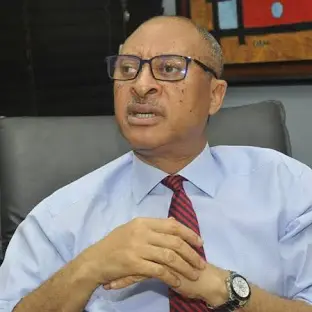
Renowned political economist and public affairs analyst, Professor Pat Utomi, has expressed frustration with the political climate in Nigeria, saying he may be forced to leave the country due to ongoing harassment and attempts to silence him.
Speaking in Abuja on Wednesday, Utomi disclosed that he is “getting fed up” with the situation, particularly following a lawsuit filed against him by the Department of State Services (DSS) over his recent political activities, including the formation of a shadow government.
Utomi, a former presidential candidate and vocal advocate for democratic reforms, said the attacks on him are a direct response to his efforts to inspire a new generation of Nigerians. He added that he is ready to relocate to Ghana or any other peaceful country if the clampdown continues.
“I’m getting fed up with all of this,” Utomi said. “If they are ready to shut my voice, I am ready to go to Ghana or anywhere else and live peacefully. I will retire next year and leave them to do whatever they want to do.”
The statement comes just days after the DSS filed a suit at the Federal High Court in Abuja, asking the court to declare Utomi’s shadow government structure “constitutional.” This move, many believe, is an attempt to stifle critical voices and opposition figures.
Earlier this year, Utomi announced the formation of a “shadow government” meant to serve as a platform for policy critique, accountability, and alternative solutions to Nigeria’s political and economic challenges. He explained that the initiative is intended to stimulate responsible governance and prepare young Nigerians for leadership.
However, the idea has drawn strong opposition from government circles, with the DSS viewing it as a threat to national security. Critics of the administration have condemned the agency’s actions, describing them as attempts to criminalize free speech and political participation.
Utomi insists that his intentions are not political rebellion but rather a patriotic call for good governance and the protection of democratic ideals. “I’m looking for a better country for the next generation,” he said. “But politicians make it look like dissenting comments are crimes.”
He lamented the current state of affairs, where critical voices are often viewed as enemies of the state. “I want to inspire the next generation to be free and make progress. It is now up to them. It is up to the current generation to realise that there are people who don’t want their country to grow.”
Professor Utomi has long been known for his commitment to national development and civic engagement. He has served in various public and academic roles, including as a former presidential adviser and founder of the Centre for Values in Leadership (CVL). Over the years, he has consistently spoken out on issues of corruption, governance, and the need for political reform in Nigeria.
Utomi’s recent statements highlight growing concerns over shrinking democratic space and increasing intolerance for dissent in the country. Human rights groups and civil society organisations have called on the government to respect citizens’ rights to free expression and political participation.
The move against Utomi comes at a time when political tensions are high in Nigeria. Critics of the administration have reported increased surveillance, legal threats, and harassment. Many say the situation is creating a culture of fear and discouraging civic engagement.
Despite his frustrations, Utomi said he still hopes for a better Nigeria, but warned that continued hostility toward critics will only push more people to leave the country in search of peace and freedom.
“Let Nigerians decide what kind of country they want to live in,” he said.
As of press time, the DSS has not made any further public comment on the court case or Utomi’s statements.