
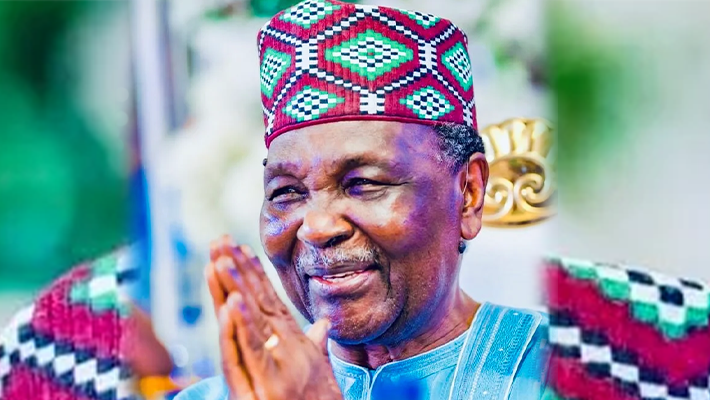
Former Nigerian Head of State, General Yakubu Gowon (rtd), has described the Nigerian Civil War (1967–1970) as the most difficult period of his life. Speaking on Saturday in Abuja, after receiving the Lifetime Integrity and Achievement Award at the 5th Convention of the Christian Men’s Fellowship, Abuja Anglican Diocese, Gowon highlighted that his decisions during the war were driven by a commitment to national unity, not hatred.
Reflecting on the civil war, Gowon stated, “I always remember the civil war. It was the most difficult period of my life. It was not my choice, but I had to be there, and had to do what I did in order to keep this country together. It was never a hatred against any people, I can assure you.” He further explained that his actions were guided by prayers and a desire to act with integrity and compassion.
The Nigerian Civil War, also known as the Biafran War, was a conflict between the Nigerian government and the secessionist state of Biafra. The war resulted in significant loss of life and widespread suffering, particularly in the South-Eastern region of Nigeria. Gowon’s leadership during this period has been a subject of both praise and criticism. His famous declaration of “No victor, no vanquished” at the end of the war aimed to promote healing and reconciliation. This policy of reconciliation, rehabilitation, and reconstruction became known as the 3Rs and played a crucial role in the reintegration of the Eastern Region into Nigeria .([wikkitimes.com][1], [allafrica.com][2])
Despite the challenges and controversies surrounding the war, Gowon remains steadfast in his belief that the conflict was necessary to preserve Nigeria’s unity. He highlighted the importance of forgiveness and reconciliation, urging Nigerians to focus on healing and moving forward together as one nation.
At the 5th Convention of the Christian Men’s Fellowship, Gowon was honoured with the Lifetime Integrity and Achievement Award. The event, held in Abuja, had the theme “Men of Honour: Living with Integrity in a Culture of Deceit,” reflecting the need for integrity in leadership and society.
The Chairman of the occasion, former President Goodluck Jonathan, represented by John-Kennedy Opara, congratulated the honourees for their consistency in living with integrity. He commended their efforts in touching lives and serving the nation. Jonathan quoted Psalm 25:14, urging men to live right and stand for integrity, regardless of the situation.
The Primate of the Church of Nigeria (Anglican Communion), Archbishop Henry Ndukuba, who presided over the convention, commended the honourees and urged Christians to uphold truth, integrity, and courage. He emphasized the need for Christians to stand strong in society, in their workplaces, and in their businesses. Ndukuba noted that Nigeria was in need of men and women of honour and integrity, leaders willing to serve the people and not corruptly pile up wealth.
Gowon’s recognition with this award underscores his enduring commitment to integrity and service to the nation. His leadership during and after the civil war continues to inspire many Nigerians, particularly in the areas of national unity and reconciliation.
In his address, Gowon called on all citizens to support the government’s efforts to uphold peace, love, and mutual respect. He emphasized that his decisions during the civil war were never driven by hatred but by a difficult necessity to preserve national unity. Gowon urged Nigerians to always stand for the truth and stressed the need for forgiveness, reconciliation, and unity across faiths and ethnicities.
His message resonates with the current challenges facing Nigeria, including ethnic and religious tensions, political divisions, and economic disparities. Gowon’s call for unity and forgiveness serves as a reminder of the importance of collective effort in building a peaceful and prosperous nation.
As Nigeria continues to navigate its complex socio-political landscape, the lessons from Gowon’s leadership during the civil war and his post-war reconciliation efforts remain relevant. His emphasis on integrity, unity, and forgiveness offers a pathway for healing and progress in the nation.