
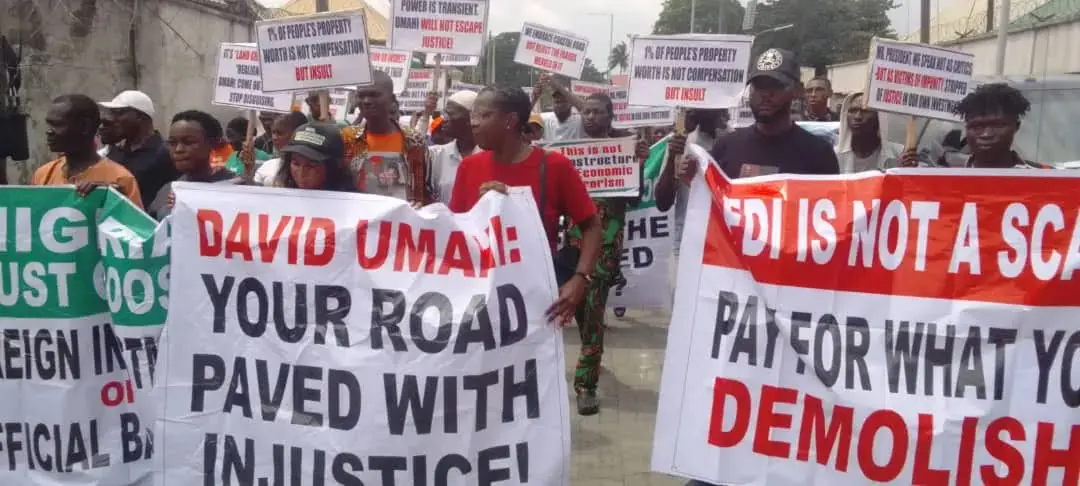
A group of concerned Nigerians, under the banner of the Coalition of Concerned Individuals, took to the streets of Lagos on Thursday to renew calls for fair compensation for people whose homes and businesses were demolished to make way for the Lagos-Calabar Coastal Highway project.
The peaceful protest comes as public frustration grows over the scale of the demolitions and what many describe as inadequate or delayed compensation for affected property owners, particularly in areas like Okun-Ajah.
Addressing journalists during the protest, the group’s spokesperson, Mr. Shina Loremika, said many victims had either not received any compensation at all or were paid amounts far below the value of their demolished properties.
“A large number of those affected by the demolition exercise have not received any form of compensation. For those who have, the amounts paid were grossly insufficient,” Loremika said.
He criticized the complicated process of accessing compensation and called for a more transparent and technology-driven approach that allows victims to verify and receive payments without delay. He also pointed out that even individuals with valid documents of ownership were not spared.
“Our major worry remains whether the government has the right to take over private property without following due process and ensuring adequate compensation,” he added.
One of the affected victims, Mr. Tahir Ahmad, a legal practitioner, also joined the protest. He said he has yet to receive any compensation despite losing his property to the demolition exercise.
The Lagos-Calabar Coastal Highway is a major federal infrastructure project aimed at connecting several states through a coastal route. However, the demolitions required for its construction have stirred controversy, with civil society groups and property owners accusing the government of ignoring the human cost of development.
Several victims have taken their cases to court, seeking justice and adequate compensation. The protesters urged the government to urgently provide relief to affected families and uphold the constitutional right to fair compensation.