
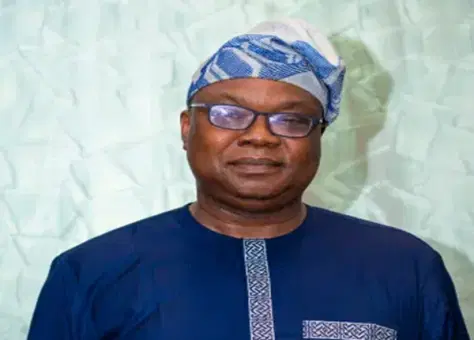
Ambassador Taofik Obasanjo Coker, Nigeria’s Consul-General in Buea, Republic of Cameroon, has died suddenly after a brief illness, the Ministry of Foreign Affairs has announced.
Coker reportedly passed away on Saturday, August 16, sending shockwaves through the diplomatic community and leaving many of his colleagues in deep mourning. The news was officially confirmed on Wednesday in a statement issued by the Ministry’s spokesperson, Kimiebi Imomotimi Ebienfa.
According to the Ministry, Ambassador Coker was a seasoned and hardworking diplomat who served Nigeria with professionalism and dedication throughout his career.
“Ambassador Coker was a hardworking and dedicated career diplomat who served Nigeria with distinction, commitment and professionalism in different capacities,” the statement said.
The late envoy, whose death was described as “untimely,” had only recently taken up his post in Buea, the capital of the Southwest Region of Cameroon, which shares a border with Nigeria’s Cross River State. His appointment was part of Nigeria’s broader diplomatic strategy to strengthen ties with neighbouring Cameroon, especially on regional security, trade, and the welfare of Nigerians living in the border areas.
Before his posting to Cameroon, Ambassador Coker served at Nigeria’s diplomatic missions in Conakry, Guinea, and in Shanghai, China, where he built a reputation for calm leadership, quiet diplomacy, and attention to citizen welfare. His experience in both West Africa and Asia made him a valuable asset in Nigeria’s foreign service.
News of his death came as a shock to many, especially as he was said to be active and healthy in the weeks leading up to his passing.
“He was a fine officer and a gentleman,” said a senior diplomat who worked with Coker in Conakry. “He always put the interest of Nigerians abroad first. His death is not just a loss to his family but to the country.”
The Ministry of Foreign Affairs said his passing is a huge loss not just to the government but to the entire diplomatic community.
“His untimely death, therefore, is a great loss to the diplomatic community and the nation at large,” the statement added.
Condolence messages have begun pouring in from across the diplomatic and political spheres. Senior officials at the Ministry of Foreign Affairs, members of the Nigerian diaspora in Cameroon, and foreign missions have all expressed their sadness and paid tribute to his service.
“We extend our heartfelt condolences to his immediate family, colleagues and friends at this difficult time and pray for the peaceful repose of his soul,” the Ministry concluded in its statement.
Ambassador Coker’s death comes at a time of growing diplomatic efforts between Nigeria and Cameroon, with both countries working to resolve cross-border security issues and improve trade relations. He was widely seen as a key figure in pushing these efforts forward, especially as Buea remains a sensitive region affected by political unrest in Cameroon.
In recent months, Coker had engaged with Nigerian citizens living in Cameroon, especially in the troubled Southwest and Northwest regions. He was known for holding regular town hall meetings with the Nigerian community to address concerns about safety, consular services, and cross-border travel.
The Nigerian government is yet to announce funeral arrangements, but sources say discussions are underway with his family and the Nigerian High Commission in Yaoundé to coordinate his repatriation and burial.
President Bola Tinubu is expected to issue an official condolence message in the coming days, while Foreign Affairs Minister Yusuf Tuggar is also scheduled to visit the late ambassador’s family.
Ambassador Coker was in his early 60s at the time of his death. Colleagues describe him as a soft-spoken but effective diplomat, deeply committed to promoting Nigeria’s image abroad and protecting the interests of its citizens.
“He had no airs around him,” said a colleague from his time in Shanghai. “Even as a senior officer, he was approachable and always had time for younger diplomats. He mentored many of us.”
The Consulate General in Buea will continue operations under the acting leadership of the Deputy Consul-General, pending the appointment of a new head.
For the diplomatic service, his death is not just personal but also institutional. Losing an officer of his experience and calibre at a time of regional tension is a setback, observers say, particularly given ongoing efforts to address issues like illegal migration, smuggling, and the humanitarian challenges posed by cross-border violence.

