
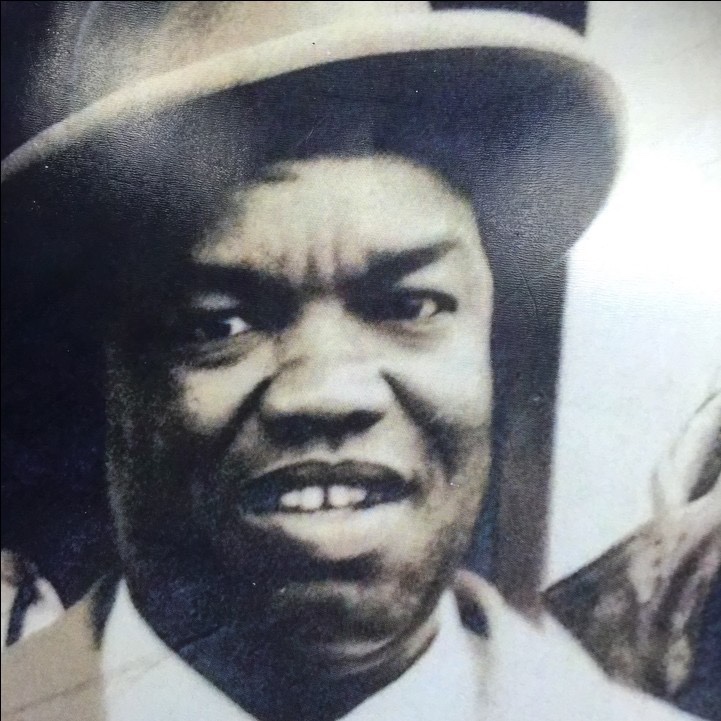
Former presidential aide and social commentator, Reno Omokri, has dismissed widely circulated claims that Sir Louis Odumegwu Ojukwu, father of Biafran leader Chukwuemeka Odumegwu Ojukwu, was once the richest man in Nigeria or Africa.
In a detailed clarification shared on his official social media pages on Sunday, Omokri described the claims — popularised by a video allegedly featuring veteran actor Pete Edochie — as historically inaccurate, calling them “fallacies built on folklore and misinformation.”
Omokri, while acknowledging the growing influence of AI deepfakes, said it is possible the video in circulation may not even feature the real Pete Edochie but an artificially generated version. Regardless, he insisted that the content was false and misleading.
Omokri pointed out that Nigeria’s economy in the 1960s was far too small to produce a billionaire in dollar terms.
“Nigeria’s GDP in 1960 was around $4.2 billion and reached $6.6 billion by 1969. A billionaire at that time would have owned almost one-quarter of the country’s total wealth,” he explained.
He further noted that there were no documented billionaires in Nigeria during its first 40 years as an independent nation, contrary to claims that Sir Louis was one.
Instead, Omokri referenced Sanusi Dantata, the son of Alhaji Alhassan Dantata, as the verified richest Nigerian by the 1960s — a status confirmed by a 1965 Time Magazine article.
Alhassan Dantata, a renowned merchant from Kano and patriarch of the Dangote dynasty, was also recognized as West Africa’s richest man before his death. His great-grandson, Aliko Dangote, is currently the richest Black man alive.
One of the most widely spread myths debunked by Omokri is the claim that Queen Elizabeth II rode in Sir Louis Ojukwu’s Rolls-Royce during her 1956 royal visit to Nigeria.
Omokri called this a fabrication, noting that archival photos and footage show that the Queen rode in a 1952 Rolls-Royce Silver Wraith that belonged to the then Emir of Kano, Muhammadu Sanusi I — grandfather of former Emir Sanusi Lamido Sanusi.
“The Emir’s car was later used again in 2018 when Prince Charles (now King Charles III) visited Kano. The Daily Mail confirmed it was the same vehicle,” Omokri stated.
He also provided historical context, noting that Emir Sanusi I was briefly the Acting Governor of Northern Nigeria in 1957, which could explain why the British monarch honoured him by riding in his vehicle.
Omokri attributed the confusion around Sir Louis’s status to regional pride and misinformation, stating that communities with less conservative cultures tend to publicize wealth more than others.
“Because the Yoruba and Northern elites are modest about their acquisitions due to cultural and religious values, others have mistaken public display for actual wealth,” he wrote.
While acknowledging Sir Louis as a respected businessman, Omokri emphasized that historical records do not support the claim that he was the wealthiest Nigerian or African at any time.
He encouraged Nigerians to seek information from verifiable sources, not viral videos or unverified social media posts.
“Claims about wealth and history should be based on facts, not emotion or regional sentiment,” he concluded.
Sir Louis Odumegwu Ojukwu was a prominent businessman and politician from Eastern Nigeria during the colonial and early post-independence periods. He was known for his involvement in transport, trading, and business development.
He was also the father of Chukwuemeka Odumegwu Ojukwu, the military officer who led the Biafran secessionist movement during the Nigerian Civil War (1967–1970).
While Sir Louis was indeed wealthy and influential, no historical financial records place him as the richest man in Nigeria, let alone Africa.
With the rise of AI-generated content and misinformation, Omokri’s intervention highlights the importance of historical accuracy and digital literacy, especially when it comes to public figures and national history.
“We must not allow folklore to replace facts in our national memory,” Omokri warned.