
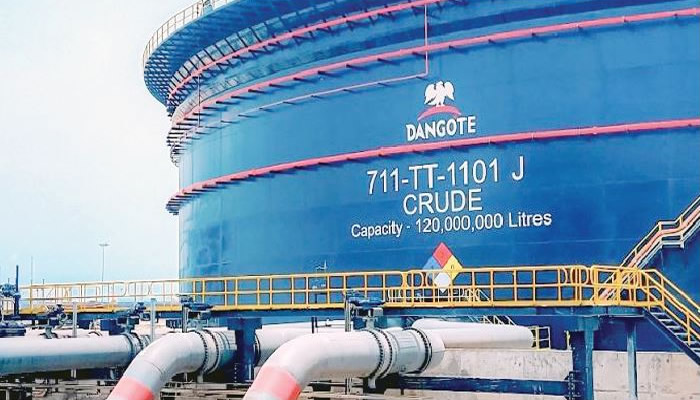
Dangote Petroleum Refinery has strongly denied reports that it imported refined petrol with high sulphur content into Nigeria, describing the allegations as “false, malicious, and misleading.”
In a statement issued on Friday, the refinery clarified that the fuel in question is not finished petrol, but an “intermediate feedstock” that is yet to be refined. The clarification comes after several reports suggested that the company was bringing in substandard petrol into the country.
The Dangote Refinery, with a production capacity of 650,000 barrels per day, said the cargo being referred to is a raw material that will be processed to meet both Nigerian and international standards before distribution.
“Dangote Petroleum Refinery has noted reports claiming it is importing finished petrol (PMS) with high sulphur content into Nigeria. These reports are false, malicious, and misleading,” the company said in the statement.
“The cargo in question is an intermediate feedstock, not finished petrol, and will be fully refined in our units to meet Nigerian and international quality standards.”
The company added that it operates within a Free Trade Zone and only refines and sells fuel products that comply with all relevant regulatory standards. It also highlighted that its products are already being exported to highly regulated markets such as the United States and Europe, which have some of the strictest fuel quality standards in the world.
“Our exports of petroleum products to the United States and Europe, among the world’s most regulated markets, underscore our adherence to global benchmarks,” the statement read.
To further reinforce its commitment to quality and accountability, the Dangote Refinery said all its fuel imports come with proper quality certification and are shared with regulators.
The company also expressed its willingness to make the documents public, saying transparency is a core value of its operations.
“All imports are accompanied by quality certificates and shared transparently with regulators. Dangote Petroleum Refinery is also willing to make these documents available to the public in the interest of full transparency and accountability,” the company said.
Fuel quality has remained a sensitive topic in Nigeria, especially with the country’s history of importing substandard petroleum products. In 2022, the country was hit by a fuel crisis caused by the importation of off-spec petrol, which damaged car engines and led to shortages across several states.
The Dangote Refinery, which was officially commissioned in 2023, has been seen as a potential game-changer in Nigeria’s oil and gas sector. Its capacity to refine large volumes of crude oil is expected to reduce Nigeria’s dependence on imported fuel and improve the overall quality of fuel available in the market.