
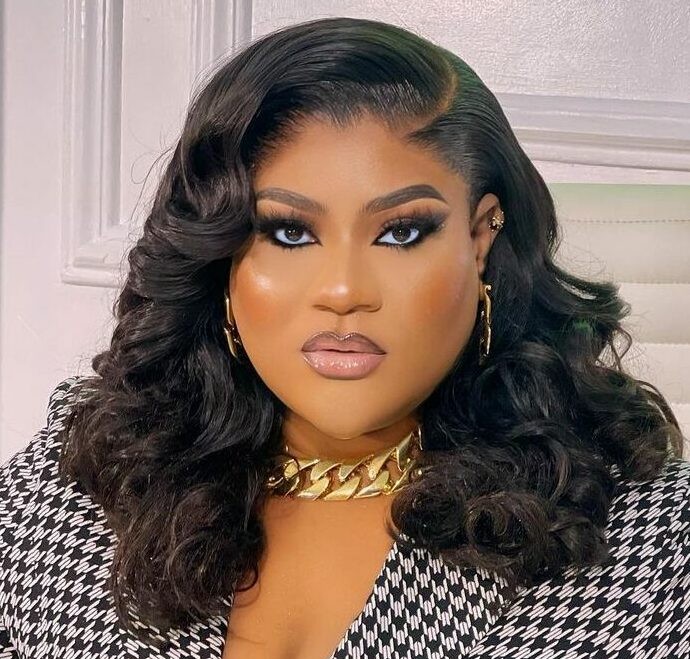
Nollywood actress Nkechi Blessing Sunday has revealed that she took matters into her own hands by tracking down and arranging the arrest of the woman who secretly recorded her at a gym earlier this year. The video, which circulated widely on social media, led to intense online mockery and body-shaming, sparking debates about privacy, consent, and the treatment of celebrities in Nigeria.
The actress made the revelation during an appearance on the Honest Brunch Podcast, where she discussed the incident in detail. The podcast episode, now trending across social media platforms, features Blessing speaking openly about her frustration and the emotional toll caused by the viral clip.
According to her, the video was recorded without her consent during a workout session and was later posted online, triggering widespread criticism and mocking comments about her body. She said the situation quickly escalated into body-shaming, with many internet users comparing her natural body to women who had undergone cosmetic surgery.
Blessing said she initially sought the help of the gym management, identified as iFitness, in identifying the woman behind the recording. However, she claimed that the gym refused to cooperate.
“iFitness hid her information from me… I found her. I got her arrested, of course,” Blessing said, stressing that she was determined to hold the woman accountable for invading her privacy and contributing to the public humiliation she faced.
The actress did not reveal how she tracked the woman down, but she hinted that she used her own network and contacts to locate the individual. Blessing said she believed the arrest was necessary to send a message that secretly filming people—especially in private spaces like gyms—is unacceptable and should not be tolerated.
The incident adds to a growing conversation about digital ethics and the increasing trend of people secretly recording others in public or semi-private places. In Nigeria, cases of unauthorized recordings in banks, malls, schools, hospitals, and gyms have sparked concerns about privacy violations and the ease with which personal moments are spread online.
Nkechi Blessing’s decision to pursue legal action highlights how celebrities, who are often seen as public property, still deserve privacy in their personal lives. Many entertainers frequently complain about fans or strangers recording them without permission, sometimes with the intention of posting the videos online for clout or mockery.
During the podcast, Blessing used the opportunity to address comments made about her appearance after the video surfaced. Many social media users compared her body to those of women who have undergone Brazilian Butt Lift (BBL) surgery or other cosmetic enhancements—a trend that has grown popular in Nigeria’s entertainment and influencer scene.
The actress strongly defended herself, expressing pride in her natural body and challenging critics who mocked her.
“You get BBL, you dey snap me wey get natural body. Are you stupid, sis?” she said during the interview, criticizing what she described as unfair and unrealistic comparisons.
Blessing said people forget that not everyone wants to alter their bodies through surgery. She added that her confidence in her natural body should not be a reason for ridicule or online insults.
Her comments reignited discussions about body-shaming—an issue many female celebrities and ordinary women say they face regularly online. Activists have long argued that the pressure created by social media, combined with the glorification of surgically enhanced bodies, has worsened self-esteem issues among young women.
Blessing also addressed the criticisms directed at her outfit in the gym video. Many people commented on her gym wear, with some saying her clothing attracted attention. The actress dismissed such claims, insisting that her outfit was her personal choice and should not be used to justify invasion of privacy.
“What I wear in the gym is my business,” she said. “It has nothing to do with anybody. It is not an invitation for anybody to secretly record me.”
She highlighted that being a public figure does not mean she has given up her right to personal space. She urged Nigerians to respect boundaries, reminding the public that everyone—celebrity or not—is entitled to dignity.
Blessing also spoke about the emotional impact of the viral video. She admitted that the widespread mockery affected her deeply, even though she maintained a brave face online. Like many celebrities, she said the constant pressure to appear confident often prevents entertainers from showing vulnerability.
She explained that public shaming can contribute to mental health struggles, adding that the internet has made it easy for people to hide behind anonymity while insulting others.
“I am strong, but I won’t lie, that video got to me,” she said. “People forget that we are human beings too.”
Mental health advocates say online shaming has become a serious issue in Nigeria, affecting celebrities, influencers, and ordinary people alike. Several high-profile cases of depression linked to cyberbullying have been reported in recent years, prompting calls for stricter enforcement of cybercrime laws.
Blessing concluded her podcast appearance by urging Nigerians to respect other people’s boundaries and focus on promoting authenticity rather than unrealistic beauty standards. She encouraged women to embrace their natural bodies and reject pressure from social media trends.
She said her decision to have the woman arrested was not driven by revenge, but by the need to set an example and discourage similar behaviour in the future.
Her stance has received mixed reactions online. While many praised her for defending her privacy and standing up against body-shaming, others questioned whether arresting the woman was too extreme. However, a large number of Nigerians agreed that secret filming should have consequences, especially when it leads to public humiliation.
As the video and podcast continue to trend online, the conversation around consent, digital behaviour, and body image is expected to grow. For many Nigerians, the incident has become a reminder that the internet can be both a powerful tool and a source of harm, and that protecting personal dignity remains essential in the digital age.

