
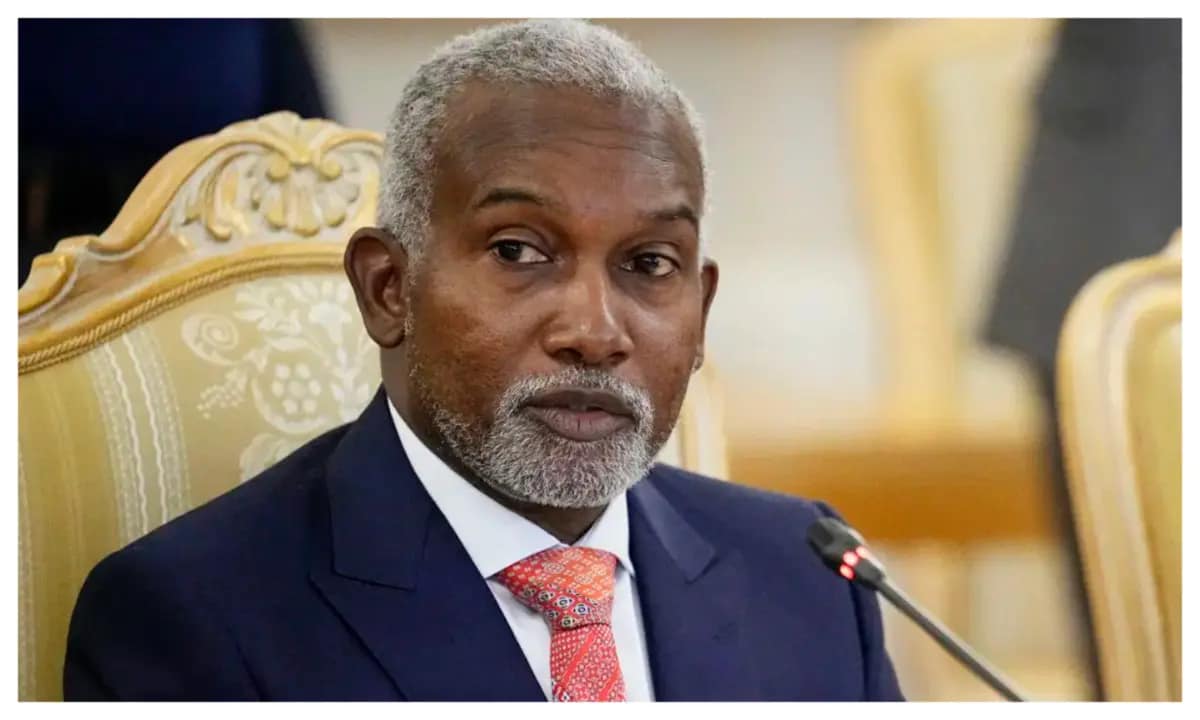
The Nigerian Foreign Affairs Minister, Yusuf Tuggar, has confirmed that soldiers aboard a Nigerian military aircraft, which made a forced landing in Burkina Faso, remain stranded in the West African nation. Tuggar disclosed this on Thursday during a joint press briefing with his Beninese counterpart, Olushegun Bakari, at the ECOWAS Commission headquarters in Abuja.
According to the minister, diplomatic channels are being actively engaged to resolve the situation, as the soldiers, part of a team on a routine mission, are still unable to leave Burkina Faso. Tuggar assured that the Federal Government is doing everything possible to secure their safe return.
The incident occurred earlier this week when the Confederation of Sahel States (AES), a breakaway regional union comprising Burkina Faso, Mali, and Niger Republic, accused the aircraft carrying 11 Nigerian soldiers of violating Burkinabe airspace. The AES subsequently claimed that it had authorised its member states to “neutralise” any aircraft found in violation of its airspace regulations.
The Nigerian Air Force (NAF) clarified that the C-130 military aircraft was on a ferry mission to Portugal and did not intend to breach any foreign airspace. The service said the aircraft was unarmed and was operating in accordance with international aviation regulations.
The development has stirred tensions in the region. Assimi Goita, the junta leader in Mali and a key figure in AES, described the forced landing as an “unfriendly act carried out in defiance of international law.” According to AES statements, member states have the right to neutralise aircraft violating the union’s airspace, though the exact measures are subject to internal protocols.
The forced landing comes amid rising instability in the Sahel, with coups and security threats affecting Mali, Burkina Faso, and Niger over the past decade. These developments have occasionally placed Nigerian military personnel and assets at risk during transits for peacekeeping or training missions.
Minister Tuggar emphasised that Nigeria respects the sovereignty of neighbouring countries but stressed that the soldiers were on an official, non-combat mission. He explained that negotiations are ongoing to ensure that the personnel are returned safely and without incident.
“Efforts are ongoing through diplomatic channels, and we are in contact with regional partners, including Burkina Faso authorities, to secure the release of our soldiers,” Tuggar said. “We hope for a peaceful resolution as soon as possible.”
The Nigerian Air Force also noted that the timing of the incident coincided with Nigerian military operations in Benin, aimed at foiling a coup attempt in that country. The simultaneous operations have added complexity to regional security relations, highlighting the challenges of military coordination across multiple West African nations.
The incident has sparked discussions among security analysts about the growing influence of AES in the Sahel and its impact on regional airspace management. Analysts argue that such situations could strain relations between Nigeria and AES member states if not resolved diplomatically.
“The situation highlights the need for clearer protocols on the movement of military aircraft across West African airspace,” said a Lagos-based security expert. “Nigeria has historically maintained cooperative relations with its neighbours, and this incident is likely to be addressed through dialogue and negotiation rather than confrontation.”
Meanwhile, ECOWAS officials, who were present during the joint briefing, expressed confidence that Nigeria’s engagement with AES and Burkina Faso would ensure the safe return of the soldiers. The briefing also included discussions on strengthening regional mechanisms to prevent airspace misunderstandings from escalating into diplomatic or military conflicts.
The Confederation of Sahel States, or AES, is a breakaway political and military union that has sought to challenge ECOWAS’s influence in West Africa. Formed by Burkina Faso, Mali, and Niger, AES has repeatedly emphasised stricter control over its borders and airspace.
For Nigeria, a key member of ECOWAS and a regional peacekeeping contributor, incidents like the forced landing present both operational and diplomatic challenges. Nigerian military aircraft frequently transit through West African airspace for training, peacekeeping, and support missions, making clear communication with neighbouring states critical.
While no shots were fired during the forced landing, the situation has generated concern within the Nigerian defence community. Observers point out that the safe return of the soldiers would demonstrate effective diplomatic engagement and reassure both military personnel and the public about Nigeria’s regional influence.
Minister Tuggar’s disclosure confirms that the Nigerian Government is taking the matter seriously. Authorities have reiterated that the soldiers’ safety is a top priority and that negotiations continue at multiple levels, including direct engagement with Burkina Faso and coordination with regional partners.
In addition, the Nigerian Air Force has reviewed its operational procedures to prevent future airspace misunderstandings. This includes stricter flight notification protocols, coordination with neighbouring air traffic authorities, and enhanced intelligence sharing within West Africa.

