
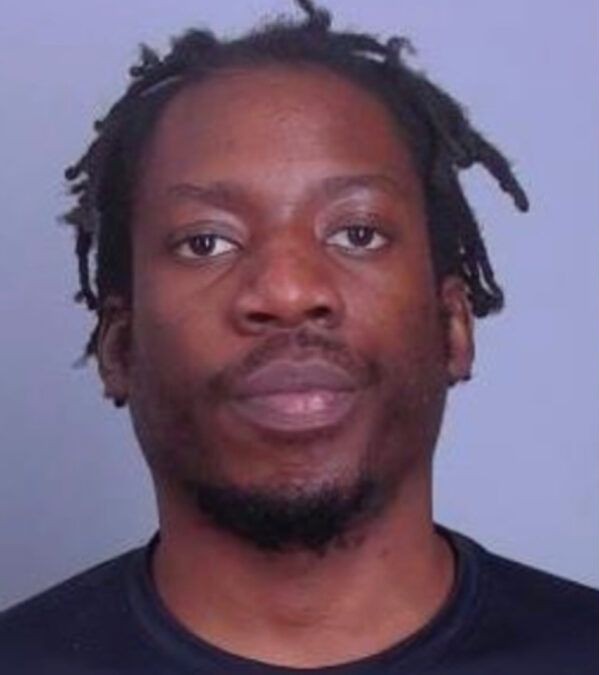
A 24-year-old Nigerian, Damilola Bamigboye, has been arrested by the United States Federal Bureau of Investigation (FBI) for allegedly abducting an Immigration and Customs Enforcement (ICE) agent in Minnesota while attempting to avoid deportation. The incident, which took place on December 10, has raised concerns over the risks faced by federal officers during routine operations, as well as the legal challenges of visa overstays in the United States.
According to court documents reviewed by Peoples Gazette, Bamigboye was charged alongside his accomplice, Rekeya Frazier, for resisting arrest and kidnapping a federal officer. The FBI said that the event began as a routine arrest operation related to Bamigboye overstaying his student visa.
On the day of the incident, FBI agents conducting surveillance on Bamigboye’s apartment in Plymouth, Minnesota, noticed him sitting in a Kia Optima while Frazier, a woman believed to be his girlfriend, drove a Jeep SUV parked next to him. The agents, in an unmarked vehicle with sirens and lights, approached Bamigboye to discuss his immigration status.
Bamigboye reportedly became uncooperative when the agents identified themselves and grabbed the driver’s headrest, instructing Frazier to drive away. A struggle ensued between the agents and the suspects, during which one federal officer was forcibly carried in the Jeep as Frazier continued to drive.
In a report submitted by FBI Special Agent Terry Getsch to U.S. Magistrate Judge David Schultz, the officer described the frightening situation. “Agent 1 is assigned to another HSI office and is not familiar with Minnesota. He had no idea where they were going and feared he was being abducted,” the report stated.
The chase ended about two miles from Bamigboye’s apartment when Frazier stopped the Jeep in front of the New Hope Police Department. Bamigboye then jumped out of the vehicle and ran into a nearby grocery store, where he was apprehended. Frazier was also taken into custody after initially resisting arrest.
Following the arrest, Bamigboye initially declined to speak to FBI agents but later admitted wrestling with a federal officer to evade capture and instructing Frazier to drive away. He claimed that post-traumatic stress disorder (PTSD), caused by a previous kidnapping in Nigeria, influenced his actions.
“The 24-year-old claimed he acted the way he had because he had PTSD from having been previously kidnapped while living in his country of Nigeria,” Agent Getsch wrote to the judge.
The FBI believes the duo planned the abduction of a federal officer, in violation of U.S. law, specifically Title 18 of the U.S. Code, Section 111, which deals with assaulting, resisting, or impeding certain officers. Court documents indicate that the act involved physical contact with the federal agent and the intent to commit another felony.
Bamigboye has now been formally charged and arraigned before federal magistrate judge David Schultz in Hennepin County, Minnesota. He faces serious legal consequences, including possible imprisonment if convicted. Frazier, the alleged accomplice, has also been charged and is in custody.
The case has drawn attention to the complex challenges of immigration enforcement in the United States. Overstaying visas is a common issue, particularly for international students, who may face deportation or legal action if they fail to comply with immigration rules. The FBI and other agencies often conduct surveillance and arrest operations in such cases, sometimes leading to dangerous encounters, as seen in this incident.
Damilola Bamigboye, a Nigerian national, has become the latest high-profile case involving visa overstayers in the United States. Nigerian students make up a significant portion of international students in the U.S., and while the majority comply with visa rules, a small number face legal difficulties for overstaying or violating their terms of residence.
This incident also highlights the risks federal officers face during routine immigration operations. The ICE agent involved described a situation that could have ended in serious injury or worse. Law enforcement agencies emphasize that federal officers carry out duties to uphold immigration laws and protect national security, but encounters like this show the potential dangers on the job.
The FBI’s statement on the case underscores the importance of following legal procedures during arrests. Agents were conducting a lawful operation to enforce immigration laws, and any interference or obstruction by suspects is taken seriously under U.S. law.
In Nigeria, the story has drawn attention from media and social media platforms, with many expressing shock over the abduction of a federal agent. Some commentators have highlighted the need for Nigerians traveling abroad to fully understand and respect local laws, while others sympathize with Bamigboye’s claims of PTSD and its influence on his behaviour.
The unfolding legal proceedings will be closely monitored, as they may influence policies on visa overstays, law enforcement operations, and the treatment of foreign nationals in the U.S. legal system. For now, both Bamigboye and Frazier remain in custody, and their next court appearance will determine bail conditions and the start of the trial process.
The FBI’s handling of the case has been described as professional, with multiple agents involved in surveillance, pursuit, and the eventual arrest of the suspects. Authorities also coordinated with local police in Minnesota to ensure the safe apprehension of both Bamigboye and Frazier, minimizing further risk to the public and law enforcement personnel.
As the case continues, it serves as a reminder of the challenges faced by international students and immigrants in complying with visa requirements, and the consequences of attempting to evade law enforcement. Experts stress the importance of legal compliance and cooperation with authorities, as incidents of this nature can escalate into serious criminal charges with long-term repercussions.