
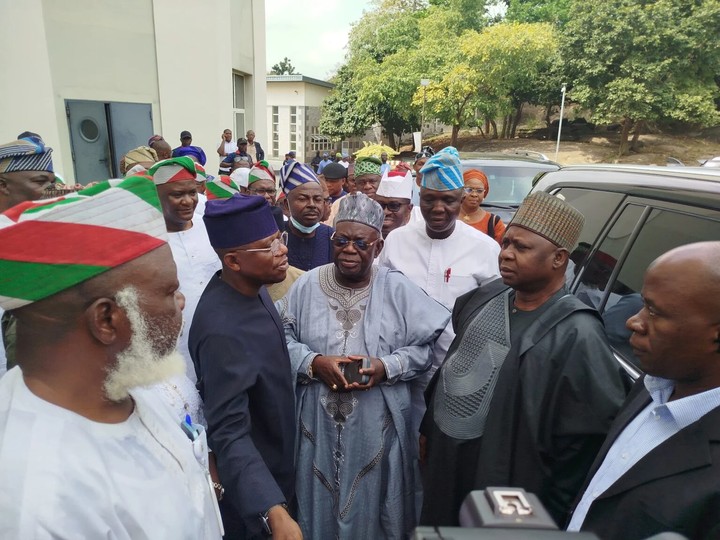
The leadership crisis rocking the Peoples Democratic Party (PDP) took a new turn as the Independent National Electoral Commission (INEC) announced that it would not recognise the Kabiru Turaki-led National Working Committee (NWC) of the party. The electoral body said its decision was based on existing court judgments and unresolved legal cases surrounding the party’s national leadership.
INEC made its position known in a letter dated December 22, 2025, and signed by its Secretary, Dr Rose Oriaran-Anthony. The letter was addressed to the PDP and responded to requests made by one faction of the party seeking official recognition.
According to INEC, it could not act on the demand to acknowledge or upload on its website the list of national officers said to have been elected at the PDP National Convention held on November 15 and 16, 2025, in Ibadan, Oyo State.
The commission explained that there are ongoing court cases and existing judgments related to the PDP leadership dispute. As a result, INEC said it would be improper and unlawful to recognise any factional leadership while the matter remains before the courts.
INEC’s decision is a major setback for the faction of the PDP led by former Minister of Special Duties, Kabiru Turaki, which is believed to be backed by Oyo State Governor, Seyi Makinde. The group had claimed to have emerged victorious at the Ibadan national convention and had written to INEC to formally recognise its officers.
However, INEC made it clear that it would not take sides in the ongoing crisis. The commission stressed that it must obey court rulings and respect due legal process, especially in matters involving party leadership and internal disputes.
“The commission’s position is guided by subsisting court decisions and pending litigation relating to the leadership crisis within the Peoples Democratic Party,” INEC stated in the letter.
The electoral body added that recognising any of the factions at this time could amount to contempt of court, given that the matter is still being decided by the judiciary.
The PDP, Nigeria’s main opposition party, has been battling internal divisions since losing the 2023 presidential election. Disagreements over zoning, leadership style, and control of party structures have worsened tensions among key party leaders and governors.
These disagreements eventually led to the emergence of different factions, each claiming legitimacy and control of the party’s national structure. The crisis has also resulted in several court cases filed by party members seeking clarification on who the rightful leaders are.
The Ibadan convention, which produced the Turaki-led NWC, was itself controversial. While the organisers described it as a valid national convention, other party stakeholders rejected it, saying it did not follow due process and violated court orders.
Some PDP leaders also argued that the convention was held without the approval of the party’s recognised organs and excluded key stakeholders from across the country. These concerns formed part of the legal battles now before the courts.
INEC’s refusal to recognise the outcome of the Ibadan convention means that the PDP remains without a universally accepted national leadership. This development is expected to further complicate the party’s efforts to rebuild and reposition itself ahead of future elections.
Under Nigeria’s electoral laws, INEC is required to recognise only properly constituted party executives that emerge in line with party constitutions and the law. The commission also relies heavily on court judgments when disputes arise within political parties.
In previous cases involving other parties, INEC has taken similar positions, refusing to recognise disputed party executives until courts give final rulings. This approach, according to INEC, helps to protect the integrity of the electoral process and prevent confusion.
Within the PDP, reactions to INEC’s decision have been mixed. Supporters of the Turaki-led faction have expressed disappointment, insisting that their convention was valid and reflective of the will of party members.
On the other hand, members of rival factions have welcomed INEC’s stance, describing it as a victory for the rule of law. They argue that any attempt to impose a leadership on the party without resolving the legal issues would only deepen the crisis.
Some senior party figures have renewed calls for reconciliation and dialogue, urging leaders of the PDP to put aside personal interests and work towards unity. They warn that prolonged infighting could weaken the party’s chances in future elections.
The role of governors in the PDP crisis has also been a major point of discussion. While governors are influential figures within the party, critics argue that excessive interference in party affairs has contributed to the current problems.
Governor Seyi Makinde of Oyo State, who is believed to support the Turaki-led NWC, has not officially reacted to INEC’s letter as of the time of filing this report. However, sources within the party say consultations are ongoing on the next line of action.
For now, INEC’s decision means that the PDP leadership crisis remains unresolved. The party faces the task of navigating legal battles while trying to maintain relevance as Nigeria’s leading opposition platform.