
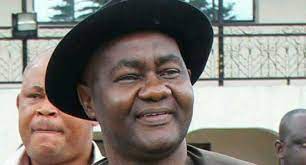
President Bola Tinubu has nominated former Rivers South-East Senator, Magnus Abe, as the new chairman of the Nigerian Upstream Petroleum Regulatory Commission (NUPRC). The nomination comes after the resignation of the previous chairman, Gbenga Komolafe.
The nomination and other appointments were announced on Monday through a statement by the Special Adviser to the President on Information and Strategy, Bayo Onanuga. The statement also revealed that President Tinubu had written to the Senate seeking confirmation of 21 nominees for the boards of the NUPRC and the Nigerian Midstream and Downstream Petroleum Regulatory Authority (NMDPRA).
“In the first letter, President Tinubu nominated Senator Magnus Abe to serve as the NUPRC board chair,” the statement said.
Magnus Abe is a former two-term senator who represented the Rivers South-East Senatorial District. He has previously served as a board member of the Nigerian National Petroleum Company Limited (NNPC Ltd.) and currently chairs the National Agency for the Great Green Wall. His experience in both legislative and executive roles in the energy sector positions him to lead the regulatory body at a time when the Nigerian oil and gas industry is undergoing reforms.
Abe’s nomination is part of a broader effort by President Tinubu to strengthen leadership at key oil and gas regulatory agencies in Nigeria. Other nominees for the NUPRC board include Engineer Paul Yaro Jezhi, a former Trade Union Congress chairman in Kaduna State, and Mr. Sunday Adebayo Babalola, a former deputy director at the defunct Department of Petroleum Resources (DPR). Both were nominated as non-executive commissioners.
Several executive commissioners were also nominated for the NUPRC board, each responsible for specialized areas. These include:
Muhammed Sabo Lamido – Finance
Edu Inyang – Exploration and Acreage
Justin Ezeala – Economic Regulation and Strategic Planning
Henry Darlington Oki – Development and Production
Indabawa Bashari Alka – Corporate Services and Administration
Mahmood Tijani – Health, Safety, and Environment
In addition, Ms. Olayemi Adeboyejo was nominated as Secretary and Legal Adviser of the NUPRC board.
In a separate development, President Tinubu nominated Mr. Adegbite Ebiowei Adeniji as the chairman of the Nigerian Midstream and Downstream Petroleum Regulatory Authority (NMDPRA) board. Adeniji is a lawyer with more than 30 years of experience in the energy sector. He has served as a technical adviser to the Minister of State for Petroleum and has worked with the World Bank on Nigeria’s oil and gas reforms. His appointment is expected to bring additional expertise and stability to the midstream and downstream regulatory sector.
The president has urged the Senate to approve the nominees expeditiously, emphasizing the need for the boards to function effectively in regulating Nigeria’s oil and gas industry. In his letters to the Senate, Tinubu charged all nominees to discharge their responsibilities professionally, noting that the appointments follow the recent appointment of chief executive officers (CEOs) for both regulatory agencies.
The NUPRC, established under the Petroleum Industry Act (PIA) 2021, is responsible for regulating upstream oil and gas operations in Nigeria, which include exploration, development, and production activities. The agency’s mandate includes ensuring compliance with safety and environmental standards, promoting investment in the sector, and protecting Nigeria’s petroleum resources.
Similarly, the NMDPRA regulates midstream and downstream petroleum activities. Its responsibilities cover pipelines, storage facilities, refineries, and marketing of petroleum products. The agency ensures efficient delivery of refined and processed petroleum products, enforces quality standards, and monitors pricing and distribution.
The appointments come at a critical time for Nigeria’s oil and gas industry, which faces challenges such as underinvestment in exploration, pipeline vandalism, theft, and the need to meet global environmental standards. Experts believe that strong leadership at NUPRC and NMDPRA is crucial for sustaining production, attracting foreign investment, and implementing reforms introduced under the PIA.
Magnus Abe’s nomination has generated reactions among political observers and oil industry stakeholders. Some see his experience as a former senator and board member as an asset that will help bridge gaps between the government, investors, and communities hosting oil operations. Others have called for transparency and accountability in the confirmation process, emphasizing that regulatory leadership should be guided by competence and not political considerations.
The confirmation by the Senate is expected to provide Abe and other nominees with the authority to fully operate in their respective roles. Once confirmed, the new NUPRC board will have the responsibility of supervising and regulating Nigeria’s upstream oil sector, ensuring compliance with laws and guidelines, and promoting sustainable development.
This development also reflects the administration’s focus on reforming the oil and gas sector, which remains Nigeria’s largest source of foreign revenue. With global oil prices fluctuating and the need for domestic energy security, regulatory efficiency has become a priority for the government.
The role of NUPRC chairman is particularly sensitive because it involves oversight of the activities of both local and international oil companies operating in Nigeria. The chairman is expected to ensure that companies comply with contractual obligations, pay appropriate taxes and royalties, and adhere to environmental and safety standards.
Similarly, the NMDPRA chairman will oversee downstream operations, including fuel distribution and refining. His role is critical in addressing issues such as fuel scarcity, product adulteration, and pipeline vandalism, which have been persistent challenges in the sector.
By sending 21 nominees for confirmation, President Tinubu aims to fill leadership gaps and ensure that both regulatory bodies operate efficiently. The appointments are part of broader efforts to stabilize the sector, improve governance, and attract investments in Nigeria’s oil and gas industry.
Once confirmed, Magnus Abe and his board members are expected to begin implementing policies and regulatory measures that align with the Petroleum Industry Act, address operational challenges, and ensure that Nigeria’s petroleum resources are managed transparently and sustainably.
The appointments also come amid calls for the government to diversify revenue sources, improve local content in the oil and gas industry, and strengthen oversight mechanisms. Analysts believe that an active and professional NUPRC and NMDPRA leadership can help achieve these objectives while promoting investor confidence and protecting Nigeria’s oil and gas resources.