
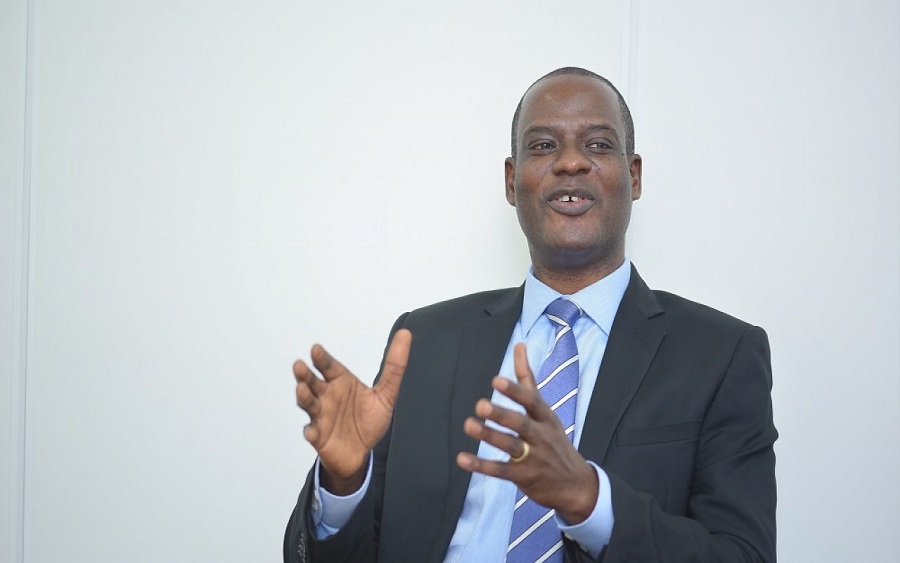
The Chairman of the Presidential Committee on Fiscal Policy and Tax Reforms, Mr. Taiwo Oyedele, has revealed that he has received threats to his life because of his role in driving Nigeria’s ongoing tax reforms. He said the threats are coming from individuals and groups who feel threatened by changes to a system that has long benefited a few at the expense of the country.
Oyedele made the disclosure in Abuja during a governance colloquium organised to mark the 50th birthday of the Special Adviser to the President on Policy and Coordination, Hajiya Hadiza Bala-Usman. The event brought together policymakers, technocrats and public servants to discuss governance, reforms and national development.
Speaking at the event, Oyedele said pushing reforms, especially tax reforms, requires courage because such changes often affect powerful and entrenched interests. According to him, Nigeria’s tax system has remained broken for decades, and efforts to fix it are usually resisted.
“Reforms are hard, and tax reforms are even harder. You need courage. I receive threats simply for trying to fix a broken system,” Oyedele said.
He explained that the threats reflect how difficult it is to change a system that many people do not trust and do not fully understand. He said Nigeria faces deep challenges such as weak tax compliance, poor understanding of how taxes are used, and widespread mistrust of government.
Oyedele noted that many Nigerians are suspicious of taxes because they do not see clear benefits in return. Roads, schools, hospitals and other public services are often in poor condition, making people question why they should pay taxes at all.
According to him, this lack of trust is one of the biggest obstacles facing tax reform in the country.
“Trust is the biggest problem. People don’t trust the government. They don’t believe their money will be used well,” he said.
He also pointed out that Nigeria’s tax revenue is very low compared to other countries with similar population sizes and economies. He said this reality makes comprehensive tax reform unavoidable if the country wants to grow and provide basic services for its citizens.
Experts have long noted that Nigeria has one of the lowest tax-to-GDP ratios in the world. This means that the government earns very little from taxes compared to the size of the economy. As a result, the country relies heavily on oil revenue and borrowing to fund its budget.
Oyedele said this situation is not sustainable and must change.
“Nigeria cannot continue like this. We need a tax system that works, that is fair, and that supports development,” he said.
Addressing public reactions to the reforms, Oyedele said many Nigerians misunderstand what the government is trying to do. He explained that contrary to public belief, the reforms are not about introducing new taxes everywhere.
“There is suddenly a national awareness, and people say the government has brought taxes all over the place, when in fact what we are doing is reducing the taxes they have been paying and harmonising them,” he said.
He explained that the old tax system was complex and confusing, with multiple taxes imposed by different levels of government. This often led to double taxation, harassment of businesses and loss of revenue.
According to him, the new reforms aim to simplify the system, remove overlapping taxes and make compliance easier for individuals and businesses.
Oyedele urged Nigerians who understand and support the reforms to speak out. He warned that when supporters remain silent, those who oppose change dominate the public space with misinformation and fear.
“If you support the reforms and keep quiet, those who are against it will control the narrative,” he said.
He admitted that pushing through the reforms carries serious risks, including political, economic and personal risks. He said reform leaders must be ready to face criticism, abuse and even threats.
“You need the courage to push through. You need the courage to take risks, because it’s very risky,” he added.
Oyedele compared past efforts to fix Nigeria’s tax system to using painkillers instead of proper treatment. He said earlier reforms only offered temporary relief and failed to address the root problems.
“What we have been doing all my adult life with the tax system was a pain reliever. It hasn’t taken us far. Now we’re doing the surgery. It will come with pain, but it is the only right thing to do,” he said.
Despite the challenges, Oyedele expressed optimism about Nigeria’s future. He said the level of commitment and coordination around the current reforms is unlike anything he has seen before.
He urged Nigerians to stay focused on the long-term benefits rather than short-term discomfort.
“This is the first time we are seeing this kind of momentum. We must not lose it,” he said.
The tax reforms Oyedele is overseeing are part of President Bola Tinubu’s broader economic agenda aimed at stabilising the economy, increasing revenue and reducing dependence on borrowing.
As part of the reforms, the Federal Government began enforcing a new tax regime on January 1, 2026. Four major laws were introduced to support the changes.
These include the Nigeria Tax Act 2025, the Nigeria Tax Administration Act 2025, the Nigeria Revenue Service Establishment Act 2025, and the Joint Revenue Board Establishment Act 2025.
The Nigeria Tax Act 2025 provides a clearer framework for taxes in the country, while the Tax Administration Act sets out how taxes should be collected and managed. The Nigeria Revenue Service Establishment Act strengthens the structure and powers of tax authorities, and the Joint Revenue Board Act improves coordination among federal, state and local tax bodies.
Government officials say the laws are designed to create a fairer, simpler and more transparent tax system that supports businesses and encourages voluntary compliance.
However, the reforms have also faced criticism. Some labour groups, small business owners and civil society organisations have raised concerns about timing, transparency and the potential impact on the poor.
Oyedele acknowledged these concerns and said dialogue remains important. He stressed that reforms should not be seen as punishment but as a necessary step to build a stronger country.
“Tax is not punishment. It is how we fund our future,” he said.
He also said improving tax administration would help reduce corruption, as clearer rules leave less room for abuse by tax officials.
As Nigeria continues to face economic pressure, including inflation, unemployment and rising public debt, analysts say effective tax reform could play a key role in stabilising government finances.
For now, Oyedele’s comments have drawn attention to the personal cost of pushing reforms in Nigeria. His revelation about threats highlights the resistance reformers often face and the difficult choices involved in changing long-standing systems.
Still, he remains firm in his resolve, saying the risks are worth it if Nigeria is to achieve long-term growth and stability.
“The work is hard, but it must be done,” he said.