
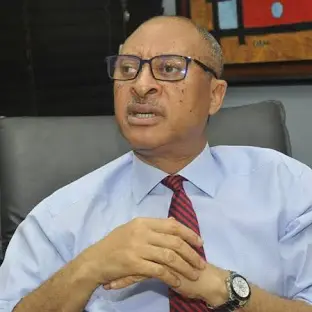
Professor of political economy and public affairs analyst, Pat Utomi, has said that if he were Nigeria’s president, he would drastically reduce the cost of governance and focus more on policies that support production and economic growth.
Utomi made the statement during an interview on Sunday Politics, a programme aired on Channels Television, where he spoke on the current state of the nation, the economy, and governance challenges facing Nigeria.
According to him, the high cost of running government in Nigeria does not make sense, especially at a time when millions of citizens are struggling with rising prices, unemployment, and declining living standards.
“It does not make sense to run a government at the expense of the masses who are facing hardship,” Utomi said.
He stressed that one of his first actions as president would be to significantly cut the cost of governance, which he described as “way too high.”
Nigeria has often been criticised for spending a large portion of its budget on recurrent expenses such as salaries, allowances, official vehicles, and the maintenance of government offices, leaving limited funds for development projects. Over the years, experts and civil society groups have called for a leaner government structure to free up resources for education, healthcare, infrastructure, and job creation.
Utomi said reducing the cost of governance would help redirect public funds to areas that directly improve the lives of ordinary Nigerians.
“I will still dramatically slice the cost of governing in Nigeria,” he said. “We are spending too much on running government and too little on helping people produce and earn a living.”
The professor also emphasised the need for strong industrial policies to stimulate production across the country. According to him, Nigeria is not doing enough to support local production, which is key to economic growth, job creation, and reduced dependence on imports.
“We’re not doing enough to stimulate production,” Utomi said. “We need industry policy that supports manufacturing, agriculture, and small businesses.”
Nigeria’s economy has long relied heavily on crude oil exports, making it vulnerable to global oil price shocks. Successive governments have spoken about economic diversification, but progress has been slow. Many factories have shut down due to high production costs, poor infrastructure, and unstable power supply.
Utomi argued that without deliberate policies to support producers, tax reforms alone would not fix the economy.
On tax reforms, Utomi said he would not remove them, noting that taxes are important for national development. However, he warned that tax revenue should not be raised simply to fund wasteful spending.
“I’m not going to remove tax reforms. They are important. We need them,” he said. “But I’m going to make sure that they are not revenues for people to spend.”
He explained that tax reforms must go hand in hand with strict controls on government spending to ensure that public funds are used wisely.
In recent times, Nigerians have expressed concern over new and existing taxes, especially as inflation and cost of living continue to rise. Many small business owners say high taxes and levies are hurting their operations, while workers complain that their incomes are not keeping pace with rising expenses.
Utomi said government must be sensitive to the condition of citizens and ensure that taxes do not become an additional burden on the poor.
He also called for constitutional reforms that would limit how government spends money. According to him, Nigeria’s current system allows for excessive spending without enough checks and balance.
“We need to look at constitutional reforms that limit how you spend,” he said.
Utomi argued that setting clear limits on government spending would promote discipline and accountability at all levels of government. He said such reforms would help prevent waste and corruption and ensure that funds are directed toward national priorities.
Another key issue Utomi raised was the need for a balanced budget. He said government should avoid excessive borrowing and ensure that spending is aligned with revenue.
“Those kinds of money you raise, we need a balanced budget,” he said. “All of those are the issues we need to bring into consideration.”
Nigeria has struggled with budget deficits for many years, often borrowing to cover gaps between revenue and spending. This has led to a growing public debt, with a significant portion of government revenue now going into debt servicing.
Utomi’s comments come at a time when Nigerians are debating the direction of governance and economic policy under the current administration. Rising food prices, fuel costs, and unemployment have increased public pressure on leaders to deliver practical solutions.
As a respected academic and former presidential candidate, Utomi has long been vocal on issues of governance, leadership, and economic reform. He has served as an adviser to past governments and is known for advocating ethical leadership and people-focused policies.
However, others note that cutting the cost of governance requires political will, as it may involve reducing the number of political appointments, merging agencies, and cutting perks enjoyed by public officials.
Despite the challenges, Utomi said these steps are necessary if Nigeria is to move forward.