
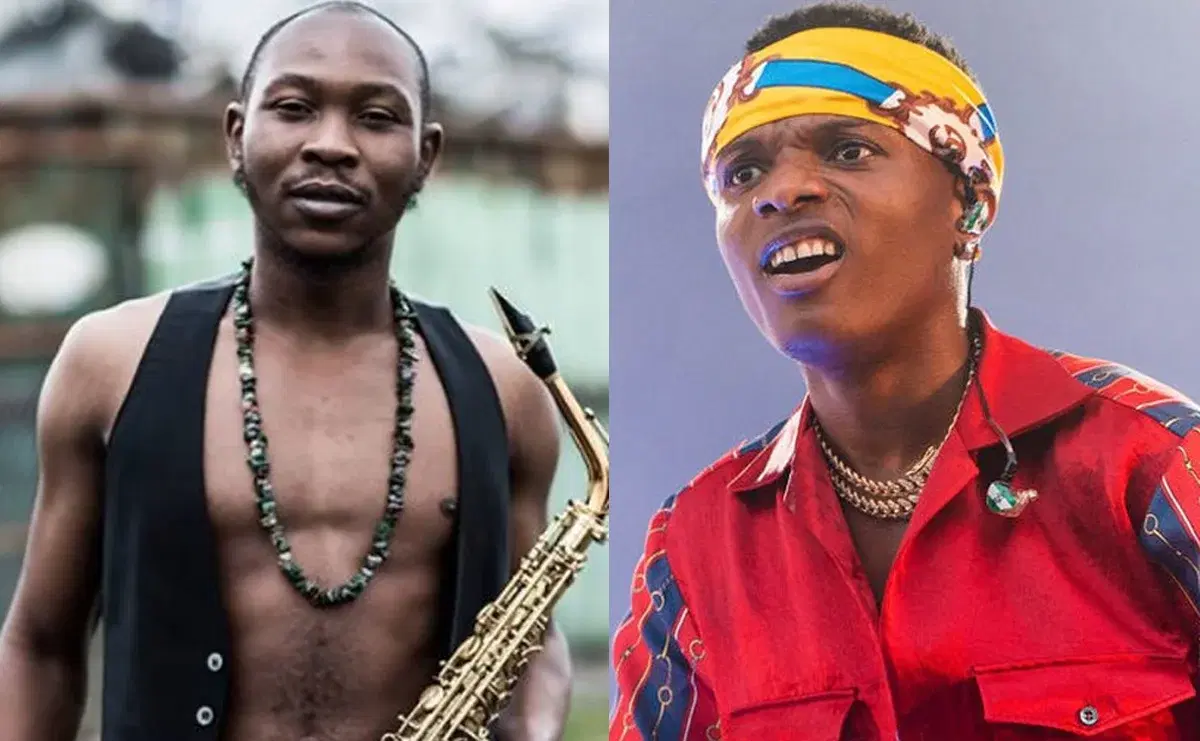
A fresh controversy involving two well-known figures in Nigerian music, Wizkid and Seun Kuti, has taken over social media and entertainment discussions across the country. The issue began after an alleged post by Afrobeats star Wizkid surfaced online, where he was quoted as using harsh words against Seun Kuti, the youngest son of late Afrobeat pioneer Fela Anikulapo-Kuti.
The post, which has been widely shared on Instagram and X (formerly Twitter), reportedly described Seun Kuti as a “hungry bastard” and “a fool at 40,” while also claiming that Wizkid’s global success is greater than that of Seun Kuti’s famous father. Though Wizkid has not officially confirmed or denied making the statement, screenshots of the alleged post have continued to trend, drawing strong reactions from fans, critics, and music lovers.
The exchange did not start suddenly. It followed weeks of tension online, largely driven by comments made by Seun Kuti during interviews and public discussions. Seun, who is known not just as a musician but also as a social activist, has often spoken against Nigerian celebrities who, in his view, enjoy wealth and fame without speaking up on social and political issues affecting ordinary people.
In some of his recent remarks, Seun criticised what he described as the silence of many popular entertainers on matters such as bad governance, poverty, and police brutality. Although he did not mention Wizkid by name, many fans believed the comments were aimed at top Afrobeats stars, including the Grammy-winning singer. This belief led to heated arguments between fans of both artistes online.
Wizkid, whose real name is Ayodeji Ibrahim Balogun, is one of Africa’s biggest music exports. Rising from Lagos streets to global stages, he has won several international awards and worked with major global stars such as Drake, Beyoncé, and Justin Bieber. His supporters often describe him as a symbol of Nigerian success on the world stage, someone who has helped push Afrobeats into international spotlight.
On the other hand, Seun Kuti carries a different kind of weight. As the son of Fela Anikulapo-Kuti, the late Afrobeat legend who used music as a weapon against oppression and military rule, Seun has continued his father’s tradition of blending music with activism. As leader of Egypt 80, Fela’s former band, Seun performs songs that openly criticise corruption, inequality, and abuse of power in Nigeria and beyond.
Because of these differences, the Wizkid–Seun Kuti situation has reopened long-standing debates within Nigerian music circles. One major question being asked is whether modern Afrobeats stars should be more vocal about social and political issues, like the Afrobeat pioneers of the past, or whether their role is simply to entertain.
Following the alleged Wizkid post, reactions were sharply divided. Some fans praised Wizkid for defending himself, arguing that Seun Kuti often attacks successful entertainers unfairly. They said Wizkid has contributed positively to Nigeria’s image abroad and should not be pressured to be an activist if he chooses not to be.
Others, however, condemned the language allegedly used by Wizkid, calling it insulting and unnecessary. Many felt that bringing Fela Anikulapo-Kuti into the argument crossed a line, given his importance in Nigeria’s cultural and political history. To them, regardless of any disagreement, Fela’s legacy deserved respect.
Several commentators also pointed out that the argument reflects a deeper generational divide. Afrobeats, which dominates today’s music charts, focuses largely on love, lifestyle, and celebration, while Afrobeat, pioneered by Fela, was deeply political and confrontational. To some observers, the clash between Wizkid and Seun Kuti represents these two worlds colliding.
As of the time of filing this report, Seun Kuti has not publicly responded to the alleged Instagram post. Wizkid has also remained silent since the screenshots began circulating. Their silence has not slowed the debate, as social media users continue to analyse old interviews, lyrics, and past statements from both men.
The controversy has also drawn attention to the pressure placed on celebrities in Nigeria. Many young Nigerians look up to music stars as role models and expect them to speak on national issues. At the same time, artistes argue that they are not politicians and should not be forced into roles they did not choose.
For now, the Wizkid–Seun Kuti issue remains unresolved. Whether either party will address the matter directly is still unclear. What is certain is that the conversation it has sparked goes beyond personal insults. It touches on identity, history, responsibility, and the changing face of Nigerian music.