
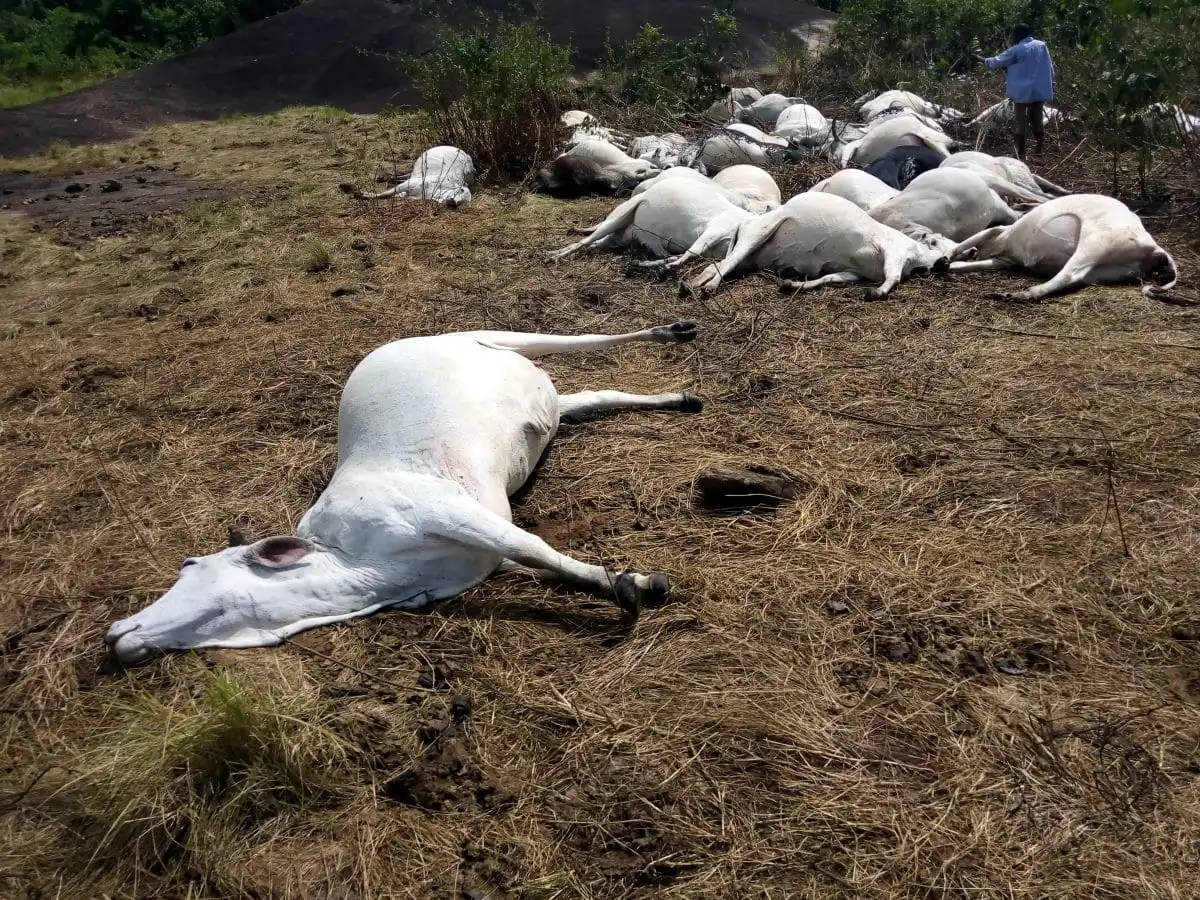
There is rising tension in Ataroga, a border community between Ebonyi and Benue states, following an attack by suspected gunmen on Fulani herders that led to the killing of more than 30 cows. The incident, which has left residents in fear, occurred in the early hours of Wednesday when the sound of gunshots reportedly woke up families in the community.
Ataroga is an Izzi-speaking community located in Ado Local Government Area of Benue State, straddling the border with Ebonyi. Residents say the area has enjoyed relative peace for decades, with herders and villagers coexisting peacefully.
Speaking to journalists, the village head, Chief Nwedoga James, said the attack threw the community into panic. “We were woken up early in the morning by the sound of gunshots. Families ran into nearby bushes out of fear. By morning, we discovered that unknown gunmen had attacked the herders and killed about 30 cows,” he said.
Chief Nwedoga further explained that following the attack, the herders accused some villagers of masterminding the incident. This led to reprisal actions and clashes in the community, prompting the police to intervene and arrest seven community members. Those detained were taken to Igumale, where they remain in custody as investigations continue.
“The police arrested seven people, who were taken to Igumale,” Chief Nwedoga said. He added that despite intervention by the Chairman of Ado Local Government Area, who appealed to the herders not to carry out further attacks while investigations continued, the situation in the village has worsened.
According to the village head, herders have since been destroying houses, looting properties, and harassing residents. “We have lived peacefully with these herders for years. We are innocent, yet our houses are being destroyed and residents harassed. We are pleading with our governors to come to our rescue,” he said, appealing to the governors of Ebonyi and Benue states, Francis Nwifuru and Hyacinth Alia, respectively, for urgent intervention.
Other stakeholders in the community, including Mr Odebe Odegu and a church leader, Mr Anthony Nwibo, described the situation as disturbing. They called on leaders of the two states and the Deputy Chief Whip of the Senate, Senator Onyekachi Nwebonyi, to intervene immediately.
“We are in serious trouble. The Izzi people here are treated like strangers. We are neither fully Benue nor Ebonyi. We are being accused of a crime we did not commit,” they lamented. “Our people are being attacked, our houses destroyed, and our properties looted. Herdsmen are looting homes and harassing residents. We need urgent help.”
Victims of the alleged looting have also come forward to share their experiences. Mr Lawrence Ogodo, a chemist shop owner, and Mr Joseph Agashi, a provision store operator and pharmacist, said their shops were looted at Aswa Chibueze and Igwebuike markets, along with over ten other shops in the area. Residents described seeing herders move from house to house, taking goods and valuables.
The attack has deepened fears among residents, many of whom have fled their homes to avoid further violence. Community members say that while herders and villagers had maintained peaceful coexistence for years, incidents like this threaten to destabilize the community and strain relationships along the border.
Border communities like Ataroga are often caught between the laws and jurisdictions of two states, making it difficult to resolve conflicts quickly. Security analysts say that clashes between herders and villagers are sometimes fueled by misunderstandings, territorial disputes, or retaliation for previous incidents. However, attacks involving the killing of livestock and destruction of property are often seen as a serious escalation.
In the past, Ebonyi and Benue states have experienced sporadic clashes involving herders and local communities, though government authorities have occasionally intervened to restore peace. Analysts note that early intervention by state governments and traditional leaders is critical in preventing small disputes from escalating into violence.
Chief Nwedoga urged both state governments to take decisive action to restore peace in Ataroga. He emphasized the need for a coordinated response involving security agencies, local authorities, and community leaders. “We appeal to our governors to come to our rescue before the situation escalates further. Lives and properties are at stake,” he said.
The community has also called for the return of the detained residents once investigations confirm their innocence. Many villagers worry that ongoing tensions could lead to further confrontations, endangering more lives and property.
The situation in Ataroga is being closely monitored by authorities in both states. While the police have already made arrests, residents say they are concerned that without proper intervention, the violence may spread to neighboring villages along the border.
“This incident has created fear and uncertainty in our community. People are afraid to go about their daily activities. Shops have been looted, homes destroyed, and our livestock killed,” said Chief Nwedoga. He appealed to security agencies to maintain a presence in the community to prevent further attacks.
Community leaders and stakeholders have urged the government to address the underlying issues that contribute to violence between herders and villagers. They called for dialogue between the two groups, as well as policies that protect residents’ lives and properties while ensuring peaceful coexistence.
As of the time of filing this report, seven community members remain in detention, and residents continue to live in fear of further violence. The incident has left the community calling for urgent action to prevent more bloodshed and ensure the safety of lives and property along the Ebonyi–Benue border.