
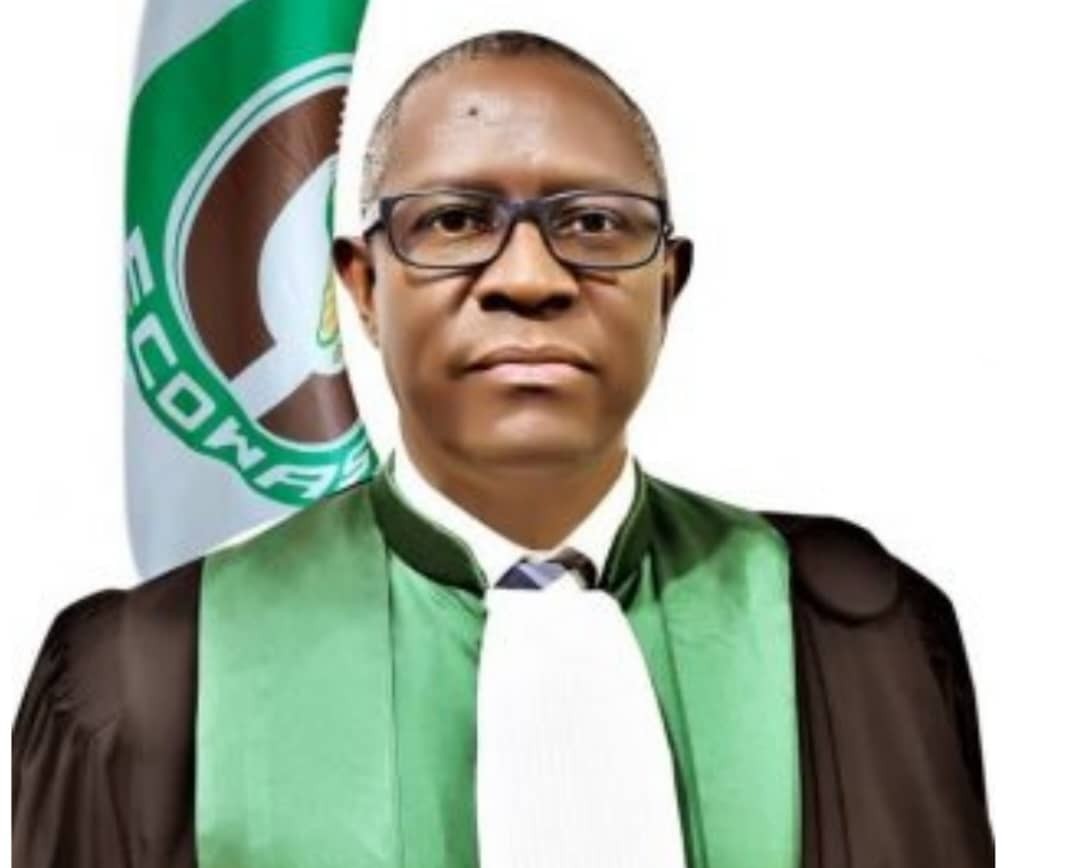
The President of the ECOWAS Court of Justice, Justice Ricardo Gonçalves, has called on civil society organisations (CSOs) to take a leading role in ensuring that the court’s judgments are enforced across member states.
Justice Gonçalves made the call on Wednesday in Abuja while addressing Nigerian civil society groups on the second day of the court’s engagement with non-state actors. He warned that justice delivered on paper but not enforced in practice remains incomplete.
“Civil society plays an absolutely central role in the enforcement of this court’s decisions,” he said.
The ECOWAS Court is the judicial arm of the Economic Community of West African States (ECOWAS), a regional body made up of 15 West African countries. The court hears cases involving human rights violations and breaches of Community law by member states.
Over the years, the court has delivered several landmark judgments, especially in cases related to unlawful detention, freedom of expression, and violations of fundamental rights. However, many of these rulings have faced delays or challenges in enforcement at the national level.
Justice Gonçalves stressed that enforcement goes beyond the responsibility of governments and institutions. According to him, active civic engagement is necessary to ensure that court decisions are respected and implemented.
He described Nigerian civil society as one of the most vibrant on the continent and said its strength makes sustained dialogue on regional justice both necessary and timely.
Justice Gonçalves said enforcement is not merely an administrative duty but also a civic responsibility. He explained that civil society groups can help bridge the gap between court rulings and real-life outcomes.
“Enforcement is not merely an administrative matter; it is also a matter of civic monitoring, strategic and responsible advocacy, public awareness, and constructive, law-based engagement,” he said.
He listed several ways CSOs can contribute. These include monitoring how governments comply with judgments, producing independent periodic reports, raising awareness among national authorities, promoting strategic litigation, and educating citizens about the importance of Community justice.
“In modern times, civil society serves as the bridge between judicial decisions and their practical realisation,” he added.
The ECOWAS Court’s judgments are legally binding on all member states. Once a judgment is delivered, it is final and expected to be enforced immediately. However, the court does not have its own enforcement arm. It relies on national governments and institutions to carry out its decisions.
This has created a major challenge across West Africa. In some cases, compensation awarded to victims of human rights violations has not been paid for years. In other cases, court orders directing governments to change certain policies or release detained persons have faced delays.
Justice Gonçalves expressed confidence that Nigeria, as a founding member of ECOWAS, has the institutional capacity and civic strength to become a regional example in enforcing the court’s decisions.
Nigeria hosts the ECOWAS headquarters and the court itself in Abuja. As one of the largest economies and most populous countries in the region, Nigeria plays a key role in shaping the direction of ECOWAS policies.
The judge urged closer collaboration between public institutions and civil society groups. He said enforcement should be seen as a collective effort to strengthen the rule of law and deliver justice to citizens across the region.
Speaking on behalf of civil society groups, Mojirayo Ogunlana, Executive Director of Digicivic Initiative, said CSOs are ready to work with governments and regional institutions to improve enforcement.
“Civil society is not here merely to criticise. We are partners in strengthening justice systems,” she said.
Ogunlana noted that the authority of any court depends not only on the quality of its judgments but also on whether states comply with them.
“If the ECOWAS Court is to remain meaningful to ordinary citizens, its judgments must translate into real outcomes such as compensation paid, rights restored, and violations prevented from recurring,” she said.
She described enforcement as both a legal and moral obligation for member states of ECOWAS, adding that belonging to a rules-based regional community requires respect for shared laws and institutions.
Also speaking at the event, Yusuf Danmadami, Acting Registrar for Appeals, Arbitration and Enforcement at the court, described the engagement as productive. He said several proposals were raised during discussions with civil society representatives.
According to him, the court is working on a draft comprehensive plan aimed at improving enforcement of judgments across member states. The plan, he said, will seek to strengthen cooperation between the court, national authorities, and civic groups.
Since its human rights mandate was expanded in 2005, individuals and non-governmental organisations have been able to file cases directly before the court without first going through national courts. This has made the ECOWAS Court more accessible than many other regional courts.
As a result, citizens from different West African countries have approached the court to challenge unlawful arrests, restrictions on free speech, electoral disputes, and other alleged violations.
However, without effective enforcement, court victories may remain symbolic.
The Abuja meeting signals a renewed effort by the ECOWAS Court to strengthen ties with non-state actors and improve the implementation of its judgments.
For many West Africans, access to justice at the regional level offers hope when national systems fail. But as Justice Gonçalves pointed out, justice must not end with a written judgment.
As ECOWAS continues to promote regional integration, peace, and good governance, the enforcement of court decisions will remain a key test of its commitment to the rule of law.
The coming months are expected to see further consultations between the court, governments, and civil society groups as plans for stronger enforcement are developed. Whether these efforts will lead to faster compliance across member states remains to be seen.