
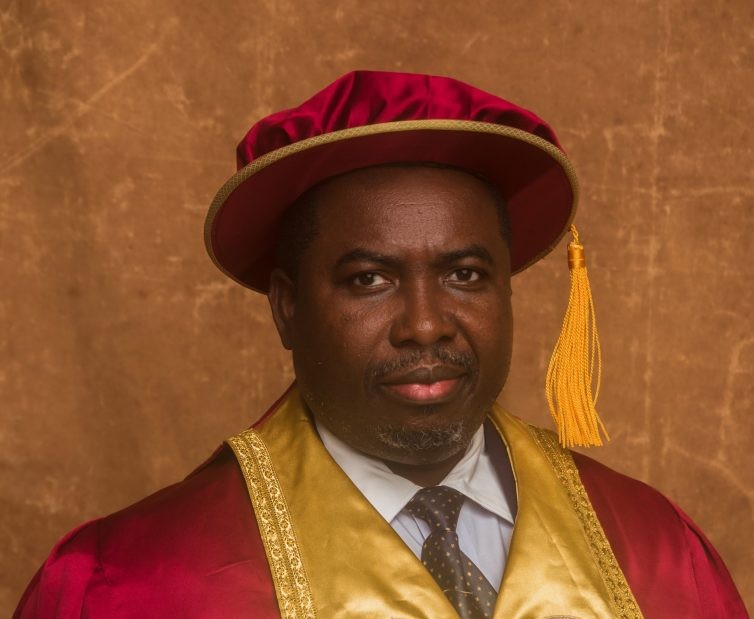
The Chairman of the Independent National Electoral Commission (INEC) in the Federal Capital Territory (FCT), Prof. Joash Amupitan (SAN), has warned that vote buying will not be tolerated in the forthcoming area council elections scheduled for February 21, 2026.
Amupitan gave the warning on Wednesday in Abuja during a high-level stakeholders’ forum attended by political parties, security agencies, civil society groups and the media. He said the commission was fully prepared to conduct a peaceful, transparent and credible election across the six area councils of the FCT.
According to him, more than 1.6 million registered voters are expected to participate in the polls. Voting will take place in 2,822 polling units, while 570 candidates will contest for 68 elective positions.
Amupitan said vote trading remains a serious threat to democracy and must be stopped. He warned that any person caught buying or selling votes would be arrested and prosecuted.
“Any individual found buying or selling votes will be apprehended and dealt with in accordance with the law,” he said.
“Vote trading undermines the sanctity of the ballot and erodes public confidence in democratic institutions. It must not be tolerated.”
To enforce this, INEC said officials of the Economic and Financial Crimes Commission (EFCC) and the Independent Corrupt Practices and Other Related Offences Commission (ICPC) will be present during the election. Their role will be to monitor activities around polling units and deter financial inducement of voters.
Vote buying has been a major concern in recent elections across Nigeria. In several past elections, there were reports of politicians offering cash or other incentives to voters in exchange for support. Civil society organisations have repeatedly called on security agencies to clamp down on the practice.
Amupitan said INEC is determined to protect the integrity of the ballot in the FCT and ensure that voters make their choices freely.
The INEC chairman also announced that the Bimodal Voter Accreditation System (BVAS) would be deployed in all polling units. The BVAS device is used to verify voters through fingerprint and facial recognition before they are allowed to vote.
He explained that election results would be uploaded in real time to the INEC Result Viewing (IReV) portal. This system allows members of the public to view results online as they are uploaded from polling units.
INEC introduced BVAS and IReV in recent elections as part of efforts to improve transparency and reduce fraud. While there were challenges in some past polls, the commission said it has worked to improve the technology and logistics.
Amupitan assured stakeholders that lessons from previous elections have been taken into account to ensure a smoother process on February 21.
To avoid delays, INEC said it would deploy 1,132 vehicles, 620 motorcycles and 14 boats for the movement of personnel and materials across the FCT. The chairman stressed that there must be no logistical lapses on election day.
Polling units are expected to open at 8:30 am. Amupitan said INEC held consultations with transport unions to ensure timely distribution of materials to all polling units.
In addition to electoral officials, security agencies will be deployed across the territory. Although he did not list all the agencies present at the forum, previous elections in the FCT have involved the police, the Nigeria Security and Civil Defence Corps and other security bodies working together.
Amupitan urged security personnel to remain professional and impartial throughout the exercise.
The INEC chairman also addressed concerns about bias. He said the commission does not favour any political party or candidate.
“INEC does not have a political party and does not have a preferred candidate,” he said. “Our mandate is clear: to provide the enabling environment for residents of the Federal Capital Territory to freely choose their representatives.”
He called on political parties, candidates and their supporters to conduct themselves peacefully before, during and after the election. He warned against violence, hate speech and any act capable of disrupting the process.
The FCT area council elections are significant because the Federal Capital Territory does not have a state governor like other states in Nigeria. Instead, it has six area councils that function like local governments.
The elections will hold in Abuja Municipal Area Council, Bwari, Gwagwalada, Kuje, Kwali and Abaji.
Chairmen and councillors elected in these councils are responsible for grassroots development, including primary education, health centres, sanitation and local roads.
With over 1.6 million registered voters, the outcome of the polls will reflect the political mood within the capital territory.
Amupitan disclosed that 89 observer groups and 700 journalists have been accredited to monitor the exercise. The presence of observers and media is expected to strengthen public confidence in the process.
Election observers usually assess whether the voting process meets acceptable standards. Their reports often highlight strengths and weaknesses in the system and offer recommendations for improvement.
The INEC chairman said the commission remains committed to continuous improvement of Nigeria’s electoral system.
As the election date approaches, campaign activities have intensified across the FCT. Political parties are holding rallies and engaging voters in different communities.
Amupitan urged residents to come out peacefully and exercise their civic responsibility without fear. He assured voters that adequate measures have been put in place to protect them and their votes.
He also appealed to community leaders and stakeholders to help maintain peace in their areas.
For many residents, the election offers a chance to choose leaders who will address local challenges such as poor roads, waste management, and access to healthcare.
As Nigeria continues to strengthen its democracy, the conduct of the FCT area council elections will serve as another test of the country’s electoral reforms. With security agencies on alert and anti-corruption bodies on ground, attention is now focused on whether the February 21 polls will meet public expectations for fairness and transparency.