
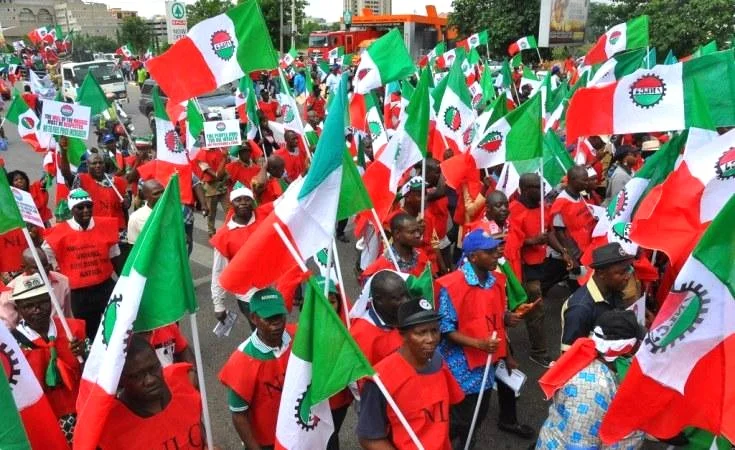
Members of organised labour on Thursday staged a protest at the Lagos office of the National Agency for Food and Drug Administration and Control (NAFDAC), as a dispute over the closure of factories and enforcement of a ban on certain alcohol products entered its seventh day.
The protest took place at the agency’s Isolo office in Lagos, where members of the Nigeria Labour Congress (NLC), the Trade Union Congress (TUC), and the Food, Beverage and Tobacco Senior Staff Association (FOBTOB) gathered early in the morning.
Chanting “No work for us, no work for you,” the protesters blocked the entrance to the office from about 7:00 a.m., preventing staff from gaining access to the premises for nearly two hours.
Operations at the office were temporarily suspended as workers were unable to enter the compound. The protest, however, remained peaceful, with no reports of violence or destruction of property.
By around 11:00 a.m., officers of the Nigeria Police Force from the Odi-Olowo Division arrived at the scene. They intervened and reopened the gate, allowing staff to resume work.
The industrial action is linked to NAFDAC’s enforcement of a ban on sachet alcohol and 10cl PET bottled alcoholic drinks. The ban, which had earlier been announced by the agency, is aimed at reducing the consumption of small-sized alcohol products, especially among young people.
NAFDAC has argued in the past that sachet alcohol and small plastic bottles are easily accessible and affordable, making them popular among minors and low-income earners. Public health experts have also raised concerns about alcohol abuse and its social impact.
However, labour unions say the manner of enforcement has led to the closure of many indigenous factories, depots, and warehouses across the country. They claim that the action has caused widespread job losses and economic hardship.
According to union leaders, some factories were sealed even when they were producing items not covered by the ban. They described the enforcement as excessive and harmful to local businesses.
Speaking during the protest, the National Secretary of FOBTOB, Jeffery Igein, said the unions would continue their action until their concerns are addressed.
“This is Day 7, and we are not backing down. We will continue until our grievances are fully acknowledged,” he said.
Hundreds of workers stood outside the NAFDAC office holding placards and chanting solidarity songs. Some of the placards carried messages calling for the reopening of sealed factories and the reinstatement of dismissed workers.
The unions are demanding the immediate reopening of affected facilities and the reversal of staff dismissals that followed the shutdown of factories.
They also called for dialogue between regulators and industry players to find a solution that protects public health without destroying jobs.
The Secretary of the TUC, Comrade Anthony Oyaga, criticised the enforcement under NAFDAC Director-General, Prof. Mojisola Adeyeye.
He said indigenous manufacturing facilities were being shut down without proper consideration of the wider economic impact.
“Factories, depots, and warehouses, including those storing lawful products not related to the banned items, are being sealed. This is not proper regulation. It is causing serious economic damage,” Oyaga said.
According to the unions, the shutdown of factories is affecting not only direct employees but also many others in the supply chain. These include transporters, raw material suppliers, distributors, market traders, artisans, warehouse workers, and logistics operators.
They warned that continued closures could increase unemployment and worsen poverty, especially among young people.
“An economy cannot grow when industries are closed instead of being properly regulated,” Oyaga added.
Nigeria is currently facing economic challenges, including rising inflation, high cost of living, and unemployment. Many households are struggling with increased prices of food, fuel, and basic goods.
Labour leaders argue that shutting down local factories at a time like this will further weaken the economy and reduce opportunities for workers.
They also expressed concern that job losses could push some youths into crime and other social problems.
In recent years, the Federal Government has spoken about the need to support local manufacturing and reduce dependence on imports. The unions say that policies should encourage growth and job creation, not lead to more factory closures.
FOBTOB and its allies called on President Bola Tinubu, the National Assembly, state governors, traditional rulers, religious leaders, and civil society groups to intervene in the dispute.
In a statement read during the protest, the union said: “We are not criminals. We are workers, producers, parents, and taxpayers. We are Nigerians.”
The unions insisted that they support proper regulation of the industry but want it done through dialogue and clear guidelines, not what they described as sudden and harsh enforcement.
They urged NAFDAC to engage stakeholders and work out a transition plan that will protect both public health and jobs.
Although NAFDAC officials did not address the protesters directly during the demonstration, the agency has in the past defended its actions. It maintains that its mandate is to regulate and control the manufacture, importation, exportation, distribution, advertisement, sale, and use of food, drugs, cosmetics, and other regulated products.
The agency has said that the ban on sachet alcohol was introduced to reduce abuse and protect vulnerable groups.
Public health advocates argue that alcohol abuse contributes to road accidents, domestic violence, and other social issues. They say regulation is necessary to protect public safety.
As the protest entered its seventh day, it remains unclear how soon both sides will reach an agreement.
Union leaders said demonstrations would continue if their demands are not met. However, they stressed that their actions would remain peaceful.
Workers at the Isolo office were eventually allowed to resume duties after police intervention, but the tension between regulators and labour groups is yet to be resolved.
For many of the protesting workers, the issue is about survival.
“We just want to work and earn a living,” one protester said. “If factories remain closed, how will families survive?”

