
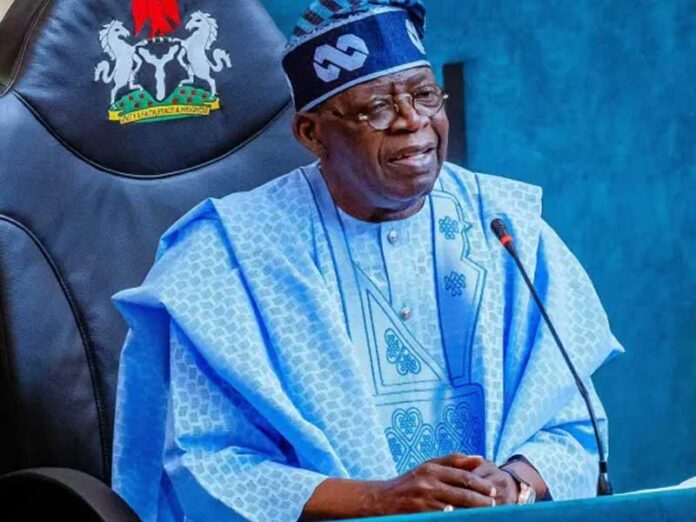
President Bola Tinubu has dismissed claims that he is behind the recent wave of defections from opposition parties to the ruling All Progressives Congress (APC), saying he has not pressured or forced anyone to leave their political platforms.
The President made the remarks on Wednesday during an interfaith Iftar with senators at the Presidential Villa in Abuja. The event, which brought together lawmakers from different religious backgrounds, was part of activities marking the holy month of Ramadan.
Speaking at the gathering, Tinubu addressed accusations that his administration is working to weaken opposition parties by encouraging their members to cross over to the APC.
“Critics must talk,” the President said. “When they accused me of killing the opposition, but I didn’t have a gun. I could have given myself a licence when I have the authority. But I didn’t.”
In recent months, several politicians from opposition parties have defected to the APC, the party that brought Tinubu to power in the 2023 general election. These defections have sparked debate across the country, with some opposition leaders alleging that pressure and intimidation may be involved.
Nigeria operates a multi-party system, with parties such as the Peoples Democratic Party (PDP), Labour Party (LP), and others providing opposition voices in the National Assembly and state governments.
Political defections are not new in Nigeria. Since the return to civilian rule in 1999, lawmakers and governors have switched parties for various reasons, including internal party disputes, political survival, and alignment with the party in power at the federal level.
However, critics argue that frequent defections can weaken opposition parties and reduce healthy political competition.
While denying any wrongdoing, Tinubu said he could not blame politicians who decided to leave what he described as a “sinking ship.”
“But I can’t blame anybody for jumping out of a sinking ship if they did,” he said.
His comment appeared to suggest that some opposition politicians may have chosen to defect due to internal crises within their parties.
Several opposition parties have faced leadership disputes and court cases since the 2023 elections. Analysts say such internal challenges sometimes push members to seek stability elsewhere.
Tinubu, however, maintained that he has not used state power to force anyone to join the APC.
The President also used the occasion to highlight the security challenges facing the country. He mentioned terrorism and banditry as major problems affecting national stability.
“What we have faced in this challenging period of this country, the terrorism and banditry, is causing us havoc,” he said.
Nigeria has battled insecurity in different regions for over a decade. In the North-East, insurgency linked to extremist groups has led to thousands of deaths and displacement. In the North-West and parts of the North-Central, banditry and kidnapping have remained serious concerns.
Security challenges often create political tension, as citizens expect leaders to provide safety and stability.
Tinubu’s administration has repeatedly pledged to strengthen security operations and improve intelligence gathering. The government has also increased funding for security agencies and sought cooperation with neighbouring countries.
At the Iftar gathering, Tinubu urged political leaders to focus on unity and cooperation instead of conflict.
He said Nigeria’s founding fathers envisioned a constitutional democracy that would bring people together, not divide them.
“And we should pull together, unite in a way that our forefathers contemplated to bring about a constitutional democracy and pull us together. They didn’t say we should fight. It’s a good thing that we are working in harmony,” he said.
Interfaith Iftar events are often used by Nigerian leaders to promote religious tolerance and national unity. Nigeria is a diverse country with large Muslim and Christian populations, and political leaders frequently stress the need for peaceful coexistence.
Some civil society groups have warned that a strong democracy requires a vibrant opposition that can question government policies and offer alternative ideas.
Others argue that defections are part of normal political processes and that politicians have the constitutional right to join any party of their choice.
The Nigerian Constitution guarantees freedom of association, including the right to belong to any political party. However, it also contains provisions that can affect elected officials who defect, depending on the circumstances.
In the past, court rulings have addressed whether lawmakers who defect should retain their seats, especially when their original parties are not divided.
As Nigeria moves closer to the midpoint of Tinubu’s first term, political realignments are likely to continue. Analysts say politicians often reposition themselves ahead of future elections.
For now, the President insists that he is not behind the movement of politicians into the APC.
His message at the Presidential Villa was clear: criticism is part of democracy, but accusations of wrongdoing must be backed by evidence.

