
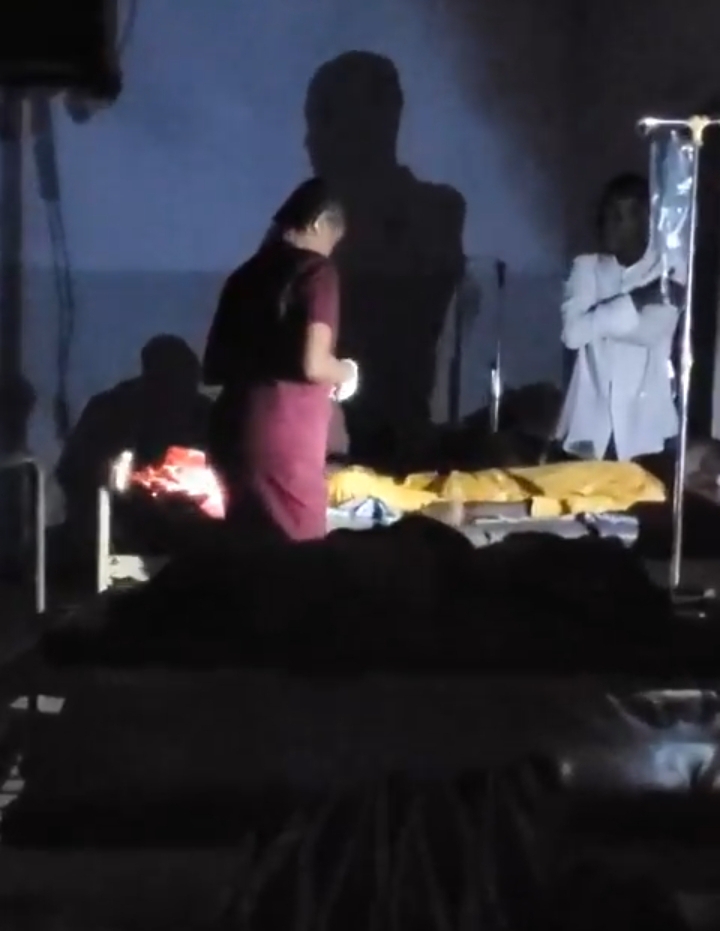
A video showing hospital workers using phone flashlights to treat a patient during a power outage in Suleja, Niger State, has sparked concern among many Nigerians about the condition of public healthcare facilities across the country.
The video, which has been widely shared on social media in recent days, shows medical workers attending to a patient in near darkness inside a hospital ward.
In the clip, nurses and other staff members can be seen using the light from their mobile phones and small torchlights to illuminate the patient’s bed while carrying out their duties.
The footage appears shaky and dim, showing the difficult working conditions inside the ward. At some points in the video, voices speaking Hausa can be heard in the background as the staff struggle to provide care with limited visibility.
Although the exact date of the incident has not been confirmed, the video is believed to have been recorded during a power outage at a hospital in Suleja, a busy town in Niger State located near Abuja.
The video quickly attracted attention online, with many Nigerians expressing concern and frustration over the situation.
Several social media users described the incident as troubling and said it highlights the ongoing challenges facing some government hospitals in the country.
Some users questioned why a hospital would not have a reliable backup power supply such as generators or solar systems, especially in emergency situations.
Others praised the dedication of the health workers in the video, noting that they continued to care for the patient despite the difficult conditions.
Many Nigerians said the incident reflects wider problems in the healthcare sector, including poor funding, lack of equipment, and weak infrastructure.
Power supply remains one of the major challenges facing many hospitals in Nigeria, particularly in public health facilities.
While larger teaching hospitals in major cities often have generators and other backup systems, smaller hospitals and rural health centres sometimes struggle to maintain steady electricity.
Frequent outages from the national power grid have also affected many institutions across the country.
Without stable electricity, hospitals can face serious problems when carrying out medical procedures, especially those that require lighting and powered equipment.
In some cases, health workers rely on generators, but the rising cost of fuel has made it difficult for some facilities to run them continuously.
This situation can affect patient care and also make working conditions more difficult for doctors, nurses, and other health staff.
Electricity plays a key role in modern healthcare services.
It powers medical equipment such as monitors, ventilators, laboratory machines, and surgical tools. It is also needed for lighting operating rooms, storing medicines in refrigerators, and maintaining basic hospital services.
For example, power outages can disrupt surgeries, affect the storage of vaccines and medicines, and slow down emergency response.
In maternity wards, stable electricity is particularly important during childbirth and emergency deliveries.
Nigeria’s healthcare system has faced many difficulties over the years.
Public hospitals often deal with shortages of equipment, limited funding, and overcrowded wards.
These challenges have sometimes led many Nigerians to seek treatment in private hospitals or travel abroad for medical care if they can afford it.
Healthcare workers have also raised concerns about working conditions in some facilities, including lack of tools and unstable power supply.
In recent years, the Federal Government and state governments have announced plans to improve health infrastructure and strengthen primary healthcare services across the country.
However, progress has been uneven, and many communities still struggle with limited medical resources.
The video from Suleja has renewed calls for stronger investment in healthcare facilities, especially in power supply and basic infrastructure.
Some health advocates say hospitals must have reliable backup electricity systems to prevent situations like the one seen in the video.
They argue that stable electricity is not just a convenience but a basic requirement for safe medical care.
Despite the darkness and limited tools, the staff continued trying to treat the patient, showing their commitment to their profession.
For many Nigerians who depend on public hospitals for treatment, these improvements could make a major difference in the quality of care they receive.