
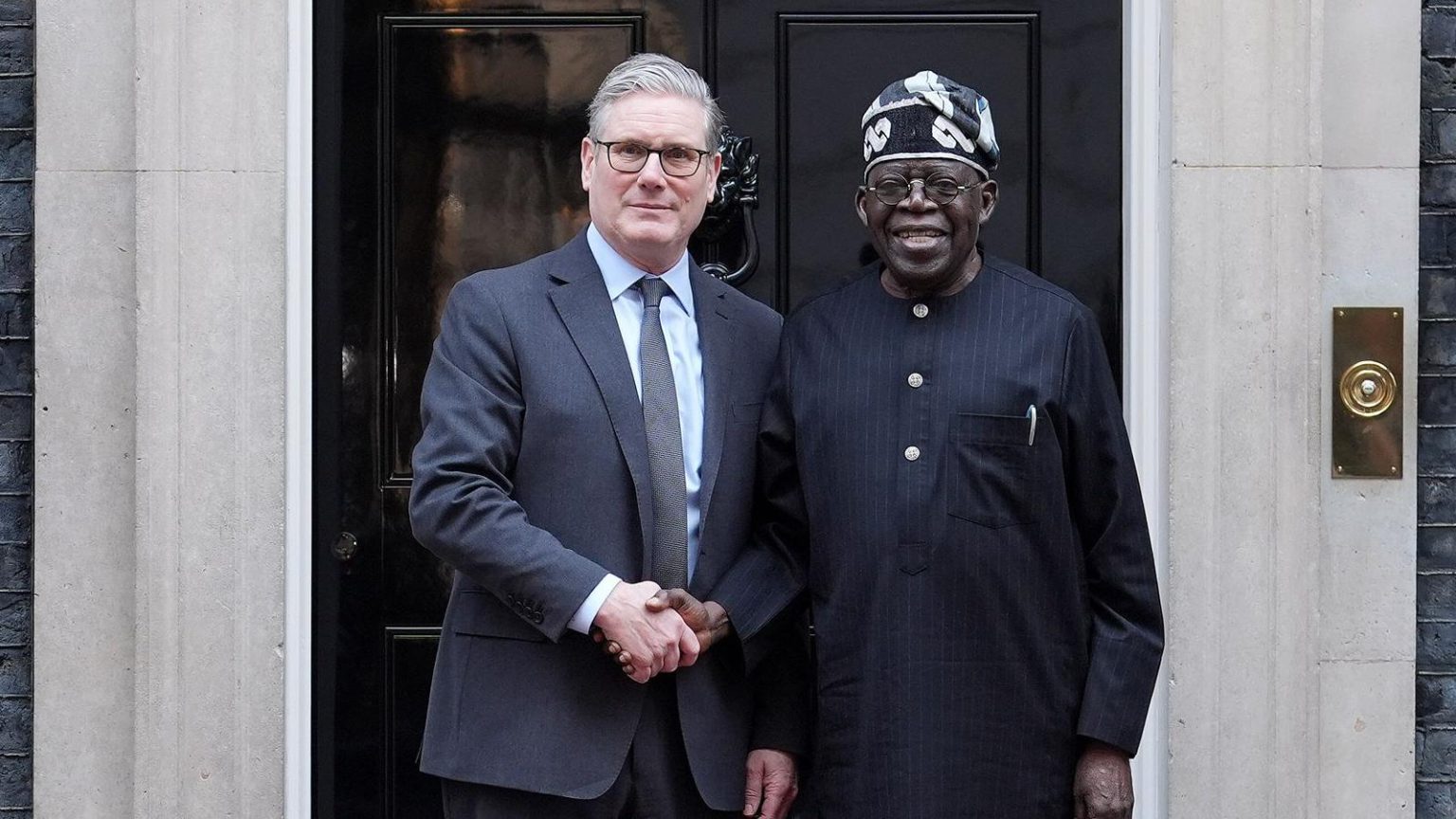
President Bola Ahmed Tinubu was on Thursday received by UK Prime Minister Keir Starmer at Downing Street, as both countries finalized a major £70 million steel supply agreement aimed at upgrading key port facilities in Lagos.
The agreement is part of a wider £746 million redevelopment program supported by the United Kingdom, focusing on the rehabilitation of the Lagos Port Complex and Tin Can Island Port Complex—two of Nigeria’s busiest and most important seaports.
Under the deal, British Steel will supply about 120,000 tonnes of steel needed for the modernisation of the ports. The project is expected to improve infrastructure, increase efficiency, and boost Nigeria’s capacity for international trade.
Prime Minister Starmer described Tinubu’s visit as “historic,” noting that it marks the first official state visit by a West African leader to the UK in 37 years. The meeting signals renewed efforts by both countries to strengthen their long-standing relationship.
Nigeria and the United Kingdom share deep historical ties dating back to the colonial era. Over the years, both countries have maintained strong cooperation in trade, education, security, and governance.
Tinubu, speaking during the visit, said his discussions with the British Prime Minister would focus on expanding trade and economic cooperation. He also noted that both countries would address global challenges such as terrorism and climate change.
“We are here to strengthen our partnership and explore new opportunities for growth,” Tinubu said.
The Lagos Port Complex and Tin Can Island Port are central to Nigeria’s economy. Located in Lagos, the country’s commercial hub, the ports handle a large percentage of Nigeria’s imports and exports.
However, for years, the facilities have faced challenges such as congestion, ageing infrastructure, and delays in cargo handling. These issues have increased the cost of doing business and slowed down trade activities.
The new agreement is expected to address many of these problems. By upgrading port infrastructure, the government hopes to improve efficiency, reduce waiting times, and attract more investment into the maritime sector.
Nigeria’s Minister of Marine and Blue Economy, Adegboyega Oyetola, said the project would strengthen Nigeria’s position as a leading maritime hub in West and Central Africa.
“This initiative will improve our ports and make Nigeria more competitive in global trade,” he said.
Funding for the project is being supported by UK Export Finance, which has guaranteed the loans for the redevelopment program.
UK Export Finance (UKEF) plays a key role in supporting British businesses to secure international contracts. By backing the project, UKEF is helping to reduce financial risks and encourage investment.
As part of the agreement, at least 20 per cent of the contracts must go to British companies. This requirement is expected to generate no less than £236 million in supplier deals for UK firms.
Out of this amount, £70 million has been allocated to British Steel, making it the company’s largest export contract supported by UKEF.
UK Trade Secretary Peter Kyle said the deal would strengthen the global position of British Steel while also supporting jobs and economic activity in the UK.
He noted that the contract would have a positive impact on communities such as Scunthorpe, where British Steel operates major facilities.
“This agreement shows how international partnerships can support our industries and create jobs at home,” Kyle said.
The deal is also seen as part of the UK’s broader strategy to increase trade with African countries, especially as it seeks new markets and partnerships after leaving the European Union.
Beyond the steel supply agreement, both Nigeria and the UK are expected to sign a Memorandum of Understanding (MoU) aimed at expanding future trade and investment relations.
The MoU will provide a framework for deeper economic cooperation, making it easier for businesses from both countries to invest and operate.
For the UK, Nigeria represents one of the largest markets in Africa, with a growing population and increasing demand for goods and services.
As part of the visit, Tinubu attended a state banquet hosted by King Charles III at Windsor Castle on Wednesday.
The monarch praised the long-standing relationship between Nigeria and the UK, highlighting the strong cultural and historical connections between both nations.
In addition to economic matters, both leaders discussed broader global issues. These include terrorism, which remains a concern in parts of Nigeria, and climate change, which affects both countries in different ways.
Nigeria has been battling insurgency and security challenges in some regions, while also facing environmental issues such as flooding and desertification.
The UK, on its part, has been active in global climate efforts and security cooperation. The discussions are expected to lead to closer collaboration in these areas.
For Nigeria, the port upgrade project is seen as a major step towards improving infrastructure and boosting economic growth.
Efficient ports are critical for trade, as they allow goods to move quickly and at lower cost. This, in turn, supports businesses, creates jobs, and increases government revenue.
The project also aligns with the Tinubu administration’s focus on economic reforms and infrastructure development.
The success of the agreement will depend on how quickly and effectively it is implemented. Both governments have expressed commitment to ensuring that the project delivers real benefits.
If completed as planned, the upgraded ports could transform Nigeria’s maritime sector and strengthen its role in regional and global trade.
The visit by President Tinubu to the UK, and the agreements reached, highlight a renewed effort by both countries to deepen cooperation and build a stronger economic partnership.