
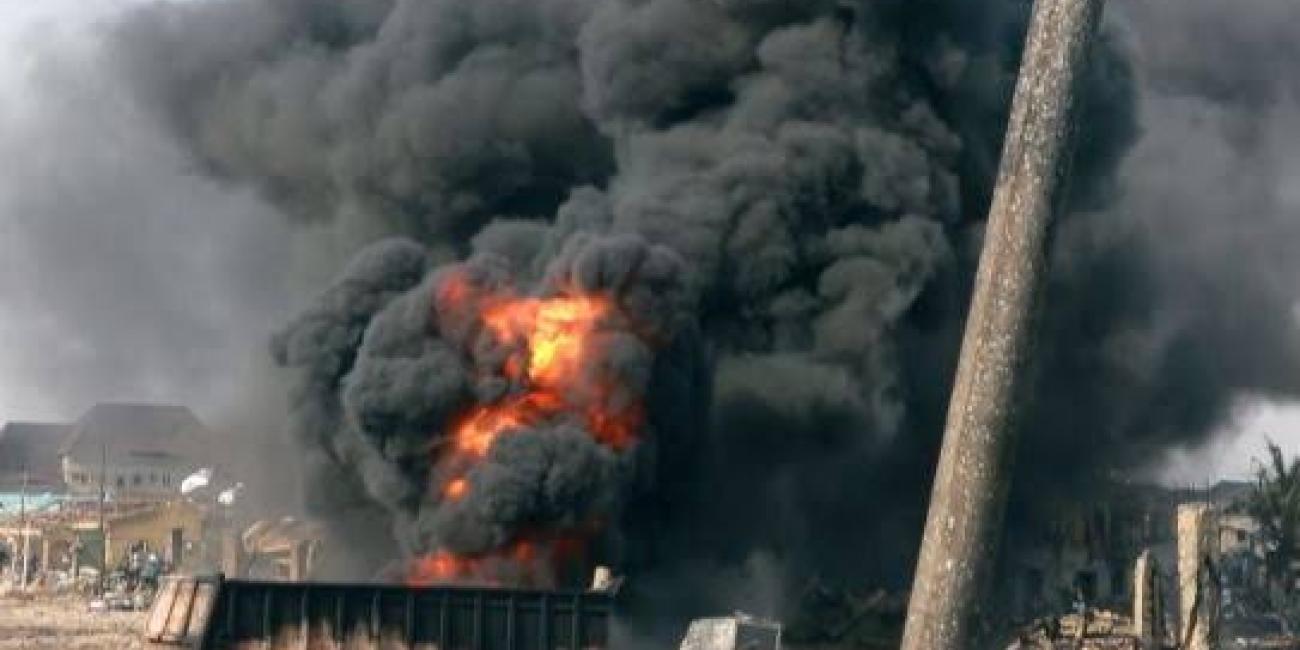
At least eight people have been feared dead after a deadly explosion rocked a rural community in Niger State in the early hours of Monday, raising fresh concerns about insecurity in parts of northern Nigeria.
The victims were travelling in a vehicle along a key rural route in Borgu Local Government Area when it reportedly ran over an improvised explosive device (IED) suspected to have been planted by terrorists. The explosion killed all occupants of the vehicle, including the driver, according to local sources.
The incident, which occurred along Luma Road, has also left a major bridge destroyed, cutting off movement between several communities and disrupting economic activities, especially the popular Babana border market.
According to sources in the area, the attack began earlier in the night when suspected terrorists planted explosives on a bridge linking Luma, Babana, and Agwara communities. The bridge is an important link for residents who rely on it for daily movement and trade.
The explosive device reportedly detonated around 2:00 a.m., severely damaging the bridge structure. However, the danger did not end there.
Later in the morning, at about 6:30 a.m., a vehicle travelling between Nuku and Woro unknowingly drove over another explosive device believed to have been planted along the same route. The device exploded instantly, killing all eight people inside the vehicle.
Local residents described the incident as tragic and shocking, noting that the victims were likely heading toward the Babana market, which holds every Monday and attracts traders from nearby communities and across the border.
The Niger State Police Command has confirmed the incident. The Police Public Relations Officer, Wasiu Abiodun, said authorities received a report about the attack and have since launched a response.
“On 23rd March 2026 at about 6:30 a.m., a report was received that earlier at about 2:00 a.m., suspected terrorists operating within the forest area used an explosive device to bomb a bridge along Luma Road in Borgu Local Government Area,” he said.
He added that the bridge connects Luma, Babana, and Agwara communities and plays a key role in local transportation.
Abiodun explained that security agencies are currently carrying out clearance operations in the area to ensure that no additional explosive devices remain and to prevent further casualties.
“Monitoring continues while clearance operations are being intensified,” he said.
The destruction of the bridge has created serious challenges for residents of the affected communities. The road serves as a major link for farmers, traders, and transporters moving goods and people across the region.
Particularly affected is the Babana market, a well-known border market that operates every Monday. The market draws large crowds from neighbouring communities and even from across Nigeria’s borders, making it an important centre for local commerce.
With the bridge now damaged, many traders may find it difficult or impossible to access the market, leading to economic losses and disruption of livelihoods.
Residents say the attack appears to have been carefully planned to cause both human casualties and economic damage.
This latest incident highlights growing concerns about insecurity in parts of Niger State, especially in remote areas with limited security presence.
In recent years, Borgu and surrounding local government areas have experienced sporadic attacks by armed groups operating from forested regions. These groups often use guerrilla tactics, including ambushes and roadside explosives, making them difficult to track.
The use of improvised explosive devices in this attack has raised fears of a dangerous shift in tactics, as such devices can remain hidden and pose risks long after they are planted.
Residents of the affected communities have expressed deep sorrow over the loss of lives. Many described the victims as ordinary citizens going about their daily activities.
“This is very painful. These were innocent people just trying to move from one place to another,” a local resident said.
Others called on the government to urgently improve security in the area and protect rural communities from further attacks.
There are also concerns that fear of more hidden explosives may prevent people from using the road even after repairs begin.
While security agencies have begun clearance operations, residents say more needs to be done to prevent future incidents.
Calls have been made for increased patrols, better intelligence gathering, and closer collaboration between security forces and local communities.
The government is also expected to assess the damage to the bridge and begin reconstruction as soon as possible, given its importance to the region.
Monday’s incident is not an isolated case. Niger State has faced several security challenges in recent years, including attacks by armed groups, kidnappings, and banditry.
Rural areas, especially those close to forests, have been particularly vulnerable. Limited infrastructure and difficult terrain often make it hard for security forces to respond quickly.
The latest attack serves as a reminder of the ongoing challenges faced by communities in these regions and the urgent need for lasting solutions.
As families mourn the victims, attention is now focused on ensuring that such tragedies do not happen again.
Security operations in the area are expected to continue in the coming days, with efforts aimed at locating and dismantling any remaining threats.
For now, fear and uncertainty remain among residents, as they grapple with the loss of lives and the disruption of their daily activities.