
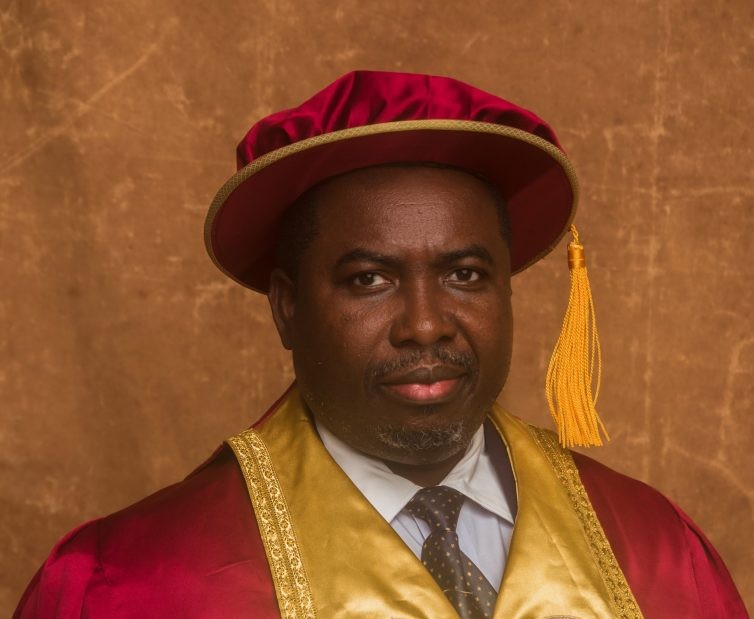
The African Democratic Congress (ADC) has called for the immediate resignation or removal of the Chairman of the Independent National Electoral Commission (INEC), Professor Joash Amupitan, citing alleged bias and lack of trust in the electoral body.
The opposition party made this demand on Thursday in Abuja during a press briefing addressed by former Senate President, David Mark. The ADC accused INEC’s leadership of siding with the ruling All Progressives Congress (APC), claiming that such actions have weakened confidence in the commission’s ability to conduct free and fair elections.
According to the party, the call for resignation became necessary after recent developments, including what it described as the “derecognition” of the ADC by INEC. The party said this action has raised serious concerns about the neutrality of the electoral body ahead of the 2027 general elections.
“We demand the immediate resignation or sack of the INEC Chairman, Professor Amupitan, and all National Commissioners,” Mark said. “We no longer have confidence in them. We are convinced that they are incapable of conducting any credible election.”
The ADC also insisted that it would continue with its political activities despite INEC’s stance. Mark explained that the law does not require INEC’s physical presence for a political party to carry out its internal programmes, as long as proper notice has been given.
“We are proceeding with our party programmes because there is nothing under the law that makes INEC’s attendance mandatory,” he said. “We have duly served INEC notice, and we will proceed accordingly.”
This development comes at a time when political activities in Nigeria are gradually building up ahead of the next general elections. Although 2027 may still seem far, political parties have started preparing early, especially after the controversies that followed the 2023 elections.
INEC, as Nigeria’s electoral body, is responsible for organizing and supervising elections at all levels of government. Over the years, the commission has faced criticism from different political parties and civil society groups, often over issues of transparency, logistics, and alleged interference.
The ADC’s latest accusation adds to a long history of tension between opposition parties and the electoral commission. In previous election cycles, several parties have raised concerns about fairness, claiming that the system sometimes favors the ruling party.
However, INEC has consistently denied such allegations, maintaining that it remains independent and committed to conducting credible elections. The commission has also introduced reforms in recent years, including the use of technology such as the Bimodal Voter Accreditation System (BVAS), aimed at improving transparency.
Despite these efforts, trust in the electoral process remains a major issue in Nigeria’s democracy. Many citizens and observers believe that for elections to be truly credible, the electoral body must not only be independent but also be seen as independent.
In his address, Mark called on the international community to pay attention to the situation. He urged global partners to hold accountable anyone found to be undermining Nigeria’s democratic process.
“We call on the international community to take note of INEC’s actions of April 1st and of the restraint we are exercising today,” he said. “We urge them to recognise the clear threat to Nigeria’s democracy and stability.”
The ADC also appealed directly to Nigerians, urging them to remain vigilant and actively defend the country’s democracy. The party warned against any attempt to turn Nigeria into a one-party state.
“We call on Nigerians to defend our democracy. This is a defining moment,” Mark said. “Stand firm. Speak out. Participate. Resist any attempt to impose a one-party state on Nigeria.”
For many Nigerians, the credibility of elections is closely linked to good governance. When elections are seen as free and fair, citizens are more likely to accept the results and support elected leaders. On the other hand, doubts about the process can lead to protests, legal battles, and political instability.
As the debate continues, all eyes will be on INEC and its leadership. Whether the commission responds to these allegations or takes steps to rebuild trust remains to be seen.