
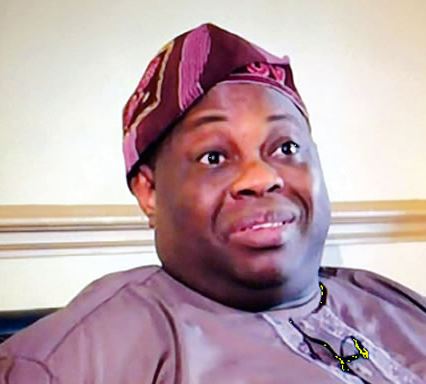
As political activities gradually build toward the 2027 general elections, media entrepreneur and politician, Dele Momodu, has thrown his weight behind a possible presidential ticket pairing former Vice President, Atiku Abubakar, and former Anambra State governor, Peter Obi.
Momodu made this known on Tuesday during an appearance on Politics Today, a current affairs program on Channels Television. He described the potential alliance as a strong and strategic move that could pose a serious challenge to the ruling All Progressives Congress (APC).
According to him, both Atiku and Obi have already shown that they can work together, having run on the same ticket during the 2019 presidential election. Atiku was the presidential candidate of the Peoples Democratic Party (PDP) at the time, while Obi served as his running mate.
Momodu said that experience gives them an advantage, as they already understand each other’s style and approach to politics.
“I would pair him with Peter Obi because they worked together in 2019, so they already share a similar temperament,” he said during the program.
He also pointed out that Obi’s performance in the 2023 presidential election makes him a valuable partner in any future alliance. Obi, who ran under the Labour Party, came third in that election but gained strong support, especially among young voters and urban residents.
According to Momodu, this existing support base means that a joint ticket would not need to start from scratch in building public acceptance.
“Peter Obi came third in the last election, so you don’t have to work too hard to maintain and attract the same group of people who love him,” he added.
Momodu’s comments come at a time when the African Democratic Congress (ADC) is positioning itself as a major platform for opposition figures ahead of the next election cycle.
In recent months, there have been growing talks about alliances among opposition leaders, as they seek to present a united front against the ruling party. Analysts say that divisions among opposition parties have often weakened their chances in past elections, allowing the APC to maintain its hold on power.
Momodu suggested that the situation may be changing, as more prominent politicians appear to be coming together under the ADC.
He claimed that the development is already causing concern within the APC, which currently controls the federal government under President Bola Tinubu.
“They cannot believe that we will have maybe four or five major opposition leaders in the country,” he said.
He further alleged that there are efforts to weaken the opposition by creating divisions among its leaders, although he did not provide specific details.
“It is reality; let’s not hide behind one finger,” Momodu stated, using a common expression to suggest that the situation is clear to observers.
He insisted that despite the APC’s strong political structure — which includes many governors, ministers, and lawmakers — there are signs that the party is uneasy about the growing strength of the opposition.
“I keep saying it, today, despite gathering all the governors, ministers, legislators, and what have you, you can see the obvious panic in the party,” he added.
The 2027 general elections, though still some times away, are already shaping political discussions across the country. Political actors are beginning to form alliances, test public opinion, and position themselves for what is expected to be a highly competitive race.
In Nigeria’s political history, alliances have played a key role in determining election outcomes. The formation of the APC itself in 2013 was the result of a merger between several opposition parties, which eventually led to its victory in the 2015 presidential election.
However, challenges remain. Bringing together strong political personalities with different interests and ambitions is often difficult. Issues such as zoning, party structure, and leadership roles could affect any proposed alliance.
There is also the question of voter trust. While both Atiku and Obi have strong followings, they also face criticism from different quarters. Some voters may be hesitant about a coalition unless it clearly outlines its plans for governance and addresses key national issues.
For the APC, maintaining unity within its ranks will also be important as it prepares for the next election. The party has continued to defend its policies and record under President Tinubu, while dismissing opposition claims of weakness.
For now, Momodu’s endorsement of an Atiku-Obi ticket adds to the growing conversation about possible alliances and the future direction of Nigeria’s politics.
As Nigerians watch these developments, many will be looking beyond political statements to see how proposed alliances translate into clear policies that address everyday concerns such as the cost of living, jobs, security, and infrastructure.
With the memory of past elections still fresh, the road to 2027 is expected to be closely watched, as both the ruling party and the opposition prepare for another major contest for power.