
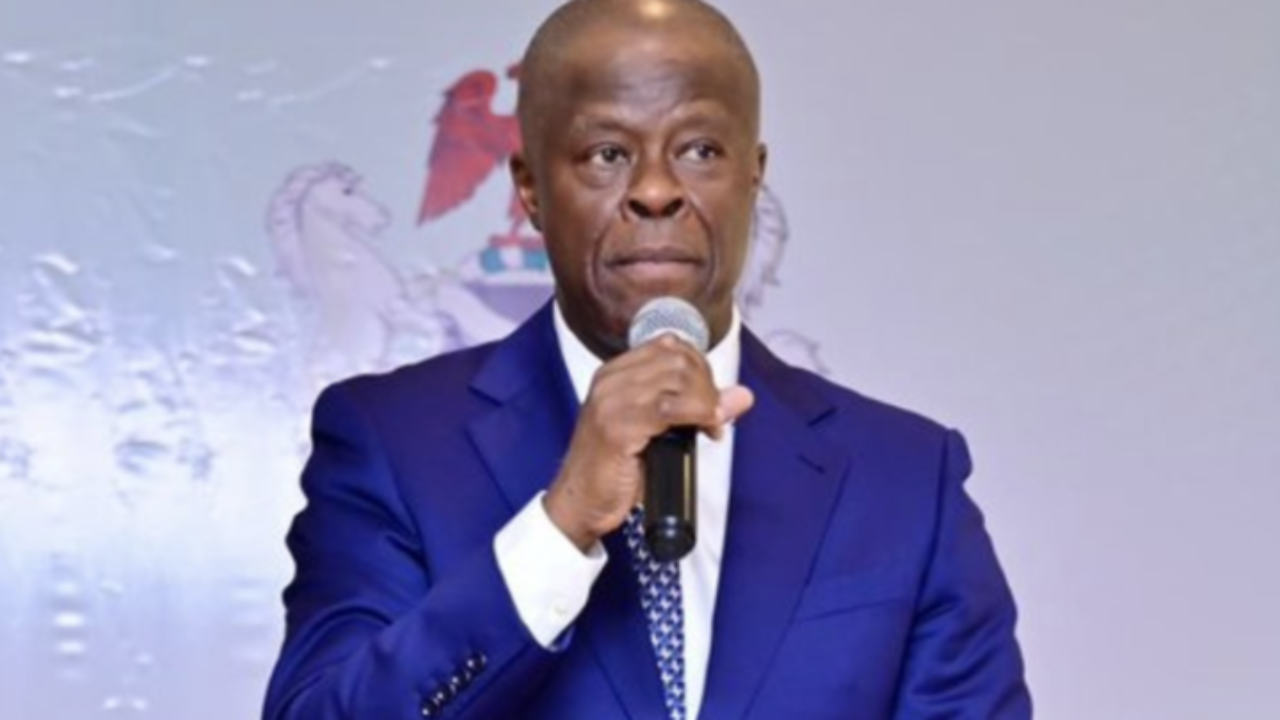
Nigeria’s Minister of Finance and Coordinating Minister of the Economy, Wale Edun, has said the country has no plans to seek financial support from the International Monetary Fund despite rising public debt and growing concerns about the economy.
Edun made this known on Thursday during a press briefing by ministers at the ongoing spring meetings of the IMF and the World Bank in Washington DC, United States.
His statement comes at a time when many developing countries, especially in Africa, are facing increasing economic pressure and may be considering financial assistance from global institutions.
Speaking directly on the issue, Edun said Nigeria is not currently considering approaching the IMF or any similar organisation for loans.
“Nigeria has no plans at the moment to approach the IMF or any other source,” he said.
His comment appears aimed at calming fears that Nigeria may soon seek emergency financial support due to its rising debt profile and economic challenges.
The IMF had recently indicated that several countries may request financial assistance in the near future, with expected demands ranging from $20 billion to $50 billion.
The global lender also advised African countries affected by economic shocks, including the impact of conflicts in the Middle East, to consider seeking support if necessary.
However, Nigeria has chosen a different path, at least for now.
Edun’s statement comes shortly after the Debt Management Office released new figures showing a sharp increase in the country’s debt.
According to the report, Nigeria’s total public debt rose by N14 trillion to reach N159.27 trillion as of the end of the fourth quarter of 2025. This figure includes debts owed by both the federal and state governments.
The rising debt has raised concerns among economists and citizens about the country’s ability to meet its financial obligations while still funding key sectors such as healthcare, education, and infrastructure.
Adding to the debate, the National Assembly recently approved a $6 billion external borrowing request by President Bola Ahmed Tinubu.
The approval has sparked discussions about the country’s borrowing strategy, especially in light of oil revenues and the need for sustainable economic management.
Speaking more broadly, Edun noted that Nigeria is not alone in facing debt challenges. He said many African countries are either already in debt distress or are close to reaching that level.
“In terms of the debt stock, nearly half of African countries are at or near debt vulnerability levels, even distressed levels,” he said.
Debt distress occurs when a country struggles to meet its debt obligations without requiring external assistance or restructuring.
According to Edun, one of the main reasons for this situation is the high cost of borrowing for African countries.
The minister explained that African nations often pay higher interest rates compared to other regions when they borrow from international markets.
This, he said, places a heavy burden on government revenues, as a large portion of income is used to service debt instead of funding development projects.
“The premium they pay for commercial debt is part of the reason for the distress,” Edun said.
He added that this situation limits the ability of governments to invest in critical sectors such as health, education, and infrastructure.
Edun said President Tinubu has been advocating for changes in the global financial system to make borrowing more affordable for African countries.
He explained that part of the challenge lies in how international rating agencies assess the risk of investing in Africa.
These assessments often lead to higher borrowing costs, even when the actual risks may not be as high as perceived.
According to Edun, there is a need to review these risk assessments and reduce the extra charges placed on African countries.
This, he said, would help make it easier for countries on the continent to access funding for development.
Rather than relying heavily on external borrowing, Edun stressed the need for African countries to strengthen their own economies.
He called for reforms that would improve efficiency, increase revenue, and reduce dependence on costly loans.
Edun said governments should adopt digital tools, including artificial intelligence, to improve public services and boost economic productivity.
He also emphasised the importance of involving the private sector in economic development.
According to him, encouraging private investment can help reduce the need for government borrowing and create more opportunities for growth.
The minister warned that continued reliance on expensive debt is not sustainable in the long run.
He urged African countries to find ways to generate more revenue internally and manage their resources more effectively.
By doing so, governments can reduce their dependence on external loans and build more stable economies.
Nigeria, like many other developing countries, faces the challenge of balancing economic growth with financial stability.
On one hand, there is a need for investment in infrastructure and social services. On the other hand, rising debt levels can limit future options and create financial risks.
Edun’s statement suggests that the government is trying to manage this balance by exploring alternative ways to fund development without turning to institutions like the IMF.
While the government’s position may reassure some Nigerians, others remain concerned about the country’s economic direction.
Rising inflation, currency challenges, and cost of living pressures continue to affect many households.
As a result, citizens are closely watching government policies and decisions related to borrowing, spending, and economic reforms.
For now, Nigeria’s stance is clear: there is no immediate plan to seek IMF support.
However, the situation may evolve depending on global economic conditions and domestic challenges.
As discussions continue at the IMF and World Bank meetings, Nigeria’s approach will remain under scrutiny, both at home and abroad.
The focus, according to Edun, is on building a stronger, more self-reliant economy that can support growth without relying heavily on external loans.