
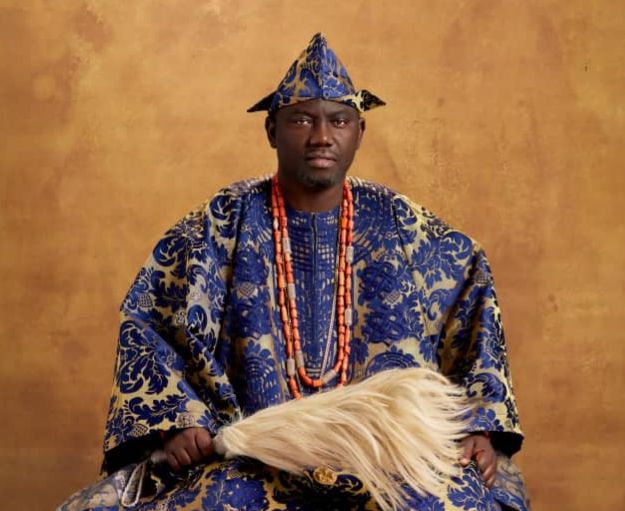
The Alaafin of Oyo, Akeem Owoade, has called for stronger cooperation among security agencies, government authorities, and local communities to tackle terrorism and other security threats across Nigeria.
He made this call on Thursday during a courtesy visit to the governor of Kwara State, AbdulRahman AbdulRazaq, in Ilorin, the state capital.
The visit comes at a time when concerns about insecurity remain high in parts of Nigeria, especially in rural and border communities where attacks by armed groups and criminal networks have been reported. While Kwara is often seen as relatively peaceful compared to some other states, it shares boundaries with regions that have experienced security challenges, making vigilance a key priority.
Speaking during the meeting, Oba Owoade stressed that effective security management requires a joint approach. He said government agencies must work closely with local communities and traditional institutions to prevent threats before they occur.
According to him, intelligence gathering and timely sharing of information are essential in dealing with modern security challenges. He explained that many threats are not isolated incidents but are often planned and supported by organised networks.
“Security threats rarely occur in isolation. They are often organised, financed, and facilitated through networks that can and should be identified and disrupted within the law,” the monarch said.
He added that beyond responding to attacks, authorities must focus more on preventive measures. This includes strengthening intelligence systems, improving surveillance, and building trust with communities so that people can report suspicious activities early.
The Alaafin also emphasised the importance of giving equal attention to rural and border communities. He noted that while major cities often receive strong security presence, smaller communities are sometimes left vulnerable.
“The safety of rural and border communities must command the same seriousness as the security of our major cities,” he said.
In recent years, some rural areas in Nigeria have faced challenges such as banditry, kidnapping, and farmer-herder clashes. Experts say these problems are often worsened by weak security coverage and poor communication between authorities and residents.
Oba Owoade said improving communication between government and traditional rulers would help address these issues. He explained that traditional leaders play an important role in guiding their communities and can serve as a bridge between the people and the government.
“Clear and steady communication with affected communities and their traditional rulers will strengthen public trust,” he said.
He added that when people receive timely information from trusted leaders, it helps to reduce fear and prevent the spread of false information.
“In moments of uncertainty, timely information and visible leadership help calm fears and counter misinformation,” he said.
The monarch also expressed solidarity with Yoruba communities living in Kwara State. He described them as part of a shared cultural and historical heritage that connects people across state boundaries.
“The Alaafin stands with Yoruba communities in the state. These are not distant places to us; they form part of our shared cultural and human fabric,” he said.
He warned that criminal elements must not be allowed to take over communities or disrupt daily life.
“Terror must not violate our farms, our markets, our places of worship, or the dignity of our daily work,” he added.
Kwara State is known for its diverse population, with people from different ethnic and religious backgrounds living together. The state has often been praised for peaceful coexistence, but leaders say there is a need to remain proactive in addressing security risks.
In his response, Governor AbdulRazaq thanked the Alaafin for the visit and for his commitment to peace and stability. He described the monarch as a leader who promotes unity beyond ethnic or regional interests.
The governor also assured that his administration would continue to prioritise security and work closely with traditional institutions.
He said traditional rulers remain important partners in governance, especially at the community level where they help to resolve disputes and maintain order.
“Traditional rulers are critical stakeholders in governance. They play key roles in community leadership and conflict resolution,” the governor said.
The Alaafin’s visit also included stops in Shao and Jebba communities, where he was received by local residents. These visits were seen as part of efforts to strengthen ties with communities and promote unity across the region.
He was accompanied by members of the Oyo Traditional Council and other traditional rulers, highlighting the collective role of traditional institutions in addressing national issues.
Security remains a major concern in Nigeria, with different regions facing various challenges. In the North-East, insurgency has been a long-standing issue, while parts of the North-West have struggled with banditry and kidnapping. In the Middle Belt, conflicts between farmers and herders have also contributed to instability.
Although Kwara State has not experienced the same level of violence as some of these regions, its location makes it important in efforts to prevent the spread of insecurity.
They also stress that security is not only the responsibility of the government but requires the involvement of all stakeholders, including traditional rulers, community leaders, and ordinary citizens.
The Alaafin’s message reflects this broader approach, calling for unity and cooperation in tackling threats before they escalate.
As Nigeria continues to deal with complex security issues, such calls for collaboration are likely to remain central to discussions on how to protect lives and property.
For residents of Kwara and neighbouring states, the visit serves as a reminder of the need for vigilance and cooperation. It also highlights the role of leadership—both traditional and political—in ensuring that communities remain safe and stable.