
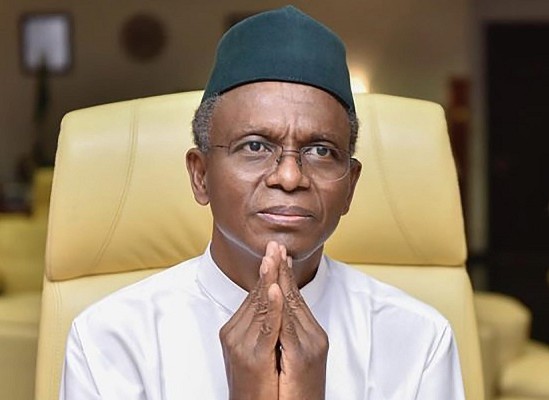
The legal troubles of former Kaduna State governor, Nasir El-Rufai, took a new turn on Thursday as he was arraigned before a Federal High Court in Abuja over allegations of illegally recording a telephone conversation involving Nigeria’s National Security Adviser, Nuhu Ribadu.
The case, brought by the Department of State Services (DSS), marks a significant development in what observers say could become a major test of privacy laws, national security protections, and political accountability in Nigeria.
At the start of the court session, the prosecution team informed the court that the charges against El-Rufai had been expanded. Originally filed as a three-count charge, the case has now been amended to include five counts. While details of the additional charges were not fully disclosed in open court, they are believed to relate to alleged unlawful access to and recording of sensitive communications.
El-Rufai, who also served as Minister of the Federal Capital Territory (FCT) during the administration of former President Olusegun Obasanjo, is accused of engaging in actions that may have breached Nigeria’s laws on communication privacy and national security.
The allegations centre on claims that the former governor unlawfully obtained or recorded a private telephone conversation involving Ribadu, one of the country’s top security officials. The National Security Adviser plays a key role in coordinating intelligence and security operations across Nigeria, making any breach involving such an office a serious matter.
Although the DSS has not publicly released full details of how the alleged recording was carried out, legal experts say the case could involve violations of laws regulating electronic surveillance, interception of communications, and misuse of classified information.
Nigeria has laws that restrict the recording or interception of private communications without proper authorisation, especially when it involves public officials handling sensitive national security matters. Such laws are designed to protect both individual privacy and the integrity of government operations.
During Thursday’s proceedings, the courtroom was filled with lawyers, journalists, and observers closely following the case. The prosecution formally presented the amended charges, while El-Rufai’s legal team indicated readiness to respond.
As is standard in criminal proceedings, the arraignment marks the formal reading of charges to the defendant. El-Rufai is expected to enter his plea, after which the court will decide on the next steps, including possible bail conditions and trial dates.
The judge adjourned further hearing to allow both parties to study the amended charges and prepare their arguments.
The case has already drawn widespread attention across the country, given El-Rufai’s prominence in Nigerian politics. Known for his outspoken views and strong political influence, his prosecution by a federal security agency raises questions about the relationship between politics and law enforcement.
In recent years, concerns have grown in Nigeria about the misuse of digital tools and surveillance technologies. With the increasing use of mobile phones and digital communication, cases involving alleged illegal recordings or data breaches have become more common.
For many Nigerians, the outcome could set an important precedent. If the court finds that the alleged actions violated existing laws, it could lead to stricter enforcement and clearer guidelines on the use of communication technologies.
As the case moves forward, attention will focus on the evidence presented by the DSS and the defence mounted by El-Rufai’s legal team. Key questions will include how the alleged recording was obtained, whether proper authorisation existed, and whether any laws were breached.
The trial is expected to continue in the coming weeks, with both sides preparing for what could be a closely watched legal battle.