
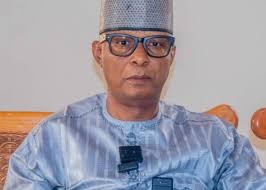
The Senate on Thursday began the screening of President Bola Tinubu’s ministerial nominee for the Ministry of Housing and Urban Development, Muttaqha Darma, in a process that could shape the future direction of Nigeria’s housing sector.
The exercise, which took place at the National Assembly in Abuja, marks another step in the administration’s ongoing effort to strengthen its cabinet and address key development challenges across the country.
Darma was ushered into the Senate chamber at exactly 12:32 pm, where he faced lawmakers during plenary for the constitutionally required screening. The process allows senators to assess the nominee’s qualifications, experience, and readiness to take on the responsibilities of public office.
Presiding over the session, Senate President Godswill Akpabio read a formal communication from the President requesting the Senate’s approval of Darma’s nomination.
After presenting the letter, Akpabio referred the matter to the Committee of the Whole, a procedure that allows all senators to participate in the screening. He directed the panel to consider the nomination and report back “as soon as practicable.”
As of press time, lawmakers had begun questioning the nominee on a wide range of issues, including his professional background, vision for the housing sector, and plans to address Nigeria’s growing housing needs.
Darma is a trained engineer with a degree in Mechanical Engineering from Bayero University Kano. His academic and technical background is seen by some observers as an advantage, especially in a ministry that deals with infrastructure, construction, and urban planning.
While he may not be widely known in political circles, his nomination suggests a possible shift toward technocratic leadership in certain government sectors.
The Ministry of Housing and Urban Development is one of the most important in Nigeria, given the country’s large and growing population. Rapid urbanisation, especially in cities like Lagos, Abuja, and Kano, has increased pressure on housing, infrastructure, and public services.
Nigeria is currently facing a housing deficit estimated in the millions of units. Many citizens, particularly low- and middle-income earners, struggle to find affordable and decent housing.
The ministry is responsible for developing policies, overseeing housing programmes, and working with state governments and private developers to expand access to homes.
If confirmed, Darma will take charge of a sector facing several long-standing challenges. These include high construction costs, limited access to mortgage financing, land ownership issues, and weak infrastructure in many urban areas.
In addition, the rise of informal settlements and slums in major cities has become a growing concern. Many urban residents live in overcrowded conditions without access to basic services such as clean water, electricity, and sanitation.
Successive governments have introduced housing programmes, but results have often fallen short due to poor implementation, funding gaps, and bureaucratic delays.
Lawmakers are therefore expected to closely examine Darma’s plans for addressing these issues during the screening.
Under Nigeria’s Constitution, ministerial nominees must be screened and confirmed by the Senate before they can assume office. The process is designed to ensure accountability and prevent unqualified individuals from taking up key government positions.
During screening sessions, nominees are typically asked about their educational background, work experience, and policy priorities. They may also be questioned on national issues and how they plan to contribute to the government’s agenda.
In some cases, nominees are asked to take a bow and go, especially if they have previously held public office. However, others undergo detailed questioning, depending on the Senate’s assessment.
The screening of Darma comes at a time when the Tinubu administration is under pressure to deliver results across critical sectors, including housing, infrastructure, and social services.
Since taking office, the President has introduced several economic and policy reforms aimed at stabilising the economy and promoting growth. However, many Nigerians are still waiting to see improvements in their daily lives.
Housing remains a key area of concern, as rising costs of rent and building materials continue to affect millions of families.
Following the screening, the Senate is expected to deliberate on the nominee and decide whether to confirm his appointment. This decision could come within days, depending on how quickly the Committee of the Whole submits its report.
If confirmed, Darma will be sworn in as minister and will immediately assume responsibility for the Housing and Urban Development Ministry.
For many Nigerians, the expectation is clear: practical solutions that will make housing more accessible and affordable.
As the process continues, attention will remain on the Senate and the nominee, with many hoping that the outcome will bring fresh ideas and renewed energy to a sector that plays a vital role in national development.