
Concerns are mounting over President Bola Tinubu’s request for a fresh $516 million external loan to fund parts of the Sokoto–Badagry Super Highway, with former Vice President Atiku Abubakar and several economists warning about Nigeria’s growing debt burden.
The President formally wrote to the Senate, seeking approval for the loan, which is expected to be sourced from Deutsche Bank. The request was read during plenary by the President of the Senate, Godswill Akpabio, marking the start of legislative consideration.
According to the proposal, the $516,333,070 loan will be used to finance Sections 1, 1A, and 1B of the Sokoto–Badagry Super Highway, a major infrastructure project planned to stretch across several states.
The highway, estimated at about 1,000 kilometres, will link Illela in Sokoto State to Badagry in Lagos State, passing through Kebbi, Niger, Kwara, Oyo, and Ogun states. The project is seen as one of the flagship initiatives of the Tinubu administration, aimed at improving transportation and boosting economic activities across the country.
Government officials say the road will reduce travel time between the northern and southern parts of Nigeria, improve trade, and support regional integration. It is also expected to create jobs during construction and open up new business opportunities along the corridor.
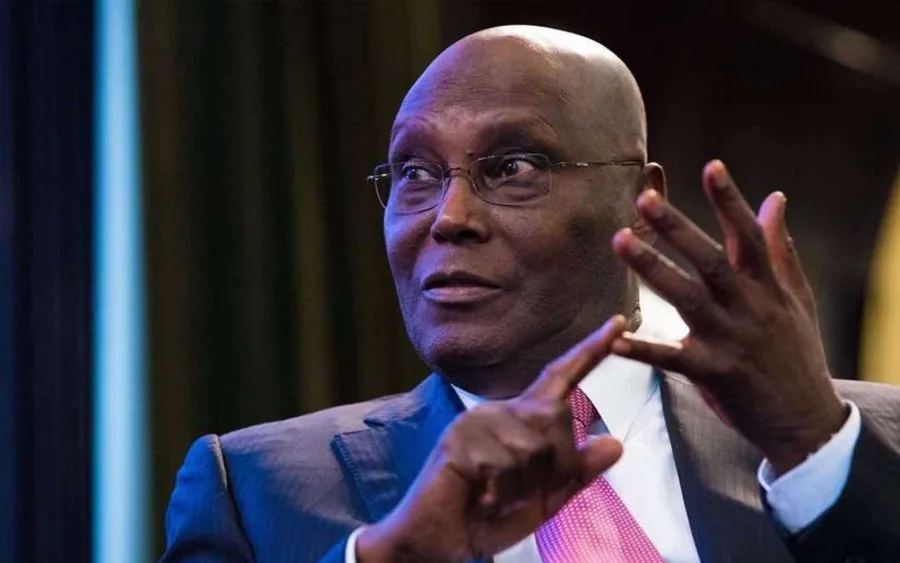
However, despite these expected benefits, the loan request has drawn criticism from Atiku Abubakar, who called for caution and greater transparency in the government’s borrowing plans.
In a statement issued by his media aide, Phrank Shaibu, Atiku acknowledged the importance of infrastructure development but warned that Nigeria’s rising debt profile should not be ignored.
“At a time when Nigeria is already groaning under the weight of unsustainable debt, the resort to yet another foreign loan raises serious concerns,” he said.
He stressed that borrowing should not be done without clear terms, proper analysis, and a reliable repayment plan.
“What Nigerians expect is not just ambitious projects, but responsible financing,” Atiku said. “Development must not become a way of pushing the country into deeper debt that future generations will struggle to repay.”
The former vice president also urged the National Assembly to carefully examine the loan request before giving approval. According to him, lawmakers must ensure that the project is financially sound and that the country is not taking on unnecessary risks.
“Nigeria must build, but Nigeria must not borrow blindly,” he added. “Progress built on secrecy and rising debt is not real progress.”
While borrowing is not unusual for developing countries, experts say it becomes a problem when debt servicing takes up a large portion of government revenue. In Nigeria’s case, a significant share of earnings is already used to repay existing loans, leaving less money for essential services such as education, healthcare, and security.
Infrastructure development has long been a challenge in Nigeria, with many roads in poor condition and limited connectivity between regions. Successive governments have identified transport infrastructure as a key area for improvement.
The Tinubu administration has continued this focus, with several road and rail projects either ongoing or planned across the country.
The Sokoto–Badagry Super Highway is particularly significant because of its size and scope. By linking the far north to the southwestern coast, it is expected to serve as a major economic corridor.
Supporters say it could boost agriculture, trade, and tourism, while also strengthening national unity by improving connectivity between regions.
However, critics insist that such projects must be backed by sound financial planning. They warn that excessive borrowing without proper management could lead to long-term economic problems.
The Senate has since referred the loan request to its Committee on Local and Foreign Debts for further review. The committee is expected to examine the details of the proposal and report back to the full Senate.
As part of the process, lawmakers may request additional information from the executive arm of government, including details about the loan agreement and the expected benefits of the project.
Public opinion on the issue remains divided. While some Nigerians see the highway as a necessary investment in the country’s future, others are worried about the growing debt burden and its impact on the economy.
In recent years, there has been increasing public interest in government borrowing, with many citizens calling for accountability and better management of public funds.
As the debate continues, the outcome of the Senate’s review will be closely watched. The decision will not only determine whether the loan is approved but also signal how Nigeria balances development needs with financial sustainability.
For now, the discussion highlights a key challenge facing the country: how to build critical infrastructure while managing debt in a way that does not harm future generations.