
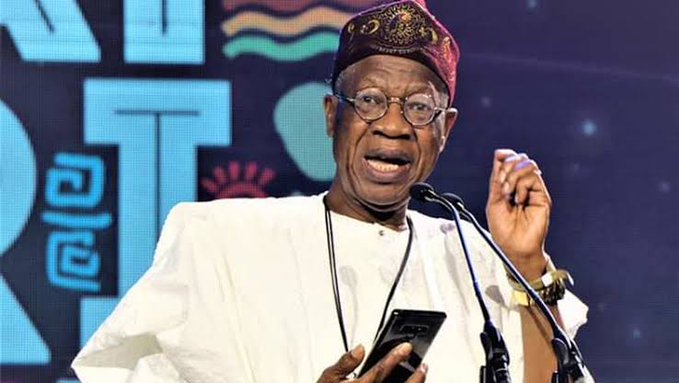
Former Minister of Information and Culture, Lai Mohammed, has called on developed countries to allow African nations more freedom to use fossil fuels for economic growth and infrastructure development.
He made this call while speaking at the University of Cambridge in the United Kingdom on Thursday, where he addressed students during an international engagement. His remarks come at a time when global discussions on climate change are becoming more urgent, with increasing pressure on countries to reduce carbon emissions.
Responding to a question on how developed nations can support Africa in dealing with climate change, Mohammed criticised what he described as unfair expectations placed on developing countries.
“I think there is a lot of hypocrisy around this climate change issue, especially regarding what developed nations expect from developing countries,” he said.
According to him, countries in Europe and North America relied heavily on fossil fuels such as oil, coal, and gas to build their economies. These energy sources powered industries, transportation systems, and infrastructure development over many decades.
He argued that it is unfair for these same countries to now ask African nations to limit their use of fossil fuels, even though many African economies are still developing and depend on these resources.
“The developed world used fossil fuels to build their infrastructure, transportation systems, roads and the like,” Mohammed said. “The only asset we have is fossil fuel. We must be allowed to use it to build our infrastructure and economy.”
Climate change has become a major global concern due to its impact on weather patterns, agriculture, and living conditions. Rising temperatures, floods, droughts, and extreme weather events have affected many countries, including Nigeria.
In recent years, parts of Nigeria have experienced severe flooding, leading to loss of lives, destruction of homes, and damage to farmland. These events have been linked to climate change, increasing the urgency for action.
Global efforts to address climate change have focused on reducing greenhouse gas emissions, especially from fossil fuels. Agreements such as the Paris Climate Accord encourage countries to transition to cleaner energy sources like solar and wind power.
However, many developing countries argue that moving away from fossil fuels too quickly could slow their economic growth. They say they need time and support to make the transition without harming their economies.
Mohammed acknowledged the importance of protecting the environment but stressed that different countries should not be treated the same.
“We agree that we must not endanger nature, but different rules will have to apply,” he said. “We must be given a lot of leeway and concessions.”
His comments reflect a broader position often expressed by African leaders, who argue that the continent contributes less to global emissions compared to developed regions but suffers many of the effects of climate change.
Africa accounts for a small share of global carbon emissions, yet it faces serious challenges such as desertification, rising sea levels, and food insecurity. Many countries on the continent also lack the financial resources needed to invest in clean energy infrastructure.
Mohammed also used the opportunity to highlight Nigeria’s development challenges, particularly in the tourism and events sector. He noted that while Lagos hosts thousands of events each month, the country still lacks adequate infrastructure to support large-scale tourism and conferences.
“At a recent Commonwealth Trade and Investment Forum, the issue of over-tourism was raised,” he said. “I pointed out that our problem in Nigeria is under-tourism.”
He explained that unlike some popular global destinations that struggle with too many visitors, Nigeria needs more tourists and better facilities to attract them. This includes purpose-built conference centres, improved transportation systems, and reliable power supply.
According to him, investing in such infrastructure requires significant funding, which could be supported by revenues from fossil fuels.
Nigeria, one of Africa’s largest oil producers, relies heavily on crude oil exports for government revenue. However, the country has also been exploring ways to diversify its economy and reduce dependence on oil.
Efforts are being made to develop renewable energy sources, but progress has been slow due to funding challenges and infrastructure gaps.
Mohammed’s comments highlight the difficult balance that many African countries face. On one hand, they are under pressure to reduce emissions and protect the environment. On the other hand, they need affordable energy to drive development and improve living standards.
This includes funding for renewable energy projects, technology transfer, and capacity building. However, many developing countries say the level of support so far has not been enough.
Mohammed concluded his remarks by reaffirming Africa’s willingness to be part of global efforts to address climate change. However, he insisted that the continent must be given the flexibility it needs to grow.
“We will join the world in saving the planet, but we must be given concessions,” he said.
His statement adds to ongoing global discussions about fairness and responsibility in tackling climate change. As countries prepare for future climate negotiations, the issue of how to balance environmental protection with economic development is likely to remain a key topic.
For Nigeria and other African nations, the challenge will be to find a path that supports growth while also protecting the environment for future generations.