
The Nigerian Consulate in Johannesburg has confirmed the killing of two Nigerians in South Africa, raising fresh concerns about the safety of foreign nationals amid ongoing tensions in the country.
The victims, identified as Amaramiro Emmanuel and Ekpenyong Andrew, died in separate incidents involving South African security personnel. The cases have sparked outrage within the Nigerian community and prompted calls for a full investigation.
In a statement released on Monday, Nigeria’s Consul-General in Johannesburg, Ninikanwa Okey-Uche, said the deaths have left families, community members and diplomatic officials in shock.
According to the consulate, Amaramiro Emmanuel died from injuries he reportedly sustained after being beaten by personnel of the South African National Defence Force on April 20. Details surrounding the incident are still unclear, but officials say the matter is under investigation.
In a separate case, Ekpenyong Andrew was arrested on April 19 in the Booysens area of Pretoria following what authorities described as an altercation with officers of the Tshwane Metro Police. His body was later discovered at the Pretoria Central Mortuary.
The circumstances leading to Andrew’s death remain uncertain, and officials have not yet released full details of what happened after his arrest.
Okey-Uche said both incidents involve security personnel, making the situation more serious and sensitive. She noted that the cases have raised concerns about the conduct of law enforcement officers and the treatment of foreign nationals in South Africa.
A formal case has been opened with the South African Police Service, while the Nigerian Consulate has called on the Independent Police Investigative Directorate to carry out a thorough, transparent and impartial investigation.
“We call on South African authorities to thoroughly investigate the matter and bring the perpetrators to justice,” the consul-general said.
She stressed that regardless of any allegations against the victims, proper legal procedures must be followed.
“No matter the allegations, there are lawful processes. Everyone should be presumed innocent and granted fair hearing in a court of law. No one should take the law into their hands,” she added.
The consulate also confirmed that it is engaging with relevant South African authorities and will provide necessary support to the families of the deceased, including consular assistance.
Beyond the immediate incidents, the consul-general raised concerns about what she described as a growing trend of profiling Nigerians in South Africa. She warned that generalising Nigerians as criminals is dangerous and could lead to further violence.
“There is a need to avoid stereotyping and profiling,” she said, urging communities to promote peaceful coexistence.
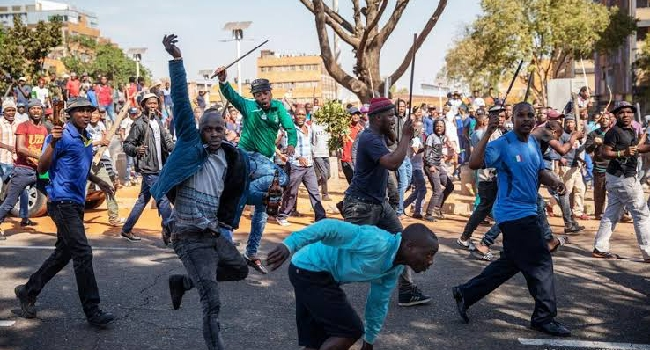
The latest killings come against the backdrop of recurring tensions in South Africa involving foreign nationals, particularly Africans from other countries. Over the years, there have been several reported cases of xenophobic attacks, with Nigerians often among those affected.
South Africa has experienced periodic outbreaks of violence linked to frustration over unemployment, crime and economic hardship. In many cases, foreign nationals have been blamed for these challenges, leading to attacks on individuals and businesses.
Nigeria and South Africa share strong diplomatic and economic ties, but incidents involving Nigerian citizens have at times strained relations between the two countries. Both governments have repeatedly called for calm and cooperation, especially during periods of tension.
In 2019, widespread xenophobic attacks in parts of South Africa led to the deaths of several people and the destruction of property owned by foreign nationals. The situation drew international attention and prompted diplomatic efforts to address the crisis.
Since then, both countries have taken steps to improve communication and prevent further incidents. However, cases like the recent deaths of Emmanuel and Andrew show that concerns remain.
Members of the Nigerian community in South Africa have expressed fear and anger over the latest development. Some have called for stronger action from both governments to ensure the safety of Nigerians living and working in the country.
Community leaders have also urged Nigerians to remain calm and avoid actions that could escalate tensions while investigations are ongoing.
Okey-Uche echoed this message, advising Nigerians in South Africa to be law-abiding and cautious as authorities look into the incidents.
She assured that the consulate will continue to monitor the situation closely and provide updates as more information becomes available.
For the families of the victims, the focus is now on seeking justice and understanding what led to the deaths of their loved ones. Observers say the outcome of the investigations will be closely watched, both in Nigeria and South Africa.
As investigations continue, many are calling for concrete measures to prevent similar incidents in the future. These include better training for security personnel, stronger oversight mechanisms and increased dialogue between communities.