
The Federal Government has raised fresh concerns over the growing spread of misinformation and disinformation in Nigeria, calling on citizens to strengthen their media literacy skills as a key defence against false and misleading information.
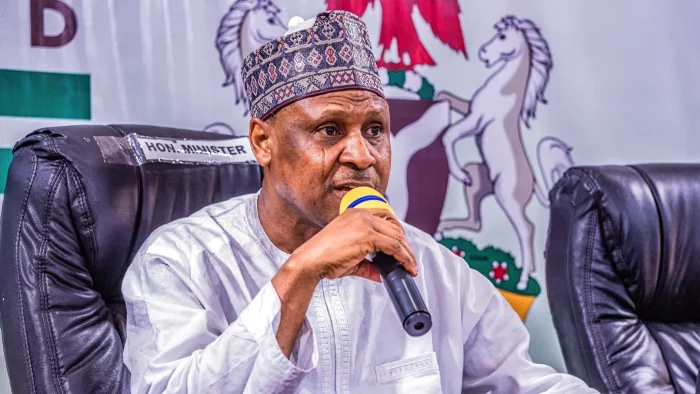
The warning was given by the Minister of Information and National Orientation, Mohammed Idris, on Thursday in Abuja at the end of a two-day event marking the unveiling of the International Media and Information Literacy Institute at the National Open University of Nigeria.
The event brought together government officials, media professionals, academics, and international partners to discuss the growing challenges of information disorder in the digital age and the need for stronger public awareness.
According to the minister, the rise of false information, especially on social media and digital platforms, poses serious risks to governance, national unity, and democratic stability. He stressed that the ability to identify and verify information has become more important than ever.
“In a world shaped by rapid technological change and the constant flow of information, the ability to think critically, verify facts, and engage responsibly is fundamental to the health of our societies and the strength of our democracies,” he said.
President Bola Ahmed Tinubu had earlier inaugurated the institute at the Presidential Villa, positioning Nigeria as a leading player in global efforts to combat misinformation and promote responsible communication.
The new institute has already gained international attention. In November 2025, the UNESCO approved its designation as a Category 2 institute during its 43rd General Conference held in Samarkand, Uzbekistan. This makes it the first institute of its kind in the world, a development seen as a major milestone for Nigeria.
The International Media and Information Literacy Institute is expected to serve as a global centre for research, training, and policy development in the area of information literacy. It will also work with governments, civil society, and international organisations to promote better understanding of how information is created, shared, and consumed.
Speaking through the Executive Secretary of the Nigerian Press Council, Mr Dili Ezughah, the minister said the government remains committed to supporting the institute to achieve its goals.
He noted that misinformation is no longer just a communication problem but a serious issue that affects many aspects of national life, including security, elections, and public trust in institutions.
“The establishment of the institute comes at a time when the world is grappling with misinformation, disinformation, and the erosion of trust in institutions,” he added.
Experts say the spread of false information has become easier with the growth of digital technology, especially with the rise of Artificial Intelligence tools that can generate realistic but misleading content. In Nigeria, fake news has been linked to election tensions, ethnic divisions, and even violence in some cases.
The Vice-Chancellor of the National Open University of Nigeria, Professor Uduma Uduma, described the creation of the institute as a major step forward for the country. He said it shows Nigeria’s ability to lead in global education and knowledge development.
According to him, the digital age has created what he called an “epistemic paradox,” where people have more access to information than ever before, but understanding has not improved at the same rate.
“Media and information literacy is no longer an academic accessory; it is essential for responsible existence in today’s world,” he said.
He explained that many people now receive large amounts of information daily from different sources, including social media, blogs, and online news platforms. However, without the skills to evaluate this information, they may struggle to separate facts from falsehood.
Also speaking at the event, former Minister of Information and Culture, Lai Mohammed, described misinformation as a serious threat to national security and unity.
He repeated his long-standing call for stronger regulation of social media platforms, arguing that such measures are necessary to protect the public from harmful content. He also stressed that regulation should not be seen as an attempt to limit free speech but as a way to ensure responsible use of digital platforms.
The issue of regulating social media has been a subject of debate in Nigeria for several years. While some support tighter controls to curb fake news, others worry that such policies could be used to suppress dissent or limit press freedom.
In her remarks, the Director of the institute, Mrs Sharon Omotosho, outlined plans to make the centre a global leader in media and information literacy. She said the institute would focus on research, advocacy, training, and partnerships.
According to her, the goal is to build a society where people are better informed and more responsible in how they use and share information.
She also explained that the institute would act as a global observatory, tracking trends in how information spreads and helping policymakers design better responses to misinformation.
“Our aim is to build a media and information literate world,” she said.
In Nigeria, the challenge is even more complex due to the country’s large population, diverse cultures, and growing internet use. Millions of Nigerians now rely on smartphones and social media for news, making it easier for both accurate and false information to spread widely.
They also note that education will play a key role. Schools, universities, and training institutions are expected to include media literacy in their programmes to prepare young people for the digital world.
As the Federal Government continues to push for stronger awareness, the success of the new institute will depend on how well it can work with partners both within and outside Nigeria.
For now, officials say the message is clear: in an age where information is everywhere, the ability to understand and verify it is no longer optional but necessary for national development and social stability.
With the establishment of the new institute, Nigeria is taking a step toward addressing one of the most pressing challenges of the modern world—ensuring that citizens are not only informed but also equipped to tell the difference between truth and falsehood.