
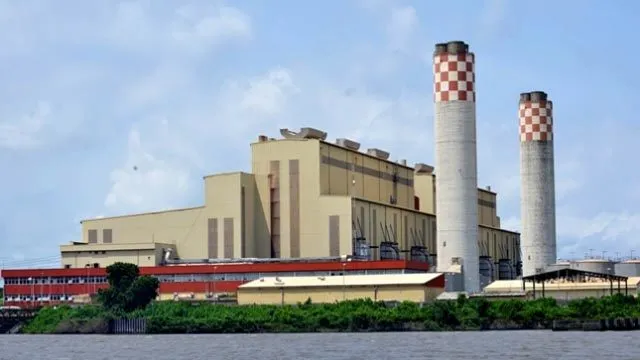
Electricity supply in Lagos has been severely disrupted following a major shutdown at the Egbin Power Station and a simultaneous fault on a key transmission line that supplies power to the state, the Nigerian Independent System Operator has confirmed.
The development has led to a significant drop in electricity supply across Lagos and surrounding areas, raising concerns over prolonged blackouts in Nigeria’s busiest economic and commercial hub.
In a statement issued on Thursday, the operator said the situation began late on April 28, 2026, when the Egbin Power Station experienced a critical operational failure that forced it to shut down completely. At the same time, a separate fault occurred on the Osogbo–Ikeja West 330kV transmission line, which is a major route used to send electricity into Lagos.
The combined effect of these two incidents has created what energy experts describe as a “dual shock” to the power system, reducing both the amount of electricity being generated and the capacity to transmit it into Lagos.
According to the system operator, the Egbin Power Station, located in Ikorodu, recorded a sudden collapse in output from about 641 megawatts to zero at approximately 8:21 p.m. on April 28.
The plant is one of the most important facilities connected to Nigeria’s national grid and plays a major role in supplying electricity to Lagos and other parts of the country. It is also the largest thermal power station on the grid, with an installed capacity of over 1,300 megawatts.
The operator explained that the shutdown was caused by technical failures involving the plant’s central compressor unit and the circulating water pump system. These faults triggered an automatic safety shutdown of all generating units to prevent further damage to the facility.
“The Nigerian Independent System Operator wishes to inform the general public of a significant reduction in power generation currently affecting electricity supply across the country, particularly within the Lagos region,” the statement said.
It added: “At approximately 8:21 p.m. on April 28, 2026, Egbin Power Station recorded a total loss of generation, dropping from about 641MW to zero output. This incident was caused by the failure of the plant’s central compressor, in addition to a malfunction of the circulating water pump system, which necessitated an immediate shutdown of all generating units to safeguard the facility.”
While engineers were still assessing the situation at Egbin, another problem emerged on the transmission network. The Osogbo–Ikeja West 330kV line, which plays a key role in transmitting power from the national grid into Lagos, developed a fault that further reduced the flow of electricity into the state.
The operator said this second failure worsened an already difficult situation by limiting the evacuation of available electricity into Lagos, which is Nigeria’s largest power consumption centre.
“Power supply to the Lagos region is currently further restricted due to the forced outage of the Osogbo–Ikeja West 330kV transmission line, thereby limiting the evacuation of available generation into the Lagos load centre,” it said.
Lagos, with its large population, dense commercial activity, and industrial base, consumes a significant portion of Nigeria’s electricity supply. Any disruption in generation or transmission often has immediate and widespread effects on homes, businesses, and essential services.
With both generation and transmission systems affected at the same time, system operators have begun implementing load-shedding measures. This means that electricity supply is being rationed across different areas in order to stabilise the national grid and prevent a total system collapse.
According to the statement, emergency measures have already been activated, including the redistribution of available power across electricity distribution companies. Priority is being given to critical infrastructure such as hospitals, security agencies, water supply systems, and other essential services.
The operator also said efforts are ongoing to optimise output from other power plants connected to the grid in order to reduce the impact of the shortfall on consumers.
“Consequently, this loss of generation has created a significant supply shortfall, necessitating immediate load-shedding measures to maintain grid stability and prevent a wider system disturbance,” the statement said.
“System operators have since deployed contingency measures, including the reallocation of available load across distribution companies, with priority given to critical national infrastructure,” it added.
It also assured the public that engineers are working closely with stakeholders in the power sector to restore normal supply as quickly as possible.
“We acknowledge the inconvenience this situation has caused electricity consumers, especially within Lagos and surrounding areas, and we assure the public that all relevant stakeholders are working closely to resolve the situation as quickly as possible,” the operator said.
Power sector experts say the incident highlights the fragility of Nigeria’s electricity system, which often depends heavily on a few major plants and transmission corridors. When one or two of these key components fail, large parts of the country can experience shortages.
Over the years, Nigeria’s power sector has faced repeated challenges, including poor infrastructure maintenance, gas supply issues, transmission bottlenecks, and funding constraints. These problems have often resulted in unstable electricity supply, despite efforts to improve generation capacity.
The Egbin Power Station has historically been one of the backbone facilities of the national grid. Any disruption at the plant is usually felt across Lagos and neighbouring states, given its strategic importance.
As repair works continue, residents and businesses in Lagos are bracing for possible power rationing in the coming days. Many households may have to rely on generators or alternative power sources until full restoration is achieved.
Authorities have urged consumers to remain patient while engineers work to fix the faults and restore stability to the grid.