
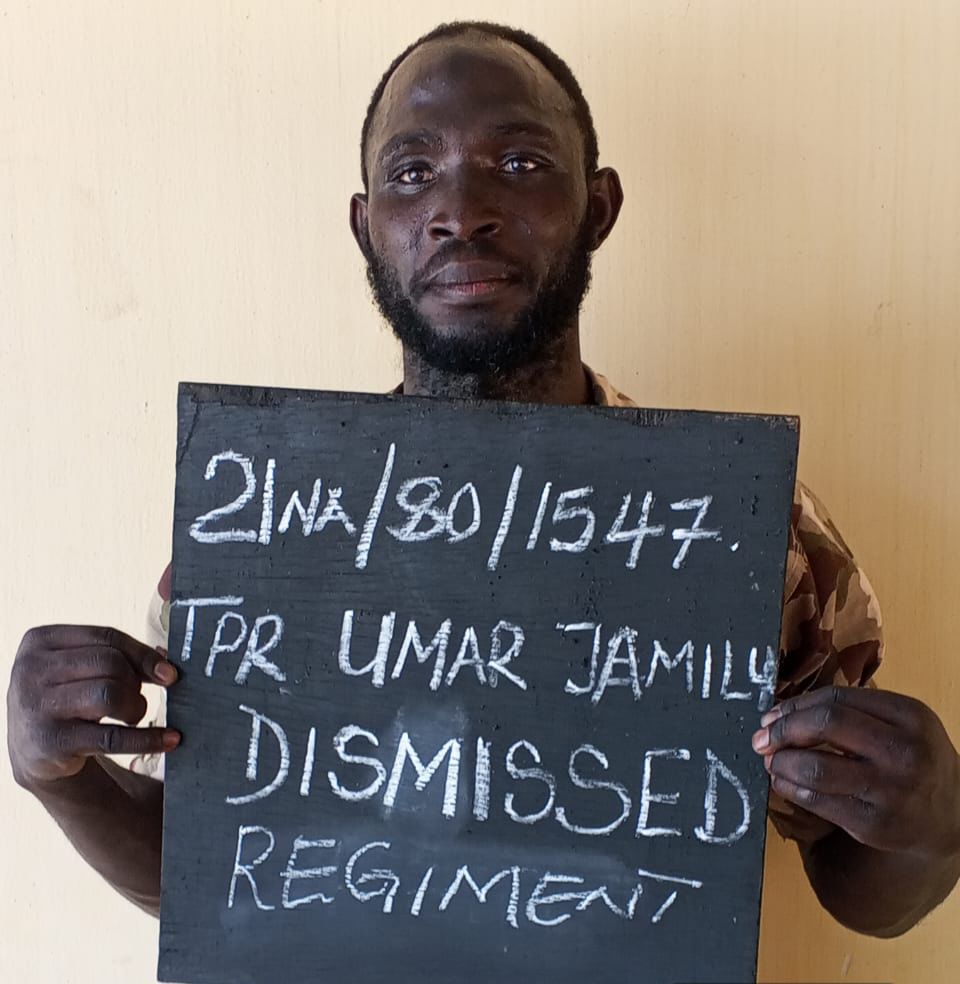
The Nigerian Army has sanctioned one of its personnel serving in the North-East over a viral social media post alleging poor feeding among troops. The Army described the claim as misleading and said it did not reflect the actual welfare conditions of soldiers on the front lines.
The affected soldier is part of Operation Hadin Kai, the ongoing military operation against insurgency in the North-East region. The Army said the disciplinary action followed an internal investigation into the post, which had raised concerns among members of the public about the welfare of troops fighting insurgents.
In a statement issued on Saturday, the Media Information Officer of the Joint Task Force North-East, Sanni Uba, said the Army took the matter seriously and conducted a detailed review in line with its procedures.
According to him, the findings showed that the image shared by the soldier did not present the full picture of the food provided to troops. He said the post gave a false impression that soldiers were being poorly fed.
“The Headquarters Theatre Command Joint Task Force (North East), Operation Hadin Kai, has noted with concern recent social media publications alleging poor feeding of troops within the theatre of operation,” the statement said.
“Following a detailed internal review, the Theatre Command wishes to categorically state that the images and narratives being circulated are misleading and do not reflect the actual feeding arrangements or welfare standards of troops in the North-East.”
The Army explained that soldiers deployed in the region are fed according to approved standards. It added that feeding arrangements are regularly monitored and, where possible, improved during special periods such as religious celebrations.
Uba noted that meals provided to troops are sometimes enhanced during occasions like Eid al-Fitr and Easter to boost morale among personnel who are far from their families.
He further explained that the feeding system in the military is not random but follows a structured process. According to him, food distribution is managed through committees made up of personnel from different ranks, with senior non-commissioned officers overseeing the process.
This system, he said, is designed to ensure fairness, transparency, and proper supervision in how meals are planned, prepared, and shared among troops, even under difficult conditions.
The investigation, however, identified what the Army described as deliberate misconduct by the soldier involved. According to the statement, the image used in the viral post did not represent the full ration issued at the time it was taken.
“Investigations confirmed that the image did not represent the complete ration issued to the individual at the time,” Uba said.
As a result, the Army applied disciplinary measures against the soldier in line with the provisions of the Armed Forces Act. While the exact nature of the punishment was not disclosed, the Army said the action was necessary to maintain discipline and protect the integrity of the force.
Military authorities stressed that discipline is a key part of operations, especially in conflict zones where coordination and trust are essential. They warned that actions capable of spreading misinformation could harm morale and weaken the unity of troops.
The Army also used the opportunity to reassure Nigerians that the welfare of soldiers remains a top priority, despite the challenges of operating in the North-East. The region has been affected by insurgency for over a decade, making logistics and supply more difficult compared to other parts of the country.
Operation Hadin Kai, which replaced earlier operations such as Lafiya Dole, is responsible for combating insurgent groups in states like Borno, Yobe, and Adamawa. Troops often operate in remote areas, facing harsh weather, poor road networks, and security risks.
Despite these challenges, the Army said efforts are continuously made to ensure that soldiers are properly cared for. This includes providing food, medical support, and other welfare services needed to sustain them during operations.
“While operations in the North-East present significant logistical and environmental challenges, consistent efforts are made to ensure that personnel are adequately catered for, even under demanding field conditions,” the statement added.
The Army also encouraged its personnel to make use of internal channels to address complaints or concerns. According to Uba, there are established systems within the military for resolving issues without going public.
He warned that taking grievances to social media could create misunderstanding and damage the image of the military, especially when the information shared is incomplete or inaccurate.
“Troops are encouraged to utilise established internal channels for the timely resolution of grievances, rather than resorting to actions capable of misrepresenting operational realities or undermining unit cohesion and morale,” he said.
The incident has once again highlighted the role of social media in shaping public opinion about national security issues. In recent years, viral posts from both civilians and security personnel have influenced how Nigerians view the situation in conflict areas.
While social media can help bring attention to genuine concerns, authorities say it can also spread misinformation if not properly verified. The Army urged the public to rely on official sources when seeking information about military operations.
“The spread of misinformation by individuals or groups seeking attention or financial gain undermines ongoing military operations and the collective national security effort,” Uba said.
For many Nigerians, the welfare of soldiers remains a sensitive issue, given the sacrifices they make in protecting the country. Incidents like this often generate strong reactions, as citizens expect the government to provide adequate support for those on the front lines.