
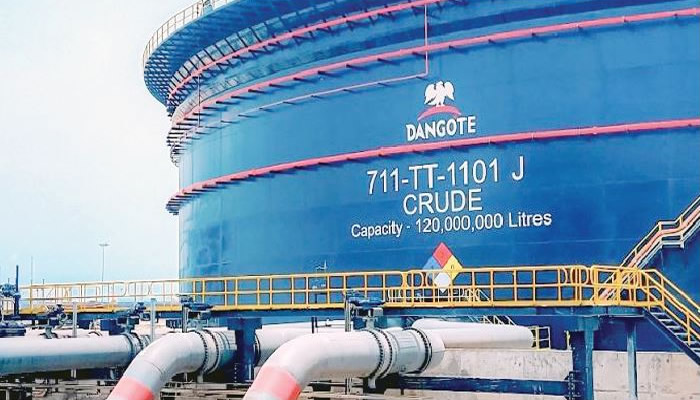
The Dangote Refinery has increased the ex-depot price of Premium Motor Spirit (PMS), also known as petrol, to N1,350 per litre, deepening concerns over rising fuel costs and the growing burden on Nigerians.
The latest adjustment, confirmed on Wednesday by a senior official of the refinery and data from Petroleumprice.ng, represents a N75 increase from the previous price of N1,275 per litre. This marks the second increase of the same amount within one week, highlighting the fast-changing nature of fuel pricing in the country’s downstream sector.
According to industry sources, the new price has already taken effect across all loading points, also known as gantries, where marketers purchase fuel in bulk before distributing it nationwide. The development has forced fuel marketers to quickly review their pricing structures, with many expected to raise pump prices in response.
A senior official familiar with the changes said the new pricing template had been activated across the board. “All loading points have been updated, and marketers are already responding by adjusting their depot prices. This is not an isolated change; it reflects prevailing supply and cost pressures in the system,” the official said.
The increase comes barely a week after the refinery raised its ex-depot price from N1,200 to N1,275 per litre. The repeated adjustments underline the growing influence of the Dangote Refinery in determining local fuel prices, especially as Nigeria continues to shift away from reliance on imported petroleum products.
For decades, Nigeria depended heavily on fuel imports despite being a major crude oil producer. This situation was largely due to the poor state of government-owned refineries, which operated below capacity or remained shut for long periods. As a result, the country spent billions of naira on fuel imports and subsidies to keep pump prices relatively stable.
However, recent reforms in the oil sector, including the removal of fuel subsidy and the push for local refining, have changed the dynamics. The entry of the Dangote Refinery, one of the largest single-train refineries in the world, is expected to reduce dependence on imports and stabilise supply in the long term.
Despite this expectation, the current situation shows that local refining does not automatically mean lower prices. Industry experts explain that fuel pricing still depends on several factors, including the cost of crude oil, foreign exchange rates, and logistics expenses such as transportation and storage.
A senior management official of the Dangote Group recently disclosed that the refinery has been subsidising the petrol and diesel it supplies to the Nigerian market. This claim suggests that actual market prices could be even higher without internal cost adjustments by the company.
The latest price hike also comes at a time when supply challenges have affected the downstream market. Earlier in the week, there was a temporary suspension in the issuance of pro forma invoices (PFI), which are necessary documents for lifting fuel from depots. Market players say this move created a short-term supply gap, making products less available.
“The suspension of PFI created a short-term supply squeeze,” another industry source explained. “When you combine that with international crude price movements and logistics costs, it becomes inevitable that depot prices will adjust upward. What we are seeing is a direct market response to those realities.”
Over the past month, the Dangote Refinery has adjusted petrol prices several times. In some cases, prices were reduced slightly due to competition and high stock levels. However, those reductions were short-lived, as supply tightened and global crude oil prices began to rise again.
This pattern reflects what analysts describe as a transition period in Nigeria’s fuel market. With the removal of subsidies and the rise of domestic refining, prices are now more closely tied to global market conditions. This means that fluctuations in crude oil prices or exchange rates can quickly affect local fuel costs.
For consumers, the impact is immediate and often severe. Petrol is a key driver of transportation and production costs in Nigeria. Any increase in fuel prices usually leads to higher transport fares, which in turn affects the prices of food and other essential goods.
Across major cities, including Lagos, Abuja, and Kano, commuters have already begun to feel the effects of previous price hikes. Commercial drivers often adjust fares quickly to reflect higher fuel costs, leaving passengers with little choice but to pay more.
Small business owners are also affected, as many rely on petrol-powered generators due to unreliable electricity supply. An increase in fuel prices means higher operating costs, which are often passed on to customers.
At the same time, some analysts argue that the current situation is part of a necessary adjustment. They believe that a fully deregulated market, though painful in the short term, could lead to more efficiency and investment in the long run.
They also point out that the Dangote Refinery’s growing role in local supply could eventually improve stability, especially if production levels increase and distribution networks become more efficient.
For now, however, uncertainty remains. With prices changing frequently, marketers and consumers alike are finding it difficult to plan ahead. Many Nigerians are watching closely to see whether the trend of increases will continue or if prices will stabilise in the coming weeks.