
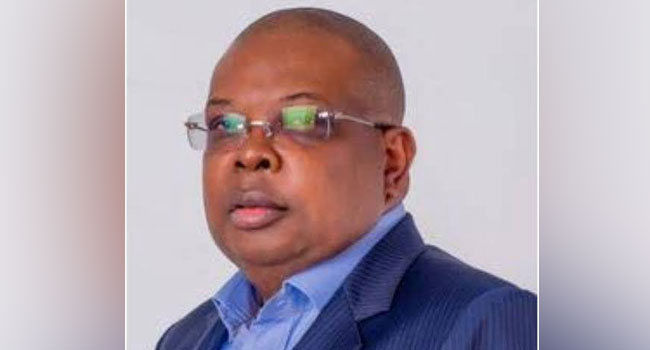
Nigeria’s new Minister of Power, Olasunkanmi Tegbe, has assured Nigerians that the era of repeated national grid collapse and unstable electricity supply will soon be addressed, pledging urgent reforms to fix the country’s troubled power sector.
Tegbe gave the assurance on Wednesday during his screening at the Senate plenary in Abuja, where he was later confirmed as minister after facing questions from lawmakers over how he intends to tackle the long-standing challenges in the sector.
The screening session, presided over by Senate President Godswill Akpabio, was marked by tough questions and strong warnings from senators who demanded clear timelines, transparency, and practical solutions to Nigeria’s electricity crisis.
After the session, the Senate unanimously confirmed Tegbe’s appointment, but not without placing heavy expectations on him to deliver quick and measurable results.
Nigeria’s power sector has struggled for decades with unreliable electricity supply, frequent grid collapses, and widespread infrastructure problems. Businesses and households across the country continue to rely heavily on generators, increasing the cost of living and doing business.
Lawmakers at the screening expressed frustration over what they described as repeated promises without results, warning that Nigerians are no longer willing to wait indefinitely for improvements.
They said the new minister must act fast to restore confidence in the system and ensure that electricity becomes more stable and accessible.
Leading the discussion, Senator Mohammed Tahir Monguno described Tegbe’s appointment as timely but stressed that the scale of the problem requires urgent and decisive action.
He criticised the frequent collapse of the national grid, calling it a major obstacle to Nigeria’s development and industrial growth.
“Grid collapse has become a recurring issue, undermining development. Transmission has failed to match generation capacity,” Monguno said.
He also pointed to insecurity in parts of the North-East as a factor contributing to damage to power infrastructure, making the situation even more difficult.
Responding to the concerns, Tegbe admitted that the problems facing Nigeria’s power sector are deep and complex. He said the recurring grid collapse is not accidental but a sign of broader structural issues within the system.
“Grid collapse is not accidental; it reflects deeper structural problems,” he said.
According to him, challenges such as weak coordination among stakeholders, poor enforcement of technical standards, and inadequate gas supply to power plants have contributed to the instability of the national grid.
To address these issues, Tegbe announced a 100-day reform plan aimed at stabilising the grid and improving electricity supply across the country.
He also promised to introduce a public performance dashboard that will allow Nigerians to track progress and hold the ministry accountable.
“If there are no results in three months, there will be none in six. Nigerians should hold us accountable,” he said.
The minister further raised concerns about individuals and groups who may be benefiting from the inefficiencies in the sector. He warned that such interests would be confronted as part of efforts to reform the system.
“There are elements that do not want the system to work because they benefit from its failure. We will take them on,” he added.
On the issue of vandalism, which has affected power lines and installations across the country, Tegbe described it as a serious national security threat.
He said the government would strengthen collaboration with security agencies, including the Office of the National Security Adviser and the military, to protect critical power infrastructure.
Another major concern raised during the screening was the financial state of the power sector. Lawmakers noted that the sector is facing a liquidity crisis estimated at about N6 trillion, which has discouraged investment and weakened operations across the electricity value chain.
Tegbe acknowledged the problem and said the current financial model is not sustainable. He promised to introduce reforms that would improve funding while ensuring that electricity remains affordable for ordinary Nigerians.
“Electricity pricing must reflect market realities, but affordability remains essential. We will ensure a fair balance,” he said.
Senator Tokunbo Abiru called for clear timelines on when Nigerians can expect stable electricity supply, stressing that reliable power is essential for economic growth and job creation.
Similarly, Senator Orji Uzor Kalu criticised the structure of the power sector, which is divided into generation, transmission, and distribution companies. He argued that poor coordination among these segments has contributed to inefficiency.
In response, Tegbe said his reform plan would focus on improving coordination across the sector. He also promised to ensure better gas supply to power generation companies and speed up the rollout of electricity meters nationwide.
The issue of estimated billing has been a major source of complaints among Nigerians, with many consumers accusing distribution companies of overcharging. Tegbe said expanding metering would help address this problem and improve revenue collection.
On rural electrification, the minister said the government would expand the use of mini-grids and renewable energy, especially solar power, to provide electricity to communities that are not connected to the national grid.
“Decentralised energy will be key to reaching underserved communities and ensuring inclusive access,” he said.
Deputy Senate President Barau Jibrin emphasised the importance of reliable electricity to Nigeria’s economy, describing the power sector as one of the country’s biggest challenges.
“Our industries cannot thrive without reliable electricity. What we need now are results, not assurances,” he said.
Despite the tough questions and criticism, lawmakers expressed cautious optimism about Tegbe’s ability to deliver, noting his professional background and the clarity of his plans.
In his closing remarks, the minister acknowledged the difficulty of the task ahead but expressed confidence that meaningful progress can be achieved with proper planning and discipline.
“This is a difficult assignment, but progress is achievable with transparency, discipline, and collaboration. Nigerians will see change,” he said.
With his confirmation now secured, Tegbe faces the challenge of turning his promises into reality. For many Nigerians, the coming months will be a test of whether the government can finally address the long-standing problems in the power sector.
As the country continues to grapple with unreliable electricity supply, expectations are high that this new leadership will bring lasting solutions and put an end to the cycle of grid collapses that has affected both businesses and households for years.