
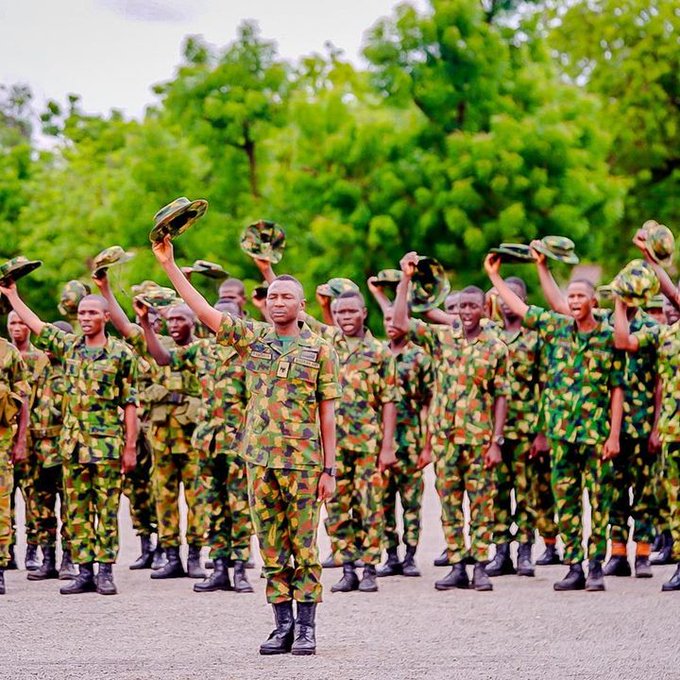
The Nigerian Army has announced stricter measures for its 2026 Captain-to-Major Written Promotion Examination, with senior officials calling for discipline, fairness, and transparency throughout the process.
The directive was given by the Commander of the Training and Doctrine Command Nigerian Army, Major General Peter Malla, during a meeting with members of the examination panel in Benin City. The event took place at the Nigerian Army School of Supply and Transport, where Malla also serves as the Examination President.
Speaking at the gathering, Malla made it clear that the credibility of the promotion exercise must not be questioned. He urged panel members to carry out their duties with honesty and professionalism, noting that the outcome of the examination would shape the future leadership of the Army.
“The integrity of this examination process must not be compromised,” he said. “You are expected to uphold the highest standards of professionalism and fairness in the discharge of your duties.”
The promotion examination is a key step in the career progression of officers in the Nigerian Army. Moving from the rank of Captain to Major is considered a major milestone, as it comes with increased responsibilities, including leadership roles in operations, training, and administration.
Malla stressed that the examination should not be seen as a routine exercise, but as a serious process that determines which officers are ready to take on higher responsibilities. According to him, candidates must be carefully assessed not only on academic knowledge but also on their leadership ability and problem-solving skills.
“Candidates must be rigorously assessed based on their leadership qualities, critical thinking abilities, and capacity to address contemporary security challenges,” he said.
Nigeria has faced several security challenges in recent years, including insurgency in the North-East, banditry in the North-West, and other forms of internal security threats. As a result, the Army has continued to place strong emphasis on training and leadership development to ensure that its officers are prepared to respond effectively.
Malla also linked the examination process to the vision of the Chief of Army Staff, noting that it aligns with ongoing reforms aimed at building a more effective fighting force.
“This examination is key to shaping the future leadership of the Nigerian Army,” he said. “It is therefore imperative that the process remains credible and in line with established guidelines.”
He further directed panel members to follow the Nigerian Army Charter for Promotion Examinations 2022 (Revised), which provides detailed rules and procedures for conducting promotion tests. The charter is designed to ensure fairness, transparency, and uniform standards across all examinations.
The TRADOC Commander expressed confidence in the ability of the panel members to deliver a credible outcome. He urged them to let their actions reflect the core values of the Nigerian Army, including discipline, loyalty, and integrity.
“I have full confidence in your ability to deliver a credible and fair examination,” he said.
He also appreciated the support of the Chief of Army Staff in ensuring that the necessary resources and guidance are available for the successful conduct of the examination.
Earlier in his remarks, the Commandant of the Nigerian Army School of Supply and Transport, Major General Adebayo Adegbite, welcomed participants and described the hosting of the examination as a privilege.
“We are honoured to host this important examination and remain fully committed to providing the necessary support for its successful conduct,” Adegbite said.
He assured that the institution would provide a conducive environment for the exercise, including logistics, security, and administrative support.
The highlights on transparency and fairness is particularly important in a system where promotions can influence morale and career progression. Any perception of bias or irregularity can undermine trust within the ranks.
By raising the standards for the 2026 promotion examination, the Nigerian Army appears to be sending a strong message about its commitment to merit and professionalism. The move is expected to encourage officers to improve their skills and prepare more thoroughly for the challenges ahead.
As preparations continue, attention will be focused on how the examination is conducted and whether it meets the expectations set by the Army leadership. For many officers, the outcome will determine not only their next rank but also their role in shaping the future of the force.
With Nigeria’s security environment still evolving, the need for capable and well-trained leaders remains critical. The Army’s decision to strengthen its promotion process is seen as a step in the right direction, aimed at ensuring that those who rise through the ranks are ready to meet the demands of modern military operations.