
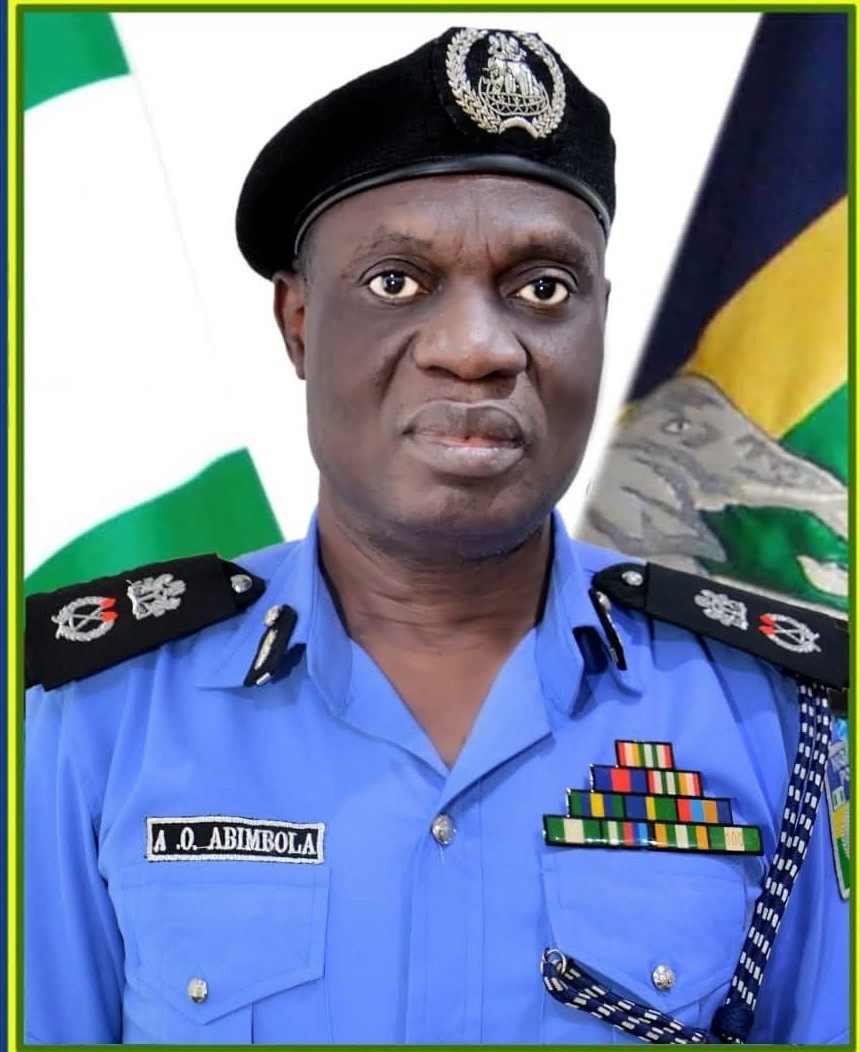
The Commissioner of Police in Oyo State, Olugbemiga Abimbola, has called on journalists in the state to support the police in tackling crime and improving security across the state.
The police commissioner made the appeal on Thursday during a courtesy visit by executives of the Oyo State Council of the Nigeria Union of Journalists to the state police headquarters in Ibadan.
Abimbola said collaboration between the media and the police remained very important in addressing emerging security threats and ensuring effective policing in Oyo State.
According to him, the relationship between journalists and the police has over the years contributed positively to security and public awareness in the state.
“Partnership with journalists remains crucial to addressing emerging security threats and enhancing effective policing in the state,” the commissioner said.
“We need your support in projecting our achievements and correcting public misconceptions about the police.”
The CP described security as a collective responsibility that cannot be handled by security agencies alone. He noted that the police rely heavily on useful and credible information from members of the public, including journalists, to carry out successful operations.
He also stressed the importance of responsible journalism at a time when misinformation and fake news have become major challenges in society.
According to Abimbola, inaccurate information can create panic, damage public trust and complicate security operations if not properly managed.
The police commissioner recalled his early experience as a cub reporter with Radio Kwara, saying the experience gave him an understanding of the important role journalists play in society.
His remarks drew attention from members of the NUJ delegation, many of whom welcomed the commissioner’s understanding of media work and communication.
In recent years, the relationship between the Nigerian media and security agencies has often faced challenges, especially over issues involving press freedom, access to information and reports of police misconduct.
However, security experts have repeatedly stated that cooperation between journalists and law enforcement agencies is important in fighting crime and maintaining public order.
Abimbola also disclosed that the police authorities were increasing efforts to improve discipline among officers and men of the Nigeria Police Force.
“The police authorities are intensifying efforts to ensure discipline among officers and men,” he said.
He advised journalists to report any case of misconduct directly to the command, assuring that complaints against officers would be treated seriously.
Public complaints against police officers have remained a major concern in Nigeria over the years. Citizens have frequently accused some officers of extortion, abuse of power, illegal detention and harassment.
Following the nationwide #EndSARS protests in 2020, the Nigeria Police Force promised reforms aimed at improving professionalism and accountability within the force.
Although police authorities have repeatedly introduced disciplinary measures and training programs, many Nigerians still believe more work needs to be done to rebuild public trust.
During the meeting, Abimbola also announced plans to inaugurate a newly created police unit in Oyo State as part of efforts by the Inspector-General of Police, Tunji Disu, to strengthen security operations nationwide.
According to him, officers assigned to the unit had already undergone special training before deployment.
“The Inspector-General of Police had established a new police unit to strengthen operations nationwide. Officers designated for the unit had undergone training,” he said.
“The unit would be inaugurated at the state command tomorrow, Saturday, May 16, 2026.”
Although the commissioner did not provide detailed information about the operations of the new unit, security observers believe the initiative may be part of broader efforts to improve response to growing security concerns across the country.
Nigeria continues to face different security challenges, including kidnapping, armed robbery, cultism, cybercrime and violent attacks in several parts of the country.
While Oyo State is considered relatively peaceful compared to some regions, the state has also experienced cases of armed robbery, cult clashes and farmer-herder disputes in recent years.
Because of this, security agencies in the state have continued to seek stronger cooperation with residents, community leaders and the media.
Earlier in his remarks, the Chairman of the Oyo State Council of the NUJ, Akeem Abas, commended the commissioner for his performance since assuming office.
Abas attributed the relative peace currently being enjoyed in Oyo State to the efforts of the police command and other security agencies.
He praised the police for their role in crime prevention and the arrest of criminal suspects across the state.
The NUJ chairman noted that journalists, security agencies and government institutions all have important responsibilities in protecting democracy and ensuring social stability.
“Journalists, as agenda setters, alongside security agencies and government, must practise the ideals they advocate,” he said.
Abas also stressed the need for collaboration among journalists, security agencies and the Independent National Electoral Commission ahead of the next general elections.
Nigeria’s elections are often accompanied by security concerns, misinformation and political tension, making the role of the media and security agencies especially important during election periods.
At the same time, security agencies are expected to maintain law and order while ensuring that elections are conducted peacefully.
Abas disclosed that the NUJ in Oyo State was already planning a summit as part of preparations for the forthcoming elections.
According to him, the summit would focus on strengthening cooperation between the media, security agencies and electoral officials in order to promote peaceful and credible elections.
The meeting between the police leadership and journalists also reflects increasing recognition of the role communication plays in modern policing.
Across the world, police organisations now rely heavily on public communication, media relations and community engagement to improve intelligence gathering and build trust with citizens.
In Nigeria, however, public confidence in the police has remained mixed due to longstanding concerns over corruption, abuse and poor welfare for officers.
Despite these challenges, many security experts argue that stronger partnerships between the police, journalists and local communities could help improve crime prevention and public safety.
For many residents of Oyo State, the call for cooperation is seen as a positive step toward strengthening security and ensuring peace in the state.
As the country gradually moves closer to another election season, both journalists and security agencies are expected to play critical roles in maintaining stability, combating misinformation and protecting democratic processes.
The discussions held at the police headquarters in Ibadan may therefore signal a renewed effort to build trust and cooperation between the media and law enforcement authorities in Oyo State.