
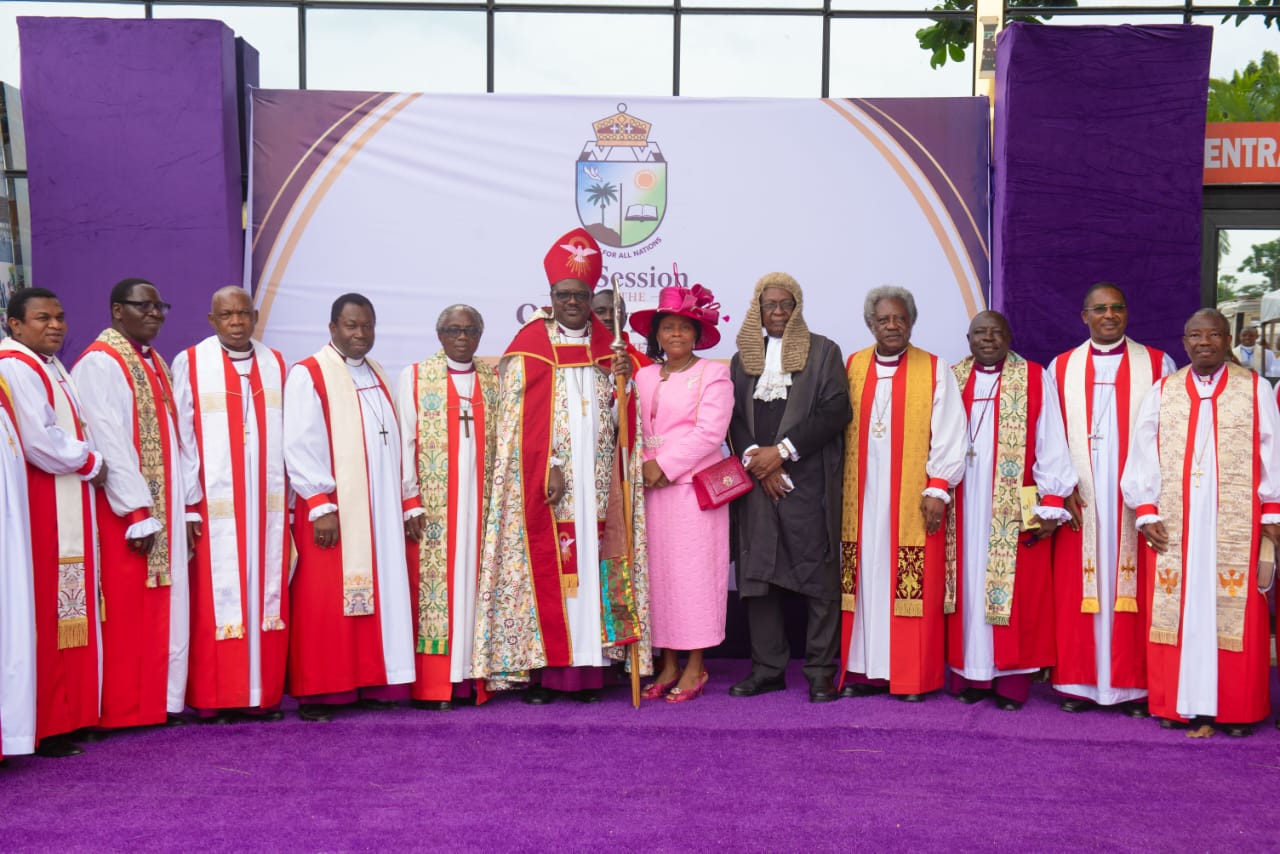
The Anglican Bishop of the Diocese of Lagos West, Rt. Rev. Olusola Odedeji, has expressed concern over the worsening economic hardship in Nigeria, saying many citizens are struggling to survive due to the rising cost of living and the falling value of the naira.
The cleric, however, urged Nigerians not to lose hope, expressing confidence that the country would eventually overcome its current challenges and return to stability.
Bishop Odedeji spoke on Friday while delivering his presidential address at the Third Session of the Ninth Synod of the Diocese of Lagos West, held at the Archbishop Vining Memorial Cathedral Church in Ikeja, Lagos State.
According to a statement released on Saturday, the bishop described the current economic situation as painful for many Nigerians, noting that the purchasing power of citizens had dropped sharply in recent years.
He said the decline in the value of the naira and the increasing pressure on households had made life difficult for many families across the country.
“The naira has lost value. Sometimes you are afraid to open your phone because of the numerous requests and bank account numbers that will be waiting for you. Things are that bad,” he said.
The bishop’s comments reflect growing public concern over the state of Nigeria’s economy as many citizens continue to battle inflation, high transportation costs, food price increases and rising unemployment.
Since the removal of fuel subsidy and the unification of the foreign exchange market by the Federal Government, prices of goods and services have risen sharply across the country.
Many Nigerians have repeatedly complained about the high cost of food, electricity, rent and transportation, while businesses have also struggled with rising operating costs.
Despite the hardship, Bishop Odedeji said the current situation should be seen as part of broader economic reforms being carried out by the government.
According to him, many developed countries also experienced difficult economic periods before achieving growth and stability.
“Many developed nations that our people are running to have gone through this phase. It’s a matter of time; we will get out of the woods. Those who have traveled out will begin to come back,” he said.
In recent years, many young Nigerians have left the country in search of better opportunities abroad, a trend popularly known as “Japa.”
The movement has been linked to economic hardship, insecurity and unemployment, with thousands of professionals, students and skilled workers relocating to countries such as the United Kingdom, Canada and the United States.
However, the bishop expressed optimism that Nigeria would recover and become attractive again for citizens living abroad.
Apart from the economy, Odedeji also spoke about the issue of insecurity in the country.
He said fear and uncertainty had become part of daily life for many Nigerians, including those travelling within the country.
According to him, even journeys between Lagos and Ibadan now create anxiety because of concerns over attacks and criminal activities on the roads.
The Lagos-Ibadan Expressway, one of the busiest roads in Nigeria, has in recent years witnessed incidents involving kidnappers, armed robbers and other criminal elements, despite increased security operations by law enforcement agencies.
The bishop urged President Bola Ahmed Tinubu to intensify efforts to improve security and protect lives and property across the country.
He stressed that economic development could only thrive in an environment where citizens feel safe.
While expressing concern over the national situation, Bishop Odedeji commended the Lagos State Government for what he described as its efforts in promoting safety, development and cooperation with religious organisations.
He specifically praised Governor Babajide Sanwo-Olu for supporting the Anglican Church and helping to address some of its challenges.
“The government of Lagos State is doing well. May God bless Lagos State. The church is indebted to him. On the issue of land ownership and some of our parishes, the governor has played a significant role. He also played a key role in the ‘City of God’ project being handled by the diocese,” he said.
Earlier in his address, the bishop reflected on the synod’s theme, “Who Is on the Lord’s Side,” using biblical references to speak about morality, righteousness and personal choices.
He said society is constantly faced with the battle between good and evil, urging Christians and leaders to stand on the side of truth and righteousness.
“There is a real and ongoing conflict. There are only two sides: the side of God and the side of the devil. We are always in a battle between right and wrong. The battle is both external and internal,” he said.
According to him, people who align themselves with God would experience peace, direction and distinction in life.
The cleric also advised leaders in government, business and religious institutions to ensure that their decisions are guided not only by efficiency and profit but also by moral and spiritual values.
Speaking at the event, Lagos State Governor Babajide Sanwo-Olu highlighted the important role of the church in nation-building and social development.
The governor, who was represented by the Secretary to the State Government, Mrs Abimbola Salu-Hundeyin, said the Anglican Church had contributed greatly to education, healthcare and humanitarian services in Nigeria.
“The Anglican Church came to Nigeria as a builder of society, wiping away tears in moments of pain. Through its parishes, schools, and hospitals, it has demonstrated the love of God and contributed immensely to society,” he said.
Sanwo-Olu also praised the church for supporting the government through prayers and moral guidance.
“Your prayers for this administration have kept us focused,” he added.
The governor urged the church to continue playing its role as a moral voice in society by promoting peace, encouraging civic responsibility and helping to address social problems.
He also called on religious institutions to support efforts aimed at tackling mental health issues, ethical decline and other social concerns affecting Nigerians.
The synod gathering brought together Anglican clergy, church leaders and members from different parts of Lagos State to discuss spiritual, social and national issues affecting the church and the country.
For many participants, the event served as both a religious gathering and a platform to reflect on Nigeria’s current realities, especially the economic and security challenges confronting millions of citizens.