
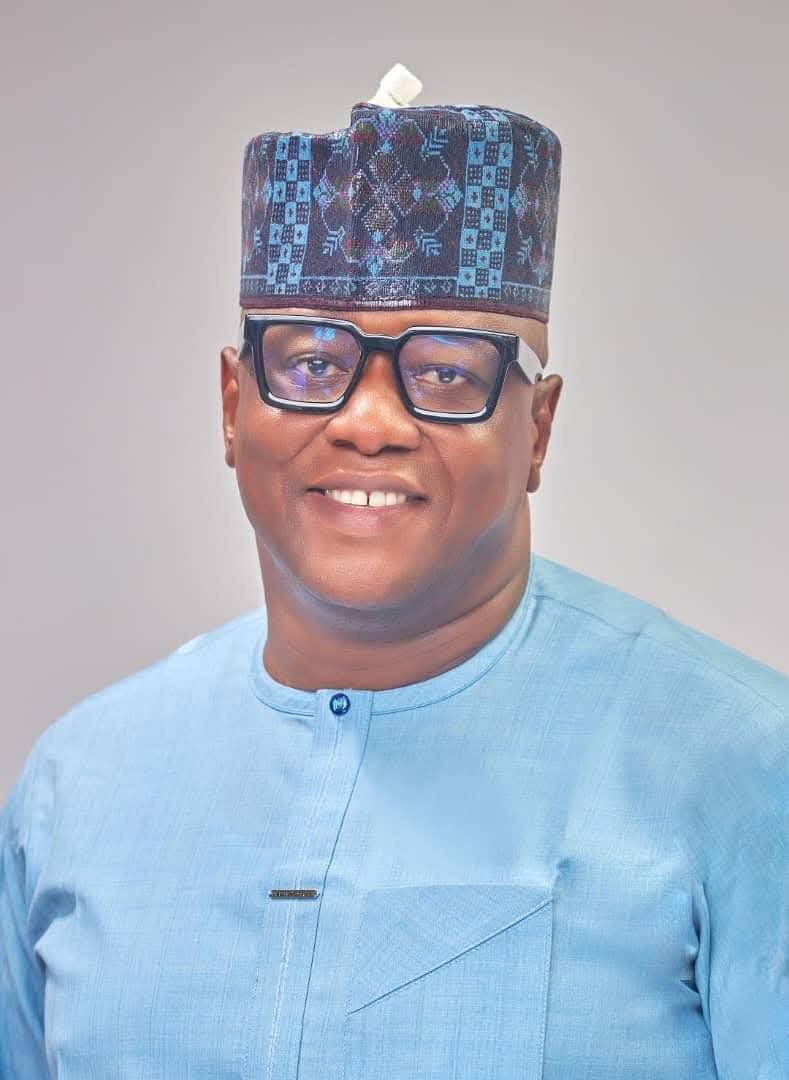
A retired naval officer and forensic accountant, Commander Yilchini Jan Bida, has formally declared his intention to contest the 2027 Plateau State governorship election on the APC platform, insisting he can defeat incumbent Governor Caleb Mutfwang in a free and fair party primary — and daring the party to make that primary genuinely competitive.
Bida, who hails from Kanke Local Government Area, made his ambition public at Kabwir Federal Ward in Kanke as part of preparations for the APC’s upcoming governorship primaries. He said his decision to run was driven by a desire to bring fresh, professionally grounded governance to a state that has suffered decades of insecurity, infrastructure decay and poor service delivery.
“Gone are the days when people simply come and say they want to govern,” he told supporters. “What is your manifesto? What is your agenda?” He promised a governance model built on accountability, discipline and a security-first doctrine rooted in his military background — a direct appeal to voters exhausted by years of deadly communal attacks and the displacement of entire communities across the state.
Bida’s entry into the race comes at a complicated moment in Plateau State politics. Governor Mutfwang, who previously served on the Peoples Democratic Party platform, defected to the APC in a high-profile ceremony at the Polo Field in Jos earlier this year. APC National Chairman Professor Nentawe Yilwatda and a large crowd welcomed the governor’s move, with Yilwatda declaring that both President Tinubu and Governor Mutfwang would win Plateau State overwhelmingly in 2027. Former Nasarawa governor Abdullahi Sule, speaking on behalf of North Central governors, described the defection as completing the APC’s hold across the entire zone.
Bida, however, is not prepared to let the party hand Mutfwang the ticket without a contest. Political observers note that his entry has already caused tension within Plateau APC, and some sources suggest that his challenge has attracted attention at the level of the presidency, which is engaging stakeholders on how to manage the internal dynamics.
The former naval officer’s case draws heavily on the security crisis that has defined life in Plateau State for years. Communal violence — often framed along ethnic and religious lines, and frequently involving disputes between farming communities and herder groups — has repeatedly devastated communities in Mangu, Bokkos, Jos North and other areas of the state. The violence has claimed many lives, destroyed farmland and displaced residents who have never fully returned home. Critics of successive Plateau State administrations argue that governance has been reactive at best — responding to crises after they erupt rather than building systems capable of preventing them.
Bida argues that his military training equips him uniquely to address this challenge. He has spoken about bringing to Plateau a style of security governance that is planned, intelligence-driven and results-focused, rather than one that depends on emergency reactions after communities have already been attacked.
He has been building grassroots credibility through community engagement. He visited the palace of the Ngolong Ngas traditional ruler in Pankshin to inform the monarch of his ambition and commiserate over recent security incidents in the area. The royal father urged him to pursue clean politics and seek divine guidance. More recently, he was conferred with the chieftaincy title of Sarkin Yaki Nemel — meaning “War Chief of Nemel” — by the Nemel Traditional Council during the 38th annual Pus Nemel cultural festival. Traditional recognitions of this kind carry weight in communities where local institutions remain central to political life.
Bida picked up his APC nomination form after the required consultations, a move that his team describes as a message to both the party leadership and the governor’s camp that he intends to contest this seat, not just make noise about it.
Whether the APC will allow a genuinely open primary in Plateau State — or whether the party’s national leadership will close ranks around the incumbent — remains to be seen. What Bida’s candidacy has already done is inject competition into a race that many assumed would be uncontested, and raised questions about internal party democracy that the APC will need to answer.