
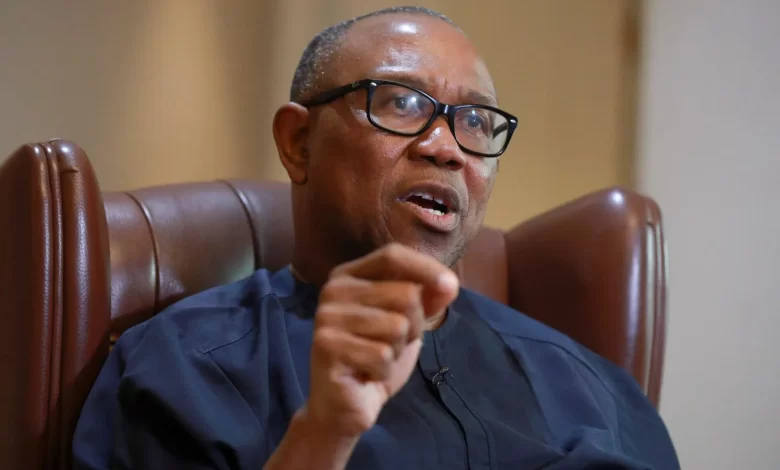
Peter Obi, the former Anambra State governor and Labour Party’s 2023 presidential candidate, has emerged as the sole aspirant for the presidential ticket of the Nigeria Democratic Congress ahead of the 2027 general elections, after no other contender purchased the party’s Expression of Interest Form before the Sunday, May 17 deadline closed.
With no rivals coming forward, Obi is now the undisputed front-runner for the NDC’s presidential nomination, subject to the party’s screening process, which began on Tuesday and runs until May 26, 2026.
The NDC’s National Secretary, Ikenna Morgan Enekweizu, confirmed the development in an official statement. He noted that while the presidential form window had shut firmly, the party extended the deadline for governorship, Senate, House of Representatives and State Assembly positions by one week, shifting the new cut-off to May 24. That extension did not apply to the presidential race. That door is closed.
Nomination Forms for screened and cleared aspirants will be collected and returned between May 20 and May 26. The NDC warned that no further extensions would be granted and directed aspirants to appear at designated venues nationwide with the required documents — academic certificates, birth certificate or sworn declaration of age, voter’s card, NDC membership card, passport photographs and a curriculum vitae submitted in six copies.
The party said screening would assess competence, character, integrity, grassroots appeal and local political considerations, while also reflecting its affirmative action policy for women, youths and persons with disabilities. As the only presidential aspirant, Obi must still go through the process.
To understand how Obi arrived at this point, one must trace the winding road of Nigeria’s opposition politics over the past year. After his strong but unsuccessful 2023 presidential run — where he came third but mobilised millions of young and urban voters in what became the “Obidient movement” — he remained one of the country’s most prominent opposition voices. He left the Labour Party and, in late 2025, moved to the African Democratic Congress, which had been positioning itself as a gathering point for major opposition figures ahead of 2027.
The ADC move was intended to cement a grand coalition among Obi, former Vice President Atiku Abubakar and ex-Kano governor Rabiu Musa Kwankwaso. The goal was a united opposition platform capable of challenging President Bola Tinubu and the ruling All Progressives Congress. That coalition never fully held together. Disagreements over party structure, zoning, running-mate choices and leadership roles triggered tensions that eventually broke the arrangement apart.
Obi left the ADC and joined the NDC. Kwankwaso followed. At a formal reception in Abuja, both men were welcomed into the party, calling for a peaceful, litigation-free political platform. The NDC, led by former Bayelsa governor Seriake Dickson, had already zoned its presidential ticket to the South for a single four-year term, with an agreement that power would return to the North in 2031. That zoning decision effectively cleared the path for southern aspirants like Obi.
The growing political alliance between Obi and Kwankwaso continues to draw national attention. Obi commands strong support among youths and urban voters; Kwankwaso controls a formidable base in Kano and parts of northern Nigeria through the Kwankwasiyya movement. Many observers expect the two to partner on a joint presidential ticket, though nothing has been formally announced.
Not everyone is enthusiastic. The APC mocked Obi’s latest party switch, with its National Publicity Secretary, Felix Morka, questioning what he described as Obi’s habit of moving from one party to another — from APGA to the PDP to Labour to the ADC and now the NDC. Morka portrayed the moves as political opportunism rather than conviction-driven leadership. Obi has shrugged off the criticism and continued to campaign on the failures of the current administration, describing fuel subsidy as an organised crime and pledging to eliminate corruption and financial recklessness from government if elected.
Whether Nigerians will trust this new platform is a question that the months ahead will answer. For now, Peter Obi runs alone — and in Nigerian presidential politics, that is no small thing.