
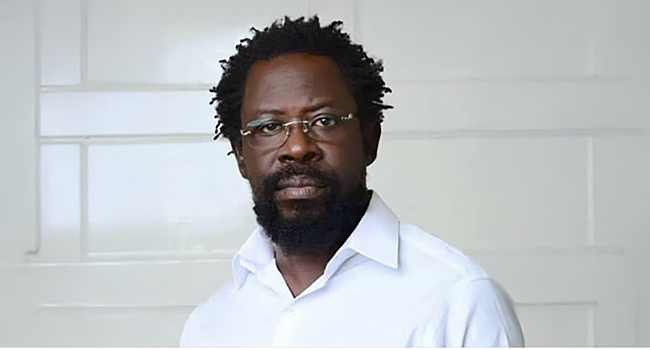
Human rights activist and lawyer, Dele Farotimi, has accused the administrations of former President Muhammadu Buhari and President Bola Ahmed Tinubu of enabling what he described as “Fulani terrorists” to spread across Nigeria.
Farotimi made the remarks on Wednesday during an interview on “State Affairs,” a podcast hosted by journalist Edmund Obilo, while discussing the worsening insecurity in the country.
The outspoken activist, who is also the author of the book Imperatives of the Nigerian Revolution, said Nigeria’s security challenges have worsened because authorities failed to act firmly against violent criminal groups operating in different parts of the country.
According to him, both the immediate past administration and the current government allowed impunity to grow, thereby weakening the nation’s ability to tackle terrorism, banditry and violent attacks.
“It is Buhari, the APC, and Tinubu’s government that enabled Fulani terrorists to overtake Nigeria,” Farotimi said during the interview.
He further criticised the Nigerian state, describing it as weak and ineffective in handling insecurity.
“The Nigerian state is so useless that at one time, an Assistant Commissioner of Police was murdered by a Fulani terrorist,” he said.
Farotimi alleged that after killing the police officer, the suspect reportedly wore the deceased officer’s uniform and later participated in peace negotiations with government representatives.
“The terrorist removed the uniform of the murdered senior police officer, wore it and sat on the table with the government at a peace negotiation,” he stated.
He argued that the government’s failure to decisively punish violent criminals had encouraged lawlessness across the country.
“It is the impunity that has extended to the Fulanis that has made it impossible to deal decisively with the madness that has overtaken us,” he added.
Farotimi’s comments are the latest in a growing national debate over insecurity in Nigeria and the handling of violent attacks linked to armed groups, bandits and terrorist organisations.
For more than a decade, Nigeria has battled several security threats, including the Boko Haram insurgency in the North-East, bandit attacks in the North-West, farmer-herder clashes in the North-Central, separatist violence in the South-East and kidnapping activities across many states.
Under Buhari’s administration, insecurity became one of the biggest issues facing the country despite repeated assurances by the government that efforts were being made to restore peace. Buhari, a retired military general who served as president from 2015 to 2023, came into office with promises to tackle terrorism and improve national security.
However, critics often accused his government of failing to stop the killings and kidnappings that spread across different regions of the country.
Since taking office in May 2023, Tinubu’s administration has also faced mounting pressure over rising insecurity and deadly attacks in parts of the country.
Several communities, especially in Benue, Plateau, Niger, Zamfara, Kaduna and Sokoto states, have recorded repeated attacks by armed groups, leading to deaths, displacement of residents and destruction of property.
The Federal Government has consistently defended its efforts, saying security agencies are working hard to confront criminal elements nationwide. Military authorities have also repeatedly announced the killing of terrorist commanders and the rescue of kidnapped victims during operations across troubled areas.
Despite these claims, many Nigerians continue to express concern over the frequency of attacks and the growing fear in rural communities.
Farotimi has remained one of the strong critics of the Nigerian political system and has often accused the country’s ruling elite of failing ordinary citizens.
In recent years, he has gained national attention through interviews, public speeches and social media commentary where he regularly speaks on governance, corruption, justice and democracy.
His book, Imperatives of the Nigerian Revolution, also examines what he describes as structural problems affecting Nigeria’s political and legal systems.
Wednesday’s remarks have already generated reactions on social media, with supporters agreeing with his criticism of the government, while others accused him of making divisive statements capable of worsening ethnic tensions.
The issue of linking criminality to ethnicity has remained sensitive in Nigeria, especially concerning violent attacks involving suspected herders. While some groups insist criminal elements should be identified and punished regardless of ethnic background, others warn against generalisations that could fuel division among Nigerians.
As the debate continues, many Nigerians are demanding urgent action from the government to end the killings, kidnappings and violent attacks affecting communities across the country.
Neither the Presidency nor the APC had officially reacted to Farotimi’s comments as of Wednesday evening.