
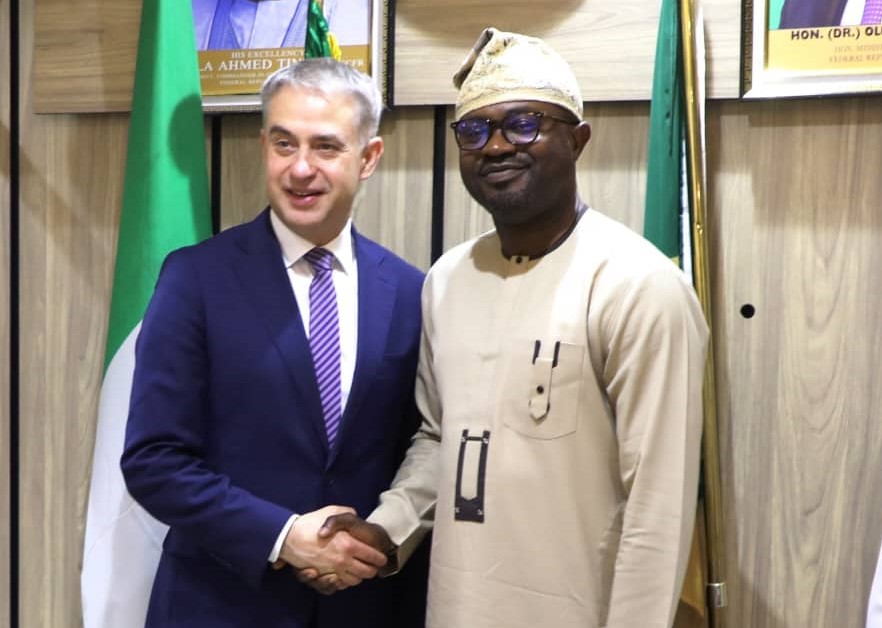
The Federal Government has reaffirmed Nigeria’s readiness for foreign investments and stronger international partnerships as part of ongoing efforts to rebuild the economy and improve national development.
Minister of Interior, Olubunmi Tunji-Ojo, stated this during a meeting with Poland’s Deputy Prime Minister, Krzysztof Gawkowski, in Abuja.
The Polish delegation also included Ambassador Michal Cygan and other senior officials.
According to a statement issued on Thursday by the spokesperson for the Ministry of Interior, Mary Ali, the meeting focused on strengthening bilateral ties between Nigeria and Poland, especially in the areas of security, technology, innovation and economic cooperation.
Tunji-Ojo said the administration of President Bola Ahmed Tinubu had introduced major economic reforms aimed at restoring investor confidence and creating a better business environment for both local and foreign investors.
He explained that some of the reforms included the unification of exchange rates, efforts to reduce inflation and the removal of fuel subsidy.
According to the minister, the policies were designed to reposition the Nigerian economy and attract long-term investments from international partners.
“Nigeria is ready for international investments and key partnerships. Recent economic changes the Nigerian government has made, such as unifying exchange rates, trying to control inflation, and taking away fuel subsidies are meant to reshape the economy and make investors feel more confident,” Tunji-Ojo said.
He added that the Federal Government was committed to creating stable policies that would encourage foreign businesses to invest in Nigeria’s economy.
Tunji-Ojo described the meeting with the Polish delegation as an important step toward building a stronger relationship between both countries.
He said Nigeria and Poland were laying the foundation for long-term cooperation that would benefit citizens of both nations.
The minister further stressed the need for practical partnerships in areas considered important to Nigeria’s growth and national security.
According to him, Nigeria is interested in expanding cooperation with Poland in border management, internal security, cybersecurity, digital innovation, technology transfer and institutional capacity building.
He also said Nigeria was ready to formalize future agreements with Poland in order to strengthen cooperation and ensure effective implementation of joint projects.
“We look forward to formalizing our cooperation through official agreements and building practical solutions that will benefit both countries,” he added.
The meeting comes at a time Nigeria is actively seeking foreign investments to support economic recovery and infrastructure development.
Since assuming office in 2023, President Tinubu’s administration has introduced several economic reforms aimed at stabilizing public finances and attracting foreign capital.
One of the administration’s first major decisions was the removal of fuel subsidy, a policy that had existed for decades but consumed a large part of government spending.
The government also moved to unify the country’s multiple exchange rates in an effort to improve transparency in the foreign exchange market and encourage investor confidence.
While government officials have defended the reforms as necessary for long-term economic growth, many Nigerians have continued to express concern over the rising cost of living, inflation and increased transportation costs following the subsidy removal.
Despite these challenges, the Federal Government has continued to assure investors and foreign partners that the reforms will eventually strengthen the economy.
Analysts say Nigeria’s large population, natural resources and expanding technology sector continue to make the country attractive to foreign investors.
Nigeria remains Africa’s most populous country and one of the continent’s largest economies, with strong potential in sectors such as energy, agriculture, telecommunications, manufacturing and digital technology.
During the meeting, Poland’s Deputy Prime Minister, Gawkowski, acknowledged Nigeria’s economic and demographic importance, describing the country as a major partner for future cooperation.
“Nigeria is a nation with considerable economic, demographic, and technological potential, and Poland sees it as a key partner for long-term cooperation,” he said.
The Polish official also expressed his country’s readiness to support Nigeria in key sectors including digitalization, innovation and infrastructure development.
In recent years, several European countries have increased engagement with African nations in areas such as trade, technology, renewable energy and security cooperation.
Nigeria, because of its strategic position in West Africa and its large market, continues to play a central role in many of these partnerships.
Security cooperation has also become increasingly important for Nigeria as the country continues to battle terrorism, banditry, cybercrime and cross-border crimes.
Tunji-Ojo has repeatedly emphasized the importance of technology-driven reforms within the Ministry of Interior and related agencies.
Under his leadership, the ministry has introduced measures aimed at improving passport processing, border control systems and digital identity management.
The minister has also pushed for stronger use of technology to combat illegal migration, document fraud and transnational crimes.
The Polish delegation’s visit is also expected to strengthen diplomatic relations between both countries.
Although Nigeria and Poland have maintained diplomatic ties for decades, trade and economic cooperation between the two nations have remained relatively limited compared to Nigeria’s relationships with some larger European economies.
Officials from both countries are now seeking to expand cooperation in areas that could create economic opportunities and improve institutional development.
As part of efforts to deepen the relationship, Gawkowski invited Tunji-Ojo to visit Poland for further discussions on bilateral cooperation.
The meeting in Abuja is therefore being seen as part of broader efforts by the Nigerian government to attract foreign partnerships and strengthen international confidence in the country’s economic reforms.
For the Federal Government, securing foreign investments remains a key part of its strategy to drive economic growth, create jobs and improve infrastructure in the coming years.