
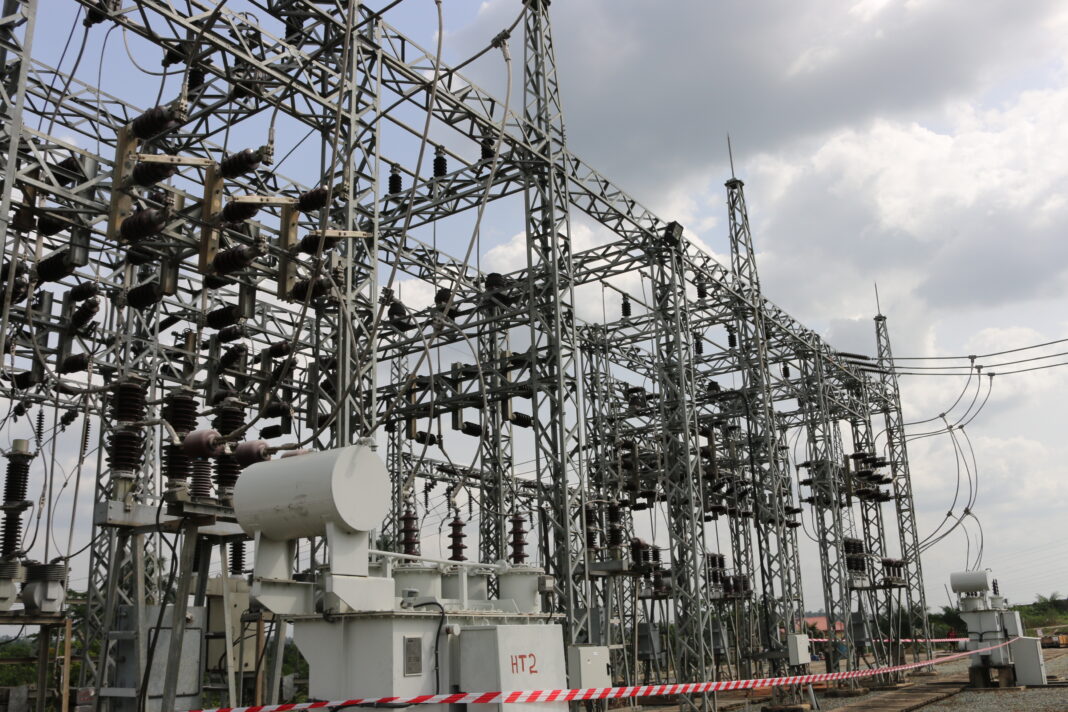
The Transmission Company of Nigeria, TCN, has said efforts are ongoing to restore electricity supply to parts of Abuja affected by a major power outage, including the Presidential Villa and the Nnamdi Azikiwe International Airport.
The blackout, which disrupted activities in several parts of the Federal Capital Territory on Saturday, was linked to a technical fault at the Apo Transmission Substation in Abuja.
In a statement issued by the company’s spokesperson, Mrs Ndidi Mbah, TCN explained that the outage was caused by faults in the red and yellow phase 33kV bushings connected to a 100MVA power transformer at the substation.
According to the statement, engineers had already succeeded in restoring the red phase bushing, while repair work on the yellow phase was still ongoing as of Saturday.
TCN said the incident affected electricity supply to customers connected to the affected transformer through the Abuja Electricity Distribution Company, AEDC.
The company assured residents and institutions affected by the outage that technical teams were working round the clock to restore normal electricity supply as quickly as possible.
“Presently, the red phase bushing has been resuscitated, while work is ongoing on the yellow phase,” the statement said.
TCN further disclosed that it had directed AEDC to temporarily supply electricity to customers connected to the affected feeders through alternative transmission feeders within Abuja while repairs continue.
“In view of this incident, TCN has requested that Abuja Electricity Distribution Company, AEDC, take supply for customers on the outgoing 33kV feeders connected to the affected 100MVA transformer at the Apo Substation from other TCN feeders within its franchise area pending completion of repairs,” the company stated.
The agency apologized to affected customers over the disruption and appealed for patience while engineers complete the repair work.
“Our engineers are working assiduously to restore the transformer and sincerely apologise for the inconvenience the incident has caused AEDC and electricity customers fed from the affected feeders,” TCN added.
The outage affected several strategic locations in the nation’s capital, including the Presidential Villa, which serves as the official residence and office of President Bola Tinubu, as well as the Nnamdi Azikiwe International Airport, one of Nigeria’s busiest airports.
Although airport authorities had not officially commented on the impact of the outage, power interruptions at the airport can affect operations such as lighting systems, cooling equipment, check-in services and other airport facilities. However, critical airport operations are usually supported by backup power systems during such incidents.
The Presidential Villa is also known to operate backup electricity systems during national grid disturbances or local transmission faults.
Saturday’s incident again highlighted the fragile state of Nigeria’s electricity infrastructure despite repeated promises by successive governments to improve power generation, transmission and distribution across the country.
Nigeria has continued to struggle with unstable electricity supply for decades, with frequent grid collapses, transmission faults and equipment failures affecting homes, businesses and public institutions.
The TCN is responsible for managing the country’s power transmission network, while electricity distribution companies such as AEDC handle supply to end users.
The Apo Transmission Substation is one of the major power facilities serving Abuja and surrounding areas. Any fault at the substation often affects several districts and important government institutions within the Federal Capital Territory.
In recent years, residents and businesses in Abuja have complained about repeated outages linked to technical faults, maintenance work and low power allocation.
The Federal Government has also been under pressure to improve electricity supply nationwide as Nigerians continue to battle rising energy costs, fuel price increases and dependence on generators.
Power sector stakeholders say stable electricity remains critical to economic growth, industrial development and improved living standards.
Despite reforms introduced since the privatisation of the power sector in 2013, many Nigerians still experience poor electricity supply and high tariffs.
TCN has in recent months carried out maintenance and upgrade works in different parts of the country as part of efforts to strengthen the national grid and improve power transmission capacity.
However, recurring faults and system failures continue to expose weaknesses in the network.
As repair work continues at the Apo substation, affected residents and businesses in Abuja are expected to rely on alternative power sources until normal supply is fully restored.